

Today in History: June 18, 1812, U.S. Declared War on Britain
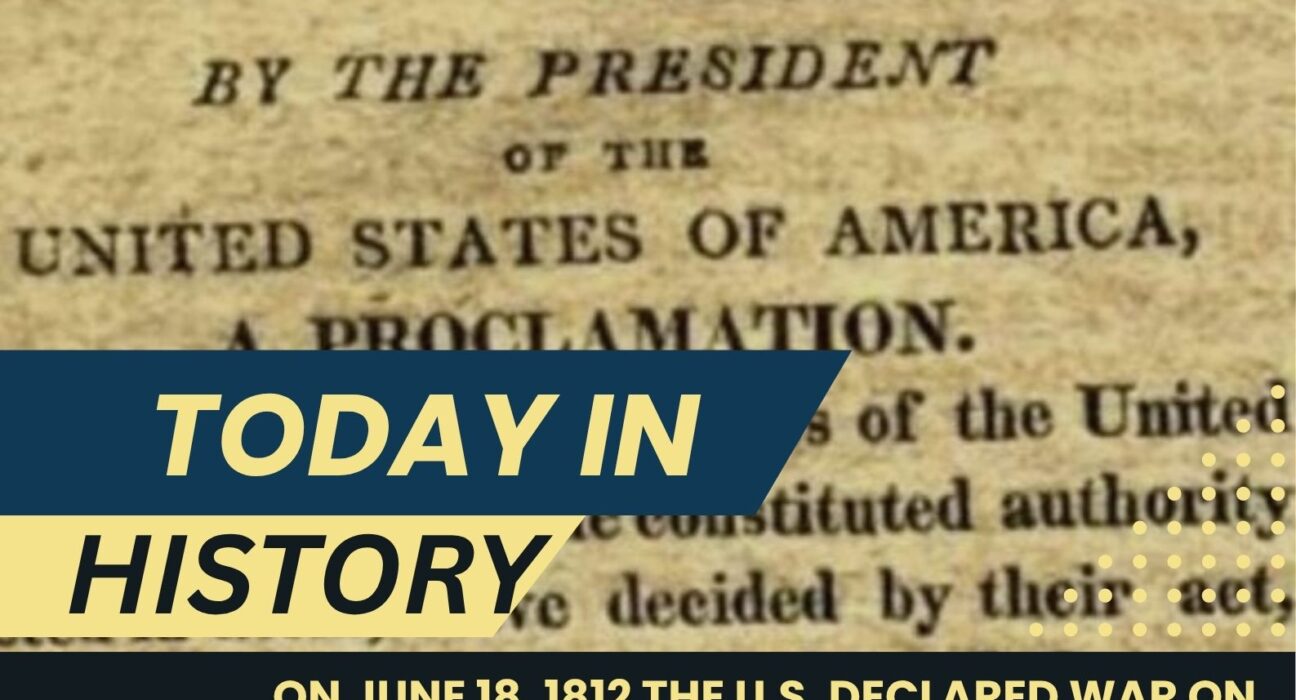
On June 18, 1812, President James Madison signed a historic declaration of war against Great Britain, marking the first time the United States had formally declared war against another nation. Often called the “Second War of Independence,” this high-stakes conflict pitted a young, economically fragile republic against the world’s most formidable naval superpower, born out of global power struggles, wounded national pride, and a raw fight for economic survival.
The roots of the war did not start on American soil, but rather across the Atlantic. Great Britain was locked in an existential struggle against Napoleon Bonaparte’s France. In their quest to choke off French resources, the British government implemented strict trade restrictions that devastated the United States, which prided itself on remaining a neutral trading partner. American merchant ships bound for mainland Europe were routinely intercepted, searched, and seized by the British Royal Navy.
Worse than the economic loss was a profound violation of American sovereignty known as impressment. Desperate for sailors to man their massive fleet, British warships began boarding American vessels under the pretext of hunting for military deserters. They forcibly captured thousands of American citizens, compelling them to serve the British crown. To the American public, this was state-sanctioned kidnapping.
For years, Washington tried to retaliate using economic warfare. Peaceful embargoes and trade bans designed to hurt the British economy backfired, tanking American commerce while Britain barely felt the pinch. By 1812, a passionate group of young Western and Southern politicians known as the “War Hawks” took control of Congress. Led by figures like Henry Clay and John C. Calhoun, they argued that America had to fight for its rights or submit to permanent colonial-style subjugation.
These lawmakers also had an eye on Canada, believing a swift invasion could drive the British from North America entirely and sever their alliances with Native American tribes resisting American westward expansion. Facing intense political pressure and recognizing that diplomacy had failed, President Madison sent his war message to Congress, securing a victory in a deeply divided vote.
The war lasted nearly three years and brought immense hardship to the young republic, characterized by surprising reversals on both sides. While the U.S. Army’s multiple attempts to invade Canada failed spectacularly, the tiny U.S. Navy achieved shocking early victories. Heavy American frigates like the USS Constitution nicknamed “Old Ironsides” defeated British warships in single-ship duels, giving domestic morale a massive boost.
By 1814, Britain had defeated Napoleon and turned its full attention to America. In August of that year, British troops invaded Maryland, marched on Washington D.C., and burned the White House, the Capitol, and other public buildings to the ground, forcing Madison to flee into the surrounding countryside. Just weeks after burning the capital, the British fleet bombarded Fort McHenry in Baltimore. The fort held, inspiring an onlooker named Francis Scott Key to write the poem that would become “The Star-Spangled Banner.”
By late 1814, both nations were exhausted. The British public was tired of high taxes and decades of constant warfare, while the United States faced near-bankruptcy. On December 24, 1814, diplomats signed the Treaty of Ghent, officially ending the war. Ironically, the treaty settled virtually none of the issues that had started the conflict, making no mention of impressment or trade restrictions, and returning all territorial boundaries exactly to how they were before the war began.
Yet, the impact on America’s identity was profound. By surviving a second conflict with Great Britain, the United States proved to the world that its independence was permanent. A wave of intense nationalism swept the country, ushering in the “Era of Good Feelings.” James Madison had risked the future of the nation on a declaration of war, and emerged with a country more unified and secure on the global stage than ever before.