How Nigeria Walked Into Awolowo’s Envisioned Wreckage
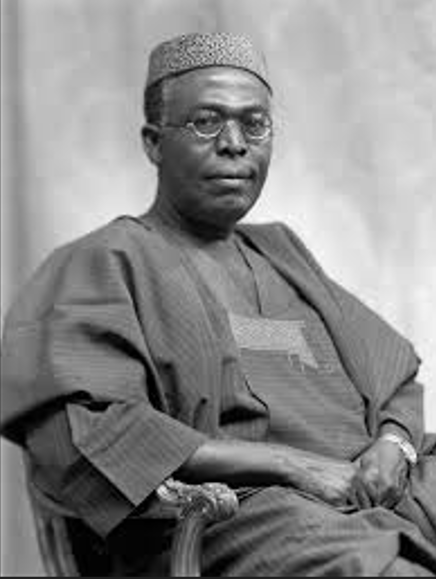
Nearly four decades after Chief Ọbafẹmi Awolọwọ took his final bow, his absence is felt not as a mere historical milestone, but as a sobering inventory of a nation rudderlessly adrift. When he passed away on May 9, 1987, the social fabric of Nigeria, though strained, still held with patches. Violent kidnapping was a plot device in foreign cinema, banditry belonged to Hollywood Westerns, and armed robbery was spoken of in muted, shameful whispers. Today, the systemic rot he warned against walks our streets unmasked and unapologetic. We are living inside the very ruins he predicted.
In 1981, Nigeria was intoxicated by the illusion of endless oil wealth. Amidst this collective euphoria, Awolọwọ sat down to write a stark, open warning to President Shehu Shagari. He noted that the nation’s vessel was accelerating toward a catastrophic reef, warning that without an immediate and courageous change of course, the ship of state would fracture, resulting in a disaster rarely matched in human history.
The response from the political establishment was swift and mocking. The political elite dismissed him as an embittered politician incapable of moving past election losses. Senators openly ridiculed his foresight on the floor of the National Assembly. Editorial boards across regional divides lambasted him, with one prominent publication notoriously writing that the sage was merely suffering from “political menopause.”
They weaponized his baptismal name, Jeremiah, turning it into a derogatory label for a doomsayer. Yet, no one stopped to ask what he was doing while they laughed. Awolọwọ provided the answer himself: while those in power squandered their time and moral authority in hedonistic pursuits, he and a dedicated few remained anchored to their desks, analyzing the nation’s structural flaws and designing solutions. As he famously observed, “Only the deep can call to the deep.” True wisdom is never an accident of birth; as Seneca once wrote, “No man was ever wise by chance.” It is forged in the solitude of rigorous thought.
The implosion Awolọwọ foresaw arrived ahead of time. By the mid-1980s, oil prices collapsed, rigour measures crippled the economy, and the visionary social safety nets he had established particularly free education in the Western region were systematically dismantled. Awolọwọ left Nigeria with a chilling axiom: The generation we abandon to ignorance today will inevitably become the architects of our terror tomorrow.
Look around at the reality of our current lot. Kidnapping has transitioned from a crime into a highly organized, lucrative corporate enterprise. In the North-West, heavily armed syndicates levy taxes, fly their own flags, and govern vast territories. In the South-West, the descendants of those denied an education now hold weapons where textbooks should have been.
Plato famously warned that the ultimate penalty for wise men who refuse to govern is to live under the rule of worse men. Nigeria did not allow Awolọwọ to steer the ship. Consequently, we are now left at the mercy of the very chaos he predicted, governed not just by short-sighted leaders, but by their angry, neglected, and heavily armed ideological children.
History does not issue apologies, but it meticulously preserves its receipts. Over time, almost every major contemporary who contested Awolọwọ’s path was forced to acknowledge his unparalleled depth. Dr. Michael Okpara eventually admitted privately that Awolọwọ’s aggressive focus on federalism and universal education was far more profound than he had initially credited. Chief Richard Akinjide, who once dismissed the 1981 warning as mere false alarm, admitted in his later years that the sage had possessed near-perfect foresight. Chief Ladoke Akintọla and Chief Meredith Adisa Akinloye, both of whom chose immediate political gain over long-term vision, watched their political structures crumble while Awolọwọ’s philosophies outlived them.
Chief Anthony Enahoro acknowledged the undeniable consistency of the man from Ikenne, while Dr. Nnamdi Azikiwe quietly regarded him as perhaps the sharpest intellect among the founding fathers. Even General Yakubu Gowon, who presided over a centralized military structure, later built national unity initiatives on the structural foundations Awolọwọ had championed for decades (NYSC)
What Awolọwọ understood, which successive leaders have failed to grasp, is that a population denied basic human capital development is a ticking time bomb. The criminal syndicates operating in our forests and cities are not born that way. They are the predictable output of a failed system, the ghosts of schools never built, teachers never compensated, and futures never prioritized.
The politicians who ridiculed Awolọwọ suffered from a fatal myopia. They saw immediate oil revenue, regional dominance, and patronage networks; they failed to see the slow-burning fuse of systemic ignorance. We chose the shallow option, and now the result has arrived in blood, ransom notes, and national anxiety. Awolọwọ’s warnings were never rooted in bitterness, they were borne out of a profound, agonizing love for a country that repeatedly stoned its prophets.
The solutions to our foundational crises will never emerge from the rooms where national wealth is squandered. They will only come from those willing to sit alone at a desk, read the patterns of history, and think. Awolọwọ did the work, the nation laughed, and now a continent reaps the consequences.