
South Africa to Locally Build Lithium Battery Cell as Demand Surges
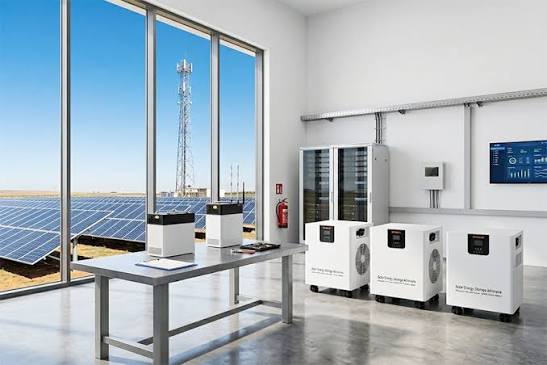
South Africa is accelerating efforts to establish a domestic lithium-ion battery manufacturing industry, driven by a projected regional demand for 55 gigawatt-hours (GWh) of battery capacity by 2034.
A March 2026 feasibility study indicates that construction of a 5–10 GWh LFP cell gigafactory is technically and commercially viable, with adequate demand to support several local manufacturers over the next decade.
The study, commissioned by the Localisation Support Fund (LSF) and conducted by EY-Parthenon, projects the Southern African battery market to grow approximately 30% annually, driven largely by accelerating deployment of BESS infrastructure for grid stabilisation and renewable-energy integration.
The BESS market—including utility-scale storage, commercial and industrial applications, and critical infrastructure—represents the highest-demand segment, with offtakers actively valuing local supply for supply chain resilience and reduced exposure to global logistics disruptions.
Trade measures support localisation. In support of this industrialisation drive, the International Trade Administration Commission (ITAC) has proposed raising the general customs duty on fully assembled lithium‑ion batteries to a WTO‑bound rate of 15% ad valorem through a new eight‑digit tariff subheading.
The preliminary determination, gazetted in April 2025, follows a broad consultation process that attracted more than 45 industry submissions.
Meanwhile, amendments to the Automotive Production and Development Programme (APDP2) propose expanding the standard materials list to include additional EV battery materials, recognising locally sourced materials from within the Southern African Customs Union (SACU) and the Southern African Development Community (SADC) as local content, and increasing the standard value added to 50% of the value of the standard material.
These policy measures complement the 150% accelerated depreciation allowance for electric vehicle production, which commenced in March 2026. “What we are now seeing is another positive step in that direction,” said NAACAM CEO Renai Moothilal.
On the supply side, South Africa has taken a significant step in battery materials processing. Manganese Metal Company (MMC) has completed the first phase of a battery‑grade high‑purity manganese sulphate monohydrate (HPMSM) plant in Mbombela,
Mpumalanga, with initial capacity of 6,000 t/y. Announcing the development at the International Manganese Institute annual conference in Rio de Janeiro, MMC Chief Marketing Officer Morné Ruiters noted that the battery market “has changed dramatically since our initial studies were completed” and that “flexibility and optionality have become critical”. MMC is already evaluating a second phase to add a further 18,000 t/y.
The South African government is further supporting this value chain through state-owned Industrial Development Corporation (IDC) funding. In March 2026, the IDC provided an additional R29.9 million (approximately US$1.9 million) to Giyani Metals to advance its HPMSM demonstration plant in Johannesburg. Giyani interim executive chairperson Nigel Robinson said: “We would like to thank the IDC for being such a supportive partner”.
With policy support, growing domestic demand and progress in critical mineral beneficiation, industry participants view South Africa as well positioned to establish a vertically integrated battery value chain, moving from raw material processing to eventual cell manufacturing. The LSF feasibility study concludes that South African‑produced LFP cells can achieve price competitiveness with imports, including from lower‑cost East Asian producers, under the scenarios assessed and with appropriate tariff support set within WTO bound rates.