

Bandit’s Cash Giveaway on TikTok Livestream Attracts Bank Account Numbers From Nigerian Viewers
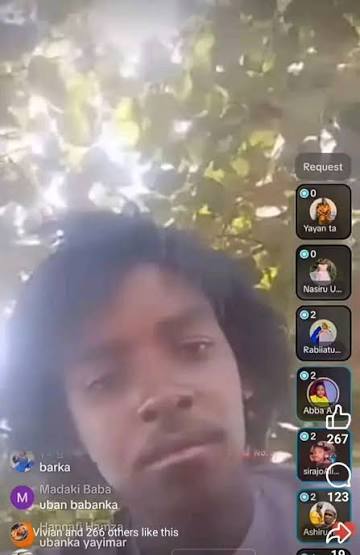
On the night of June 4, 2026, a masked individual calling himself a “Celebrity Bandit” went live on TikTok and did what Nigerian politicians have done for decades before elections: he gave away cash. But the money came from kidnapping ransoms.
Tens of thousands watched live as the masked host, who boasted a following exceeding 200,000, urged Nigerians to drop their bank account numbers into the comment section, using the slang “Azah.” Within minutes of the broadcast beginning around 7 p.m., the livestream attracted more than 15,000 concurrent viewers, and the comment section was flooded with account details from users across the country.
Multiple social media users subsequently reported receiving transfers of between ₦5,000 and ₦20,000, posting screenshots of credit alerts that appeared during the live session. The host openly acknowledged that the funds originated from kidnapping ransoms, according to multiple accounts. One self-described celebrity bandit boasted of spending over ₦50 million on a single TikTok live session, while another openly acknowledged spending close to ₦100 million sourced directly from ransom payments.
Perhaps most alarming, a bandit in a separate live session issued a direct threat against President Bola Tinubu, his son, and his family. The individual claimed sponsors had ordered them to target the president, demanding a ransom of $50 million and warning they would move on Abuja if the money was not paid. While authorities have made arrests for other social-media banditry cases, no official public response has been made regarding the specific threat to the presidency.
The episode has triggered a wave of outrage across Nigerian social media, but it has also laid bare the acute economic pressures shaping the nation’s response to organized crime. Business analyst Bolaji Fesomade, in a post on X, wrote: “Yesterday, some Nigerians dropped their account no. for a bandit on TikTok for giveaway, and the bandit credited them with ransom money. This highlights our core issue: the average citizen enables crime. When DSS traces his funds to you, expect arrest & jail time alongside him.”
Fesomade’s warning pointed to a grim irony: some of the same online accounts that regularly condemn banditry and kidnapping were among those submitting their details. “Even people wey dey insult bandits everyday were pasting their account,” one user lamented on X. “Hunger don turn everybody.”
Public affairs analyst Dr. Amina Yusuf described the trend as a “reflection of desperation and failed systems,” adding, “When people are hungry and feel abandoned by the state, they will collect money from anywhere. The real danger is normalizing bandits as celebrities. Today it’s giveaway, tomorrow it’s recruitment.”
But observers warn of a deeper, more insidious strategy. By distributing cash to desperate citizens, bandits are replicating the political playbook that has long corrupted Nigeria’s democracy—buying loyalty and building dependency. “They are conditioning Nigerians. It is psychological,” one analyst noted. “This is the same thing that politicians do during elections. Now bandits are doing it. The next giveaway, whose blood are they sharing? Whose two-year-old child’s death are those millions built on?”
Legal experts have cautioned that participants who knowingly accept money derived from criminal activities could face prosecution. Under the Money Laundering (Prevention and Prohibition) Act, 2022, it is an offence to knowingly possess, receive, or benefit from proceeds derived from unlawful activities. Conviction carries imprisonment of not less than four years and up to 14 years, or a fine not less than five times the value of the proceeds, or both.
“People often assume that receiving a transfer from an online giveaway carries no risk, but where the source of the funds is linked to criminality, investigators may seek to determine the extent of the recipient’s knowledge and involvement,” a security expert familiar with financial crime investigations told local media.
Human rights lawyer Inibehe Effiong condemned both the bandit and the participants, stating, “You cannot eat from crime and claim to fight it. Collecting money from bandits makes you complicit. Government must also ask why citizens are this desperate.”
The Nigeria Police Force has not issued an official statement on the specific June 4 incident, though a senior officer speaking anonymously said the Cybercrime Unit is tracking the TikTok account in question. “We are aware. Glorifying crime is an offense. Posting account numbers to suspected criminals is also risky for citizens,” the officer said.
The June 4 TikTok incident is not isolated. Bandits have increasingly used TikTok to broadcast their activities, flaunt ransom proceeds, and, in some cases, advertise weapons for sale. In a separate case, authorities announced the arrest of a suspect known as “Sule Yellow,” who was apprehended following online boasts of criminal exploits.
The Nigerian government has previously claimed to have taken down accounts used by bandits and terrorists on the platform, though enforcement appears inconsistent.
As of Saturday morning, June 6, the “Celebrity Bandit” account that hosted the giveaway had gained an additional 30,000 followers. The comment section remained filled with requests from users hoping to be included in future giveaways, along with messages such as “Oga next time abeg” and “God bless you sir”.
“They think they have hit the jackpot. But they are merely larger pigs in a breeding farm. The farce of it all,” one observer wrote. “The danger in giving a bandit your account details. They know your full name. At worst, if it is Opay, they have your number.”
And then there is the question that lingers long after the credit alerts stop pinging: “The next giveaway, whose blood are they sharing? Whose two-year-old child’s death are those millions built on?”