


Iran Delays Response to US Peace Proposal as Sporadic Clashes Erupt in Strait of Hormuz
Iran has not yet formally responded to the latest US proposal to end the war, despite US Secretary of State Marco Rubio’s expectation that Tehran would deliver its answer on Friday.
The delay comes as the two sides remain officially in a ceasefire, even as “sporadic clashes” were reported in the Strait of Hormuz.
Speaking to reporters in Rome on Friday, Rubio stated that Washington was still awaiting a reply. “We’re expecting a response from them today at some point,” Rubio said, adding, “I hope it’s a serious offer, I really do”. At the same time, he warned that Iran’s reported moves to control maritime transit through the strategic waterway are “unacceptable”.
On Saturday, Iran’s Foreign Ministry spokesman Esmaeil Baghaei confirmed that the proposal remains under review and that Tehran would respond “at the appropriate time”. Baghaei dismissed deadlines set by US officials, saying they “mean nothing”. According to Al Jazeera, the delay is due to the technical complexity of the text and the need for approval from multiple centers of power in Tehran, including Parliament Speaker Mohammad Bagher Ghalibaf, the Islamic Revolutionary Guard Corps (IRGC), and ultimately Supreme Leader Ali Khamenei.
Tensions escalated on Friday when Iran’s semi-official Fars news agency reported fresh “sporadic clashes” between Iranian and US naval forces in the Strait of Hormuz. The skirmishes occurred after the US military carried out airstrikes on civilian areas in southern Iran, according to Iranian officials, who accused Washington of violating the ceasefire.
The US Central Command said its forces acted in “self-defense” against “unprovoked Iranian attacks”.
Amid the turmoil, Russian Foreign Minister Sergey Lavrov held a phone call with his UAE counterpart, Sheikh Abdullah bin Zayed Al Nahyan, on Friday to discuss the situation. Moscow reaffirmed its position that the prospects for stabilization must not be jeopardized by a resumption of hostilities and emphasized the need to support ongoing negotiation efforts between Iran and the US.
Former US Vice President Kamala Harris delivered a fiery critique of the conflict at a Democratic Party event in Las Vegas on Thursday. “When you look at this war in Iran, which the American people do not want, which was not authorized by Congress — but even if it was, it should not have been initiated,” Harris told the crowd. “He talked about obliterating … It’s all just bullsh*t!” she said, eliciting cheers from the audience.
Meanwhile, the human cost of the conflict continues to mount. On February 28, the United States and Israel attacked an elementary school for girls in Minab, Iran. The strike killed 175 people, including 168 female students, and wounded 95 others, according to Iranian state media. Speaking at a funeral rally in Brussels, European Parliament member Milan Uhrik called for an immediate investigation, stating that the attack “could well have been a planned strike” and a war crime.
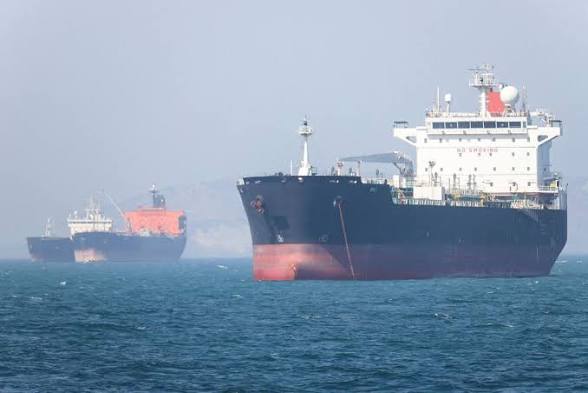
The International Maritime Organization reports that at least 11 seafarers have been killed in the conflict. Maritime charities warn that about 20,000 seafarers remain stranded in the Gulf amid the blockade of the Strait of Hormuz, suffering from hypervigilance, burnout, and anxiety. “They see drones flying, they see missiles flying, and then we see instances where the ships get hit,” said Gavin Lim of the Sailors’ Society. “You can imagine that anxiety and fear building up”.