Crisis Rocks ACF as BOT Offer to Resign if I ditched of Misappropriation
Arewa Consultative Forum (ACF), one of northern Nigeria’s most influential socio‑cultural organisations, is in the throes of an escalating leadership crisis that has pitted its Board of Trustees (BoT) against its National Executive Committee (NEC).
The dispute centres on a bitter fight over tenure, constitutional powers and the control of an N3.9 billion endowment fund.
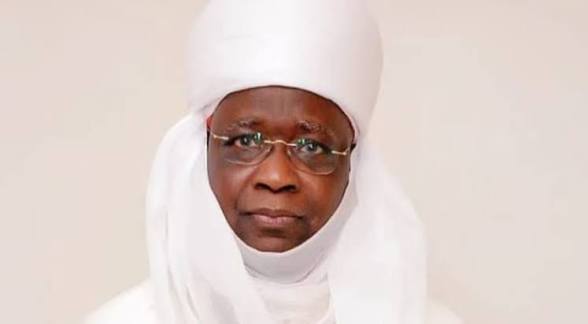
At the heart of the storm is Alhaji Bashir Dalhatu (Wazirin Dutse), the Chairman of the BoT, who on May 6, 2026, was suspended by the NEC over allegations of financial misconduct and constitutional breaches.
The decision was taken at an emergency NEC meeting in Kaduna after police sealed off the ACF’s national headquarters along Sokoto Road, prompting the committee to reconvene at an undisclosed alternative venue.
Dalhatu, a former minister who served under the Interim National Government of Chief Ernest Shonekan and later under General Sani Abacha, has dismissed the suspension as “funny and ridiculous” and an “irresponsible” overreach, insisting the NEC has no authority to remove him.
In an interview with Daily Trust, Dalhatu traced the crisis to a letter from six senior members who petitioned the BoT alleging that certain officials had overstayed their constitutionally mandated tenures. The ACF constitution provides for a single six‑year term for BoT members, while NEC members serve three‑year terms renewable once.
According to Dalhatu, the BoT resolved at its April 23 meeting that the tenures of several officials – including Secretary‑General Murtala Aliyu, Deputy BoT Chairman Senator Fred Orti, Vice Chairman Ambassador Ibrahim Mai Sule and Deputy NEC Chairman Senator Ibrahim Ida – expired on March 10, 2026. A communiqué drafted after an elders’ meeting convened by General Haliru Akilu on April 21, 2026, proposed that Aliyu be given until May 15 to hand over his papers owing to his son’s wedding arrangements – a proposal Dalhatu said Aliyu had initially agreed to without objection.
Murtala Aliyu, the embattled Secretary‑General, has rejected the BoT’s declaration.
In a separate interview with Daily Trust, he argued that his tenure remains valid, citing a letter of appointment dated July 25, 2023, signed by the Leadership Selection Committee, which he said renewed his mandate. “The constitution is very clear: the two tenures are separate,” Aliyu stated, adding that a secretary‑general does not simply walk away but must wait until a successor is appointed.
The crisis escalated dramatically on May 6 when ACF’s NEC, citing a report from an Ethics Committee that had been constituted after a member’s petition, passed a vote of no confidence on Dalhatu and ordered an indefinite suspension pending investigation. The Ethics Committee alleged that Dalhatu had failed to respond to queries within a stipulated 48‑hour timeframe and had violated constitutional provisions, including overreaching his authority and cancelling a duly convened meeting without constitutional backing.
In addition to the suspension, the NEC directed an immediate forensic audit of all ACF financial activities, including the Endowment Fund, with instructions to recover any funds found to have been improperly managed.
Dalhatu has not only welcomed the forensic investigation but has himself urged the police to probe suspected financial misappropriation. “If they see my name linked to one kobo, I will resign from the ACF,” he declared. He provided a detailed defence of the N3.9 billion endowment fund raised during the forum’s 25th‑anniversary drive, saying it was deposited in a separate Jaiz Bank account in Kano Andrew had already yielded between N60 million and N70 million in profit sharing.
“The account has never been operated,” he stressed. “I am not a signatory to operate the account; I only signed to open it.”
The crisis has taken on a deeply personal dimension, with Dalhatu alleging that Aliyu has converted the ACF into a “feeding bottle” – a beneficiary of what he called illegal disbursements of meagre resources. Dalhatu insisted that he himself has never taken a kobo from the forum in two and a half years, covering all his own expenses for meetings.
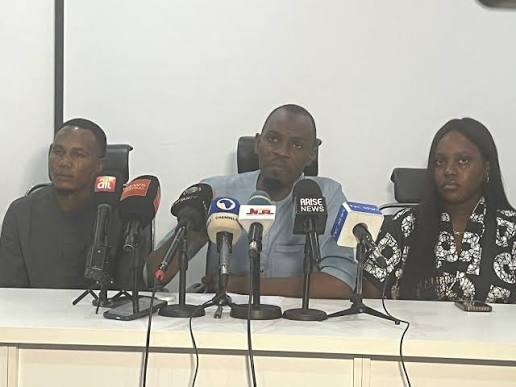
The internal rift has spilled into the public domain, drawing in security forces. On May 5, police operatives barricaded the ACF secretariat on Sokoto Road, blocking access ahead of the scheduled NEC meeting. Kaduna State Police Command stated that the deployment was to prevent a potential breakdown of law and order between rival factions. ACF’s National Publicity Secretary, Professor Tukur Muhammad‑Baba, condemned the police action as “unlawful interference” with the forum’s internal affairs.
The importance of the ACF as the foremost pan‑northern socio‑cultural organisation cannot be overstated. Since its founding, the forum has served as a critical platform for articulating the interests of northern Nigeria, mediating regional conflicts and advocating on issues such as security, education and economic development. The paralysis now gripping the ACF threatens to silence a vital collective voice for the north at a time of profound challenges – from banditry and insurgency to almajiri reform and economic distress.
The outcome of this leadership struggle, and particularly the forensic audit of the N3.9 billion endowment that was intended to address these very challenges, will likely shape the forum’s credibility and future relevance for years to come.
As of May 9, the ACF’s headquarters remained under police blockade, with both factions dug in and the wider northern public watching anxiously. Multiple prominent northern elders, including former heads of state Yakubu Gowon, Ibrahim Babangida and Abdulsalami Abubakar, have been called upon to intervene.
Yet, for now, the forum’s fate hangs in the balance between duelling interpretations of its founding charter and competing claims over who genuinely speaks for the north.