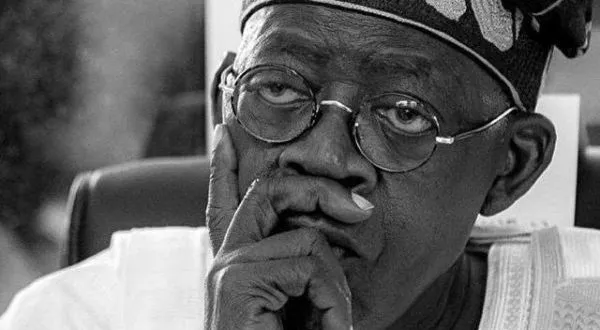

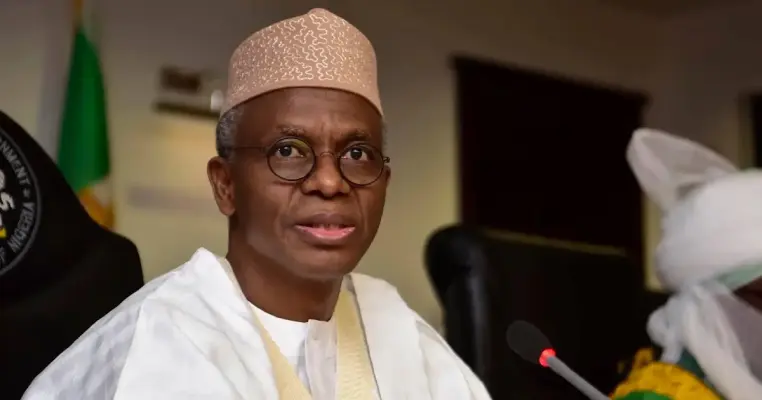
Anthony Enahoro: The Needle Mover
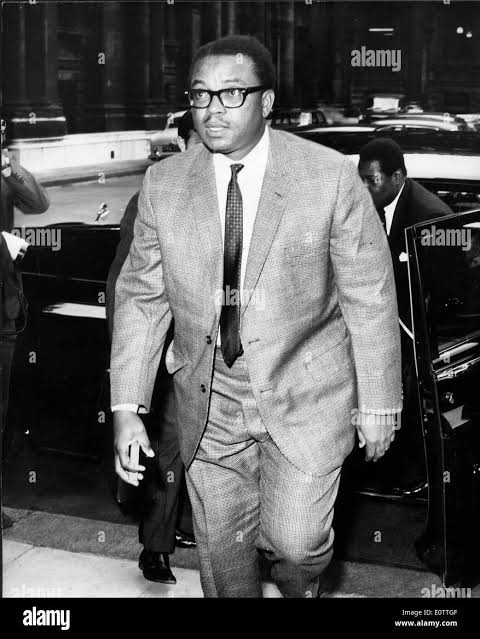
Anthony Enahoro: The Needle Mover
Chief Anthony Enahoro was not a man who believed in the patient “polite” politics of the 1950s. While many leaders of his era were willing to negotiate a slow transition toward independence, Enahoro was a firebrand who believed that freedom was an inherent right, not a gift to be scheduled by a colonial master. His journey into activism began not in a boardroom, but in the trenches of journalism, where he discovered the power of the written word to challenge the British Empire.
By the age of 21, Enahoro had already made history as the youngest editor of a Nigerian newspaper, the *Southern Nigerian Defender*. He used his platform to expose the injustices of colonial rule, fearlessly criticizing the British administration even when it meant risking his personal safety. His sharp editorials acted as a wake-up call for a generation of Nigerians, earning him three separate prison sentences for sedition before he had even turned 30.
These early stints in prison did not break his spirit; instead, they forged a legendary resolve. Each time Enahoro walked out of a colonial jail, he was greeted as a hero by the masses. He realized that for Nigeria to truly prosper, it needed more than just better policies it needed total self-governance. This conviction led him to join the Action Group, where he became a key lieutenant to Chief Obafemi Awolowo and a central figure in the constitutional struggle.
The defining moment of Enahoro’s life—and arguably of Nigerian history—occurred on March 31, 1953. As a member of the House of Representatives, he stood up and moved a historic motion that demanded “self-government for Nigeria in 1956.” It was a bold, strategic strike that forced the British to stop stalling. By setting a specific date, Enahoro effectively backed the colonial administration into a corner, forcing them to address the reality of a sovereign Nigeria.
This “Self-Government Now” motion acted as a political earthquake that split the House. While some northern leaders were wary of the timing, fearing the south would dominate the new nation, Enahoro’s move ignited a national consciousness that could not be ignored. The tension was so high that it led to the famous “walkout” from Parliament by the Action Group and NCNC members, signaling a total breakdown of the colonial status quo.
Outside the legislative halls, Enahoro was a master of grassroots mobilization. He understood that independence was not just a legal change but a psychological one. He traveled across the country, speaking to workers, students, and farmers, convincing them that they were ready to manage their own affairs. He bridged the gap between elite intellectual debate and the raw energy of the Nigerian streets, making the quest for “Self-Rule” a truly national movement.
Even after the motion faced delays and led to constitutional crises, Enahoro remained the ultimate negotiator. He represented the Nigerian interest at various London Constitutional Conferences, where he was known for his sharp legal mind and refusal to back down on core principles of federalism. He wasn’t just fighting for a flag and an anthem; he was fighting for a system where every ethnic group in Nigeria had a seat at the table.
Enahoro’s fight did not end when the British flag was lowered in 1960. He remained a fierce watchdog for democracy throughout his life. When Nigeria fell under the grip of military dictatorships in later decades, the aging lion returned to the front lines. He became a founding member of the National Democratic Coalition (NADECO), once again risking his life to demand a return to civilian rule and true federalism during the Abacha era.
His legacy is one of unwavering courage and intellectual brilliance. Enahoro taught Nigerians that youth is not an excuse for silence and that freedom requires someone to have the audacity to ask for it first. He was a man who lived through the colonial era, the first republic, and the dark years of military rule, never once losing his faith in the potential of a self-governing, democratic Nigeria.
Today, Anthony Enahoro is remembered as the “Father of Nigeria” for his singular act of defiance in 1953. He proved that one voice, backed by conviction and the support of the people, can bring an empire to its knees. His life remains a blueprint for activists and leaders across the continent, reminding us that the fight for self-determination is a continuous journey that requires both the passion of the youth and the wisdom of the elders.