Senate Pushes Revenue Expansion as Budget Rollovers Trigger Fiscal Worries
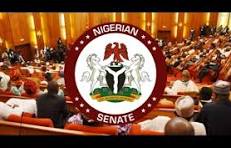
Mounting concerns over fiscal instability dominated discussions at the National Assembly on Wednesday as the Senate Committee on Finance criticised the Federal Government’s continued implementation of overlapping budgets, warning that the practice undermines effective economic planning and project delivery.
The concerns emerged during an interactive session between the committee and top economic officials over the 2026–2028 Medium-Term Expenditure Framework (MTEF) and Fiscal Strategy Paper (FSP), alongside a review of the 2024 and 2025 budget performances and projections for 2026.
Lawmakers expressed particular unease over the 2025 fiscal year, which has seen significant revenue underperformance. While the 2024 budget recorded relatively strong outcomes, Finance Minister and Coordinating Minister of the Economy, Wale Edun, disclosed that the 2025 budget failed to meet expectations, forcing the rollover of most capital projects.
According to Edun, the Federal Government realised N26 trillion to fully fund the capital component of the 2024 budget. In contrast, only N10 trillion has been generated so far in 2025 from an expected N40 trillion, leaving a revenue gap of N30 trillion.
As a result, about 70 per cent of capital projects scheduled for 2025 have been deferred to the 2026 budget.
The minister attributed the shortfall to structural weaknesses in revenue generation, explaining that treasury management measures and financial engineering were deployed to cushion the impact.
He noted that ongoing reforms aimed at boosting revenue include automation, digitalisation and process re-engineering, as well as enforcing direct remittance of funds by revenue-generating agencies into the Treasury Single Account (TSA).
However, senators across party lines criticised the recurring rollover of budgets, describing it as detrimental to national development. Senator Danjuma Goje (APC, Gombe Central) described the situation as unacceptable, insisting that the country must return to a single, orderly budget cycle beginning in 2026.
Echoing the sentiment, Senator Olalere Oyewumi (PDP, Osun West) argued that unrealistic budget proposals were at the heart of repeated implementation failures, warning that such practices inevitably lead to overlapping budgets in subsequent years.
Questions were also raised over the government’s borrowing strategy. Senators Victor Umeh (LP, Anambra Central) and Ireti Kingibe (LP, FCT) queried why borrowing approvals granted by the National Assembly were not utilised to offset revenue shortfalls, noting that multiple budgets complicate fiscal management and weaken investor confidence.
In response, the Chairman of the Senate Committee on Finance, Senator Sani Musa (APC, Niger East), assured lawmakers that steps were being taken to restore fiscal discipline.
He announced the constitution of a three-member ad hoc committee to engage the Minister of Finance and the Accountant-General of the Federation on the prompt settlement of payments owed to local contractors for projects executed in 2024 before the current budget expires on December 31.
As part of efforts to strengthen revenue mobilisation, the committee also directed the Federal Inland Revenue Service (FIRS) to raise its 2026 revenue target to N35 trillion, up from the earlier projection of N31 trillion.
FIRS Chairman, Zaccheus Adedeji, informed the committee that the agency generated N20.2 trillion in 2024 and N25.2 trillion in 2025, noting that the full impact of these gains is often eroded by the complications arising from multiple budget implementations within a single fiscal year.
The Senate maintained that stabilising budget projections and execution remains critical to restoring confidence in the nation’s fiscal framework and ensuring sustainable economic growth.