
Stakeholders Rally on AI, Investments to Unlock 37bn Barrels, 200tcf Oil & Gas Potential
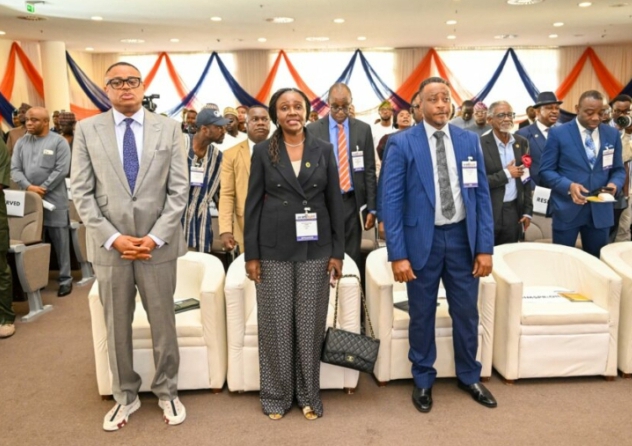
Nigeria’s oil and gas sector is poised for a transformative boom, with regulators, national operators, and industry leaders uniting at the 26th Oloibiri Lecture Series and Energy Forum (OLEF 2026) to harness AI, digital innovation, and targeted investments totaling over $34 billion.
Hosted by the Society of Petroleum Engineers (SPE) Nigeria Council in Abuja, the forum—under the theme “Beyond the Three Million Barrels Target: Harmonising Digitalisation, Capital and Policy Frameworks for Intelligent Operations and Asset Optimisation”—drew policymakers, executives, and academics to chart a path surpassing national production goals of 3 million barrels per day (bpd) of crude oil and up to 22 billion cubic feet per day (bcf/d) of gas by 2030.
The Nigerian Upstream Petroleum Regulatory Commission (NUPRC) chief executive, Oritsemeyiwa Eyesan, stated that regulations under the 2021 Petroleum Industry Act (PIA), including 19 gazetted rules and Presidential Executive Orders, have supported over $10 billion in upstream investments. She cited projects such as Bonga North, Ubeta, and HI, which have progressed following changes to approvals, fiscal terms for gas and deepwater, and oversight frameworks.
Eyesan noted Nigeria holds 37 billion barrels of crude oil and 200 trillion cubic feet of gas reserves. She mentioned NUPRC’s digital platforms for approvals and compliance, along with production targets of 2 million bpd oil and 10 billion standard cubic feet (bscf) of gas by 2027, rising to 3 million bpd and 12 bscf by 2030. These include domestic supply obligations, gas flaring measures, and Host Community Development Trusts.
Also speaking, the Nigerian National Petroleum Company Limited (NNPC) group chief executive officer, Bashir Bayo Ojulari, described efforts to digitise data from 1956, including paper-based well logs, and pilot AI applications.
Ojulari, represented by Upstream executive vice president, Udobong Ntia, said NNPC’s approach includes three stages: maintaining existing assets, advancing near-term projects with financing from producers like Chevron and TotalEnergies, and reviewing portfolios for marginal fields.
Ojulari attributed over $24 billion in investments, including Bonga Southwest, to PIA provisions and streamlined NUPRC approvals that addressed legacy disputes.
On his part, the Nigerian Midstream and Downstream Petroleum Regulatory Authority (NMDPRA) chief executive, Engr. Saidu Mohammed, said the agency plans to launch ‘Project NEXUS’ soon, linked to the Midstream and Downstream Petroleum Industry Sustainability Initiative (MDPISI).
The initiative covers carbon reduction, blue hydrogen, and carbon capture, utilisation, and storage (CCUS).
Mohammed referred to PIA’s consolidation of 17 regulations into the Petroleum Operations Regulation, upstream “Big Bank” projects, and midstream needs like pipelines and refining. Funding sources include the Midstream and Downstream Gas Infrastructure Fund (MDGIF), the Africa Energy Bank, and others.
PTDF on Digital Tools and Capacity Building
Petroleum Technology Development Fund (PTDF) executive secretary Prof. Shuaibu Shehu, represented by general manager of Research and Innovation Olayinka Agboola, pointed to PIA’s role in regulatory clarity. The agency supports digital technologies including AI, IoT, machine learning, and robotics, alongside programmes like PhD Split-Site, Centres of Excellence in Kaduna and Port Harcourt, and industry partnerships. Challenges mentioned include operational issues and regulatory delays.
SPE Nigeria Council Chairman Francis Nwaochei highlighted digital tools, financing, and regulations for asset management amid global competition. Breakout sessions covered Policy and Regulation, Finance and Capital, and Digital and Data, with plans for a joint action plan involving government, regulators, and operators.