

Power, Taxes, Insecurity May Dampen Nigeria’s Mining Future, Says Geologist
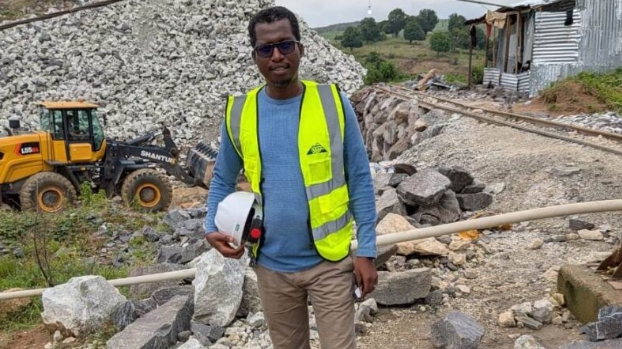
Artisanal mining remains one of the most complex challenges in Nigeria’s mineral sector, and managing it requires reform – not elimination.
In an exclusive interview with Nigerianmining, Managing Director and CEO of Kimberlite Africa Ltd, Jamil Mangga, said: “Artisanal and small-scale mining has been a challenge globally, and Nigeria is not an exception.”
He warned that unregulated activity leads to “indiscriminate mining” and distorts exploration results by disrupting natural geological formations. “You are going to miss out data… in its original state,” he said, highlighting the impact on formal exploration.
Rather than banning artisanal miners, Mangga proposed a structured approach: “look for a way to streamline it.” One option is to restrict operations to alluvial (river-based) zones, allowing large-scale exploration to proceed elsewhere. He also emphasised the role of states in organising miners into cooperatives. Such structures, he said, would enable “training on safe mining practices” and improve information flow within the sector.
Why Mining Conflicts Persist
On conflicts between mining companies and host communities, Mangga was direct: “It is nothing other than not keeping to agreement.” He pointed to Nigeria’s revised Community Development Agreement (CDA) framework, which now includes broader participation from community leaders, youth representatives, security agencies and regulators.
Despite these improvements, implementation remains uneven. “Usually, it boils down to lack of keeping to promises,” he said, noting that community demands are often modest—basic infrastructure such as water, health facilities and electricity.
Another major issue is consent and land rights. Mangga warned that “duplication of consent” has led to legal disputes and slowed licence approvals. He urged both federal and state governments to address overlaps and ensure clarity in land allocation processes.
Weak Local Processing and the Energy Constraint
Nigeria’s struggle with local mineral processing, according to Mangga, is rooted in structural challenges rather than lack of intent. “Processing needs energy, power… and that is the first challenge,” he said. Companies are often forced to generate their own electricity, significantly increasing costs.
Other constraints include poor infrastructure, insecurity and multiple taxation. He noted that “huge levies… beyond statutory payments” imposed by subnational authorities can discourage operators and “make them lose interest in local processing.” The result is limited value addition, with raw minerals exported instead of processed domestically.
Investor Hesitation at Early Exploration Stage
Mangga described early-stage exploration as the most difficult phase for attracting investment. “The sector is all about de-risking, and early-stage de-risking is the most difficult,” he said.
Investors typically expect “a minimum dataset”—basic geological and feasibility information—before committing funds. However, in Nigeria, they often struggle to access or interpret available data. He also pointed to a shortage of skilled professionals capable of producing reliable technical reports.
“The integrity of reports matters more than even the mine itself,” he said, stressing that credible data forms the foundation of investment decisions.