
Outrage in Umuahia as Electricity Bills Spike Despite Poor Supply
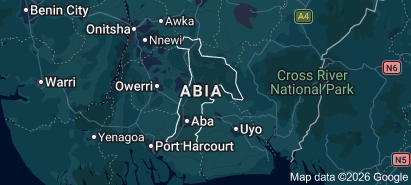
Residents of Umuahia, the Abia State capital, are expressing growing frustration over sharp increases in electricity bills, with many saying the cost of power now rivals or exceeds their house rent.
Findings show that electricity charges, which ranged between N6,000 and N14,000 as recently as June 2025, have surged to between N50,000 and N70,000 monthly. The rise in tariffs has coincided with a decline in power supply, worsening the burden on households and small businesses.
In a city where annual rent for a three-bedroom apartment averages between ₦350,000 and ₦550,000, many residents say they now spend more on electricity than on accommodation.
Those without prepaid meters are particularly affected, as they remain subject to estimated billing under the Band tariff system.
Residents, including civil servants and low-income earners, say the situation is becoming unsustainable. A civil servant, Harrison Ogbonnaya, said his monthly bills now consume most of his income, citing charges of over N50,000 in recent months despite partial payments and subsequent disconnection.
Another resident, Obinna, described the situation as excessive, while ICT professional Ndubuisi Odimba warned that some businesses have already shut down due to rising costs.
Small business operators say they are equally impacted. Chimdi Ejirika, who runs a business centre, said he is billed between N65,000 and N80,000 monthly despite minimal usage, while a metal fabricator, Kingsley Obioma, reported paying up to ₦90,000 amid erratic supply.
Many residents also complain of prolonged outages lasting up to three days, with daily supply rarely exceeding six hours when restored. The situation has led to accusations of exploitation against the Enugu Electricity Distribution Company (EEDC).
In response, EEDC spokesman Emeka Eze said the higher bills reflect the implementation of the Band A tariff following subsidy removal, noting that customers are now paying the actual cost of electricity. He added that supply challenges are linked to reduced power generation caused by gas shortages, which affect over 75 per cent of Nigeria’s electricity output.
The Abia State Electricity Regulatory Agency (ASERA) confirmed that the tariff structure is a nationwide policy and not specific to the state. Its chairman, Emeka Onyebule, said Band A customers are expected to receive a minimum of 20 hours of electricity daily but acknowledged that supply in Umuahia has dropped significantly due to constraints on the national grid, falling from about 35 megawatts to roughly 13 megawatts.
Onyebule said efforts to transfer electricity distribution assets to the Abia State Government are still ongoing, adding that compensation has been directed for customers affected by poor supply, though he admitted the relief provided so far may be insufficient.
Officials also identified metering as a key solution to billing disputes, but noted that the high cost of prepaid meters about N130,000 for single-phase and N230,000 for three-phase units, remains a major barrier for many residents.
Despite official explanations, residents continue to demand urgent intervention, warning that the rising cost of electricity is placing severe strain on livelihoods and threatening the survival of small businesses.