


How I Led Result-Oriented Advocacy at 16 in G.S.S Afon
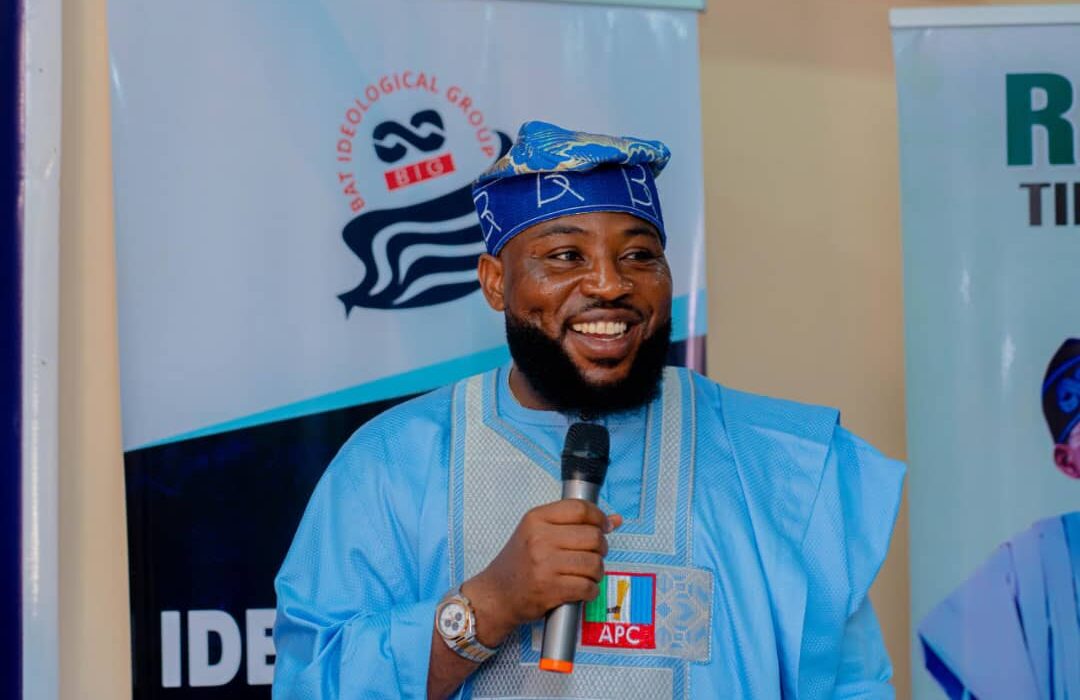
By Bamidele Atoyebi
Governors handpicked their political Puppets as LG Chairmen Yet Won’t Allow Them to Perform
In a constitutional democracy, there is an inherent misunderstanding regarding where the burden of daily governance lies. While the eyes of the nation are perpetually fixed on the Presidency in Abuja, the true machinery of public welfare is designed to operate much closer home. Nigerians often expect the central government to handle every micro-level grievance, overlooking the fact that the Federal Government is already occupied with the massive weight of international diplomacy, national security, and the complex exclusive list of duties.
President Bola Ahmed Tinubu’s political philosophy has an initio been rooted in the belief that democracy only breathes when it trickle down to the smallest units of society. This was most evident during his tenure as Governor of Lagos, where he took the bold, politically risky step of breaking 20 local governments into 57. He did this specifically to ensure that the “dividends of democracy” could trickle down to the lower cadres of the population, providing them with a direct link to administrative power.
This move in Lagos was not merely administrative; it was a battle for the soul of local autonomy. At the time, the central government under the Obasanjo administration withheld crucial funds in an attempt to stifle this expansion, yet Tinubu stood his ground. This historical defiance underscores a career-long passion for ensuring that local authorities have the resources they need to serve their immediate communities without being tied to the apron string of central power.
Today, one of the greatest gifts any leader can give Nigeria is the actualization of political and financial autonomy for local governments. By allowing these local authorities to manage their own funds, the President has removed a major excuse for underdevelopment. However, despite this autonomy being granted on paper, many state governors continue to handpick “puppet” chairmen, effectively preventing the local government system from functioning as the independent powerhouse it was meant to be.
The disparity in local investment is staggering when compared to the federal efforts. While the Federal Government works to mitigate the impact of fuel subsidy removal through initiatives like new CNG buses, many local governments have failed to invest in their own basic infrastructure. Very few local councils have taken the initiative to establish procurement departments, invest in rural farm roads, or provide essential water services, leaving a vacuum that the central government cannot realistically fill from afar.
Furthermore, the economic empowerment of the rural population is being stifled by local inaction. There is a noticeable lack of local government involvement in providing micro-loans to farmers or market tradersthe very people who drive the local economy. While critics on social media are quick to blame the Presidency for high food prices, they often ignore that their local chairmen are doing little to support the agricultural roots of their own districts.
This culture of “blaming the center” has become a tailored mindset for many Nigerians, particularly those who have grown up only seeing the Federal Government as sole responsibility bearers. Interestingly, a major portion of those criticizing the Federal Government or President Tinubu on social media are described as being part of a diaper generation who may not yet fully grasp the complexities of governance. By focusing solely on the President, these critics inadvertently grant a “free pass” to local and state officials who are actually responsible for the schools and roads in their backyards.
The consequences of this local abandonment are dire, as the neglect of the grassroots creates a cycle of instability. When local governance fails to provide opportunities, these areas become primary recruiting grounds for bandits and insurgent groups seeking more hands. Security is not just a matter of military might from the top; it is a matter of providing economic stability at the bottom, which is the primary mandate of a functioning local government.
The path forward requires a shift toward advocacy for progressive results, where citizens take direct interest in local affairs. I saw the power of this approach in my story as an SS2 student at at Government Secondary School, Afon, Kwara State, when I was 16-year-old. I led a protest to local government after being chased from school (G.S.S Afon) due to unpaid fees caused by my parent and other students missing salaries of over seven months from the state and local government. My peaceful demand for accountability led to the principal being sanctioned and the students resuming classes the very next day, proving that direct, local pressure can yield immediate fruit.
The BAT Ideological Group (BAT-IG) is transforming political support into progressive advocacy by shifting the focus from electioneering to measurable grassroots results, such as improving welfare for security personnel to advocating for the Rigasa electricity solution which serves as a validated blueprint for energy autonomy in over 3,000 communities. BAT-IG’s strategic advocacy approach champions national cushions like subsidized transport, petty trader grants, work from home for none essential workers,and online lecture for higher education students, free bus to school for public school primary and secondary school pupil among others to cushion the effects of global oil crisis. Ultimately, the group calls on all pro-Tinubu support groups to stand up for our leader by actively calling out state governors and local government chairmen whose performance fails to match the recent surge in government allocations, ensuring that these resources truly reach the people.
Nigerians must form organized community groups to lead protest to their local government and demand transparency. The President has provided the structural autonomy; now, the citizens must provide the oversight. Until the people hold their local chairmen as accountable as they hold the President, the true potential of Nigeria’s democracy will remain locked behind the gates of local government offices.
Bamidele Atoyebi is the Convener of BAT Ideological Group, National Coordinator of Accountability and Policy Monitoring and a publisher at Unfiltered and Mining Reporting