
“Sanction”, as Major Weapon in US Arsenal
By 𝔸bdulrazak Tomiwa
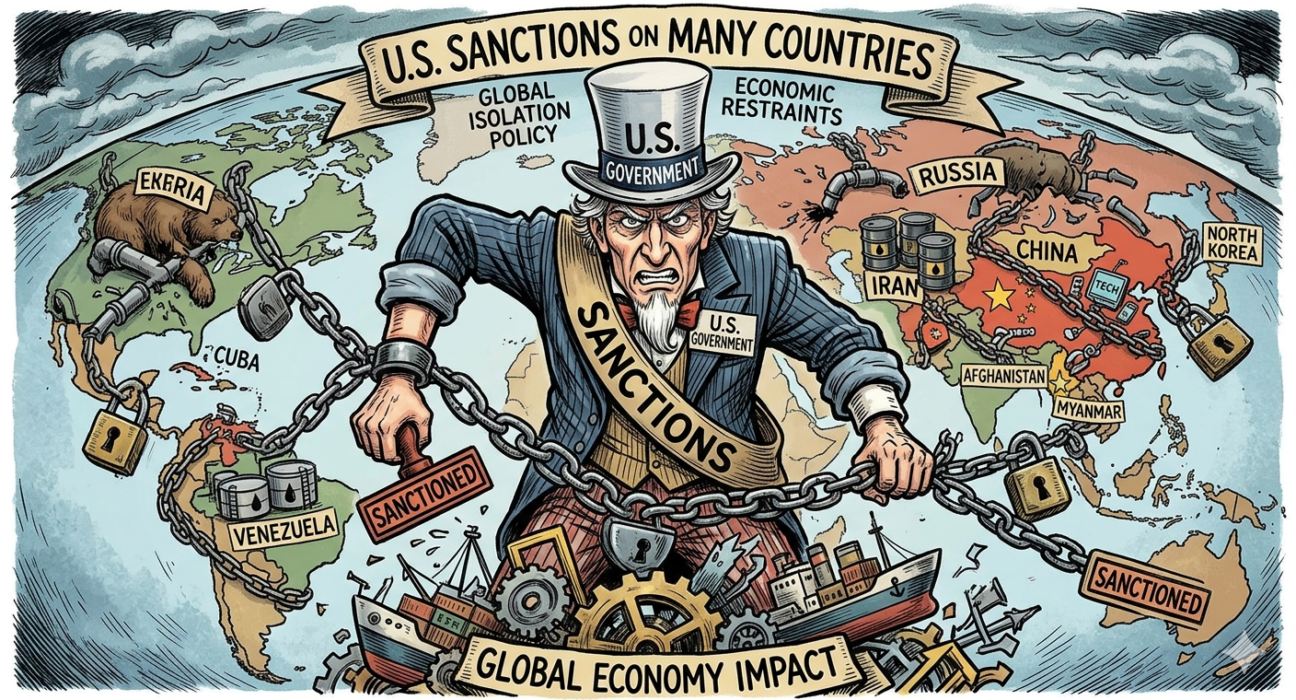
The use of economic sanctions has evolved into the United States’ most formidable non-kinetic weapon, a tool of “financial warfare” that can destabilize an adversary without firing a single shot. This power is not rooted in traditional military might but in the structural dominance of the U.S. dollar, which serves as the lifeblood of global trade. Because the vast majority of international transactions are settled in dollars, the U.S. Treasury Department acts as a global gatekeeper, possessing the unique ability to “unplug” entire nations from the modern financial grid.
At the heart of this arsenal is the Office of Foreign Assets Control (OFAC), which manages the “Specially Designated Nationals” (SDN) list. When a country or individual is placed on this list, they become “financial pariahs.” U.S. banks and citizens are strictly prohibited from engaging with them, effectively freezing any assets held within the American jurisdiction.
For a targeted nation, this often means an immediate halt to foreign investment and a sudden inability to pay for essential imports like food, medicine, or industrial machinery.
The true “nuclear option” of this weapon, however, lies in secondary sanctions. Unlike primary sanctions, which only bind U.S. entities, secondary sanctions target third-party foreign firms. The U.S. essentially issues a global ultimatum: “You can trade with our enemy, or you can trade with the United States, but you cannot do both.” Given that no major international bank or corporation can survive without access to the U.S. market, they almost always comply, resulting in a total global boycott of the sanctioned nation.
Russia currently stands as the most sanctioned nation in history, particularly following the escalation of conflict in the 2020s. The U.S. and its allies took the unprecedented step of freezing hundreds of billions of dollars in Russian central bank reserves and disconnecting major Russian banks from SWIFT, the global financial messaging system. This has forced the Russian economy into a state of “fortress” isolation, drastically raising the cost of living and cutting off the high-tech components required for modern industry.
Iran has faced decades of “maximum pressure” campaigns that have crippled its energy sector, which is the backbone of its economy. By sanctioning anyone who buys Iranian oil, the U.S. has caused the Iranian rial to plummet in value, leading to runaway inflation and a massive loss of purchasing power for its citizens. Despite its vast natural resources, Iran’s inability to access international capital has left its infrastructure aging and its middle class struggling under the weight of an isolated economy.
In the Western Hemisphere, Cuba has endured the longest-running trade embargo in modern history. For over sixty years, U.S. sanctions have restricted everything from tourism to the sale of basic goods. While the Cuban government blames the “blockade” for the island’s economic stagnation and crumbling buildings, the U.S. maintains the measures as a tool for democratic pressure. Regardless of the political debate, the result has been a nation largely frozen in time, disconnected from the rapid technological booms of the 21st century.
Venezuela provides a stark example of how sanctions can accelerate a domestic crisis. Once the wealthiest nation in South America due to its oil reserves, Venezuela saw its production collapse after the U.S. targeted its state-run oil company, PDVSA. By cutting off the regime’s ability to refine gold and export crude to the U.S., the sanctions intensified a humanitarian catastrophe, contributing to one of the largest migration crises in history as millions fled a country where the currency had become effectively worthless.
In East Asia, North Korea remains under a near-total global embargo. Because of its nuclear program, it is subject to some of the strictest UN-backed and U.S.-led sanctions imaginable. These measures don’t just target military goods; they restrict coal exports, seafood, and even the labor of North Korean citizens abroad. This has turned the country into a “hermit kingdom” where the state must rely on elaborate smuggling networks and cyber-heists to acquire the foreign currency needed to sustain the ruling elite.
The humanitarian impact of these weapons is the subject of intense international debate. Critics argue that while sanctions are intended to pressure governments, they often “cripple” the most vulnerable citizens instead. In nations like Syria and Afghanistan, the freezing of state assets and the fear of “over-compliance” by banks have made it difficult for NGOs to deliver aid, leading to shortages of life-saving medical supplies and driving up the price of bread and fuel to levels the average family cannot afford.
As we move through 2026, the global response to this “dollar weapon” is shifting. Nations are increasingly seeking “de-dollarization” developing alternative payment systems like China’s CIPS or using cryptocurrencies to bypass the U.S. Treasury. While the U.S. sanction remains a major weapon for now, its constant use may eventually erode the very dominance that makes it effective, as the world looks for ways to trade outside the reach of the American financial shield.