

Israeli Army Admits ‘Limited Targeted Ground Operations’ in South Lebanon
Military incursion marks new phase in conflict as Hezbollah fires hundreds of rockets and global oil prices soar
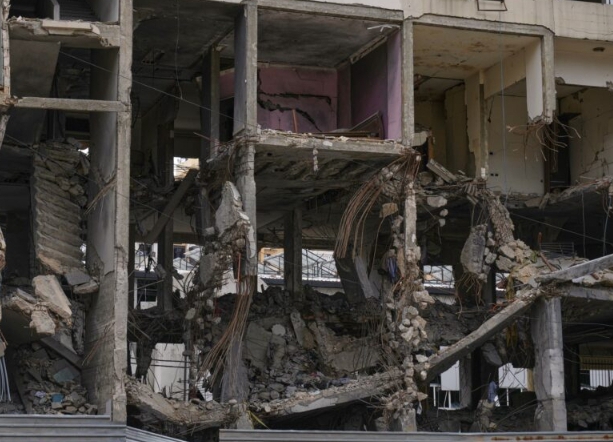
The Israeli military announced on Monday that it has launched “limited and targeted ground operations” against key Hezbollah strongholds in southern Lebanon, significantly expanding the two-week-old conflict that has already drawn in Iran and disrupted global energy markets.
In a statement, the Israel Defense Forces said troops from the 91st Division are operating to “enhance the forward defense area” along the northern border, with operations focused on dismantling terrorist infrastructure and eliminating Hezbollah operatives.
“Prior to the troops’ entry into the area, the IDF conducted strikes using both artillery and the Israeli Air Force against numerous terrorist targets in order to mitigate threats in the operational environment,” the military said.
Military spokesman Lieutenant Colonel Nadav Shoshani told journalists that Hezbollah had recently escalated its activities, with the Iran-backed group “firing hundreds of rockets a day” toward Israel and moving elite Radwan forces toward the border.
Unlike during the 2023-2024 war when tens of thousands of Israelis were evacuated from northern communities, Shoshani indicated that no suchy evacuation is planned this time, suggesting Israel intends to maintain a continuous military presence in border areas.
The ground incursion comes amid a widening conflict that began on March 2, when Hezbollah attacked Israel in response to the killing of Iranian Supreme Leader Ayatollah Ali Khamenei in joint US-Israeli strikes. Since then, Israel and the United States have conducted sustained airstrikes against Iranian targets, while Tehran has effectively closed the Strait of Hormuz—through which approximately one-fifth of the world’s oil normally passes—in retaliation.
The strait’s closure has triggered what analysts describe as “the largest oil supply disruption in history,” with Brent crude prices surging past $105 per barrel on Monday amid mounting supply fears.
Lebanese authorities report that Israeli attacks have now killed 850 people, while more than 830,000 individuals have registered as displaced. Approximately 130,000 are currently staying in collective shelters across Lebanon.
Late Sunday, Israel launched fresh strikes on Beirut’s southern suburbs, a Hezbollah stronghold, continuing an aerial campaign that has accompanied the ground operation.
The escalation has triggered urgent diplomatic efforts, with former US President Donald Trump pressing NATO allies and other nations to form a naval coalition to reopen the Strait of Hormuz. However, responses have been muted—Japan and Australia have declined to send warships, while the UK is considering deploying minesweeping drones rather than manned vessels.
British Prime Minister Keir Starmer discussed the need to reopen the strait with Trump on Sunday, while also speaking with Canadian Prime Minister Mark Carney about the impact on international shipping.
Meanwhile, UN peacekeepers in southern Lebanon reported being fired upon Sunday “likely by non-state armed groups,” and a drone attack targeted the Ali Al Salem airbase in Kuwait, which hosts Italian and US forces.
Despite the ground operation, an Israeli military spokesman said no direct talks were planned with Lebanon to halt the fighting, contradicting a Lebanese official’s statement that Beirut was preparing a negotiation delegation.
The incursion echoes similar Israeli ground operations conducted in 2024 during the previous major war with Hezbollah, though the current conflict’s connection to the broader US-Iran confrontation raises stakes significantly higher than previous cross-border clashes.
As ground troops engage Hezbollah positions in southern Lebanon and the naval standoff continues in the Gulf, the Middle East faces its most severe multi-front crisis in decades—with global economic consequences already being felt at petrol pumps worldwide.