



Naira Tumbles to N1,425/$, Weakest Level in Six Weeks
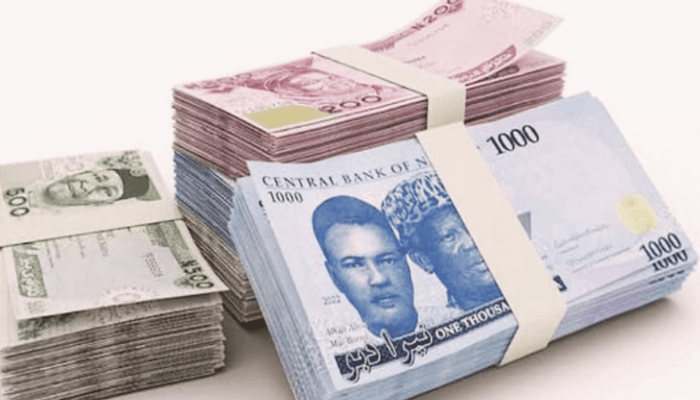
Nigeria’s currency weakened to N1,425 per dollar on Monday, marking its lowest closing level in six weeks amid continued volatility in global financial markets.
Data published on the Central Bank of Nigeria (CBN) website showed the naira declined from N1,398 per dollar recorded on Friday, reflecting sustained pressure on the local currency.
The latest rate represents the weakest level since January 12, 2026, when the naira last traded at N1,425 to the dollar.
Market figures indicate the currency had traded at about N1,337 per dollar on February 17 before gradually depreciating in subsequent trading sessions. Last week, the naira recorded only one day of appreciation, strengthening slightly to N1,382 per dollar on Wednesday from N1,390 per dollar on Tuesday before resuming its downward movement.
Analysts attribute the recent decline to developments in global financial markets, including geopolitical tensions and movements in major currencies that continue to influence capital flows and commodity prices.
Global investors have also been reacting to uncertainties surrounding tensions in the Middle East and fluctuations in oil prices, factors that often affect the performance of oil-dependent economies such as Nigeria.
In international currency markets, the U.S. dollar traded at 157.73 yen and $1.1632 per euro during early Asian trading on Tuesday, although it had retreated slightly from levels recorded the previous day.
The easing followed remarks by former U.S. President Donald Trump suggesting that military operations against Iran were nearing completion and progressing faster than expected.
Iran’s Revolutionary Guards dismissed the claim, but the comments appeared to reduce immediate concerns about a potential disruption to global oil supplies.
The mixed signals prompted investors to adopt a cautious stance, contributing to fluctuations in oil prices and currency markets.
Despite the pressure on the naira, the Central Bank of Nigeria said the country’s improving external reserve position could help cushion the currency against prolonged volatility.
According to the apex bank, Nigeria’s net foreign exchange reserves rose to $34.80 billion at the end of 2025, indicating improved external liquidity.
The country’s gross external reserves also increased to $50.45 billion as of February 2026, supported by stronger oil earnings and increased foreign inflows.
CBN Governor Olayemi Cardoso said ongoing monetary and foreign-exchange reforms are aimed at boosting market confidence and enhancing liquidity in the foreign exchange market.
Projections contained in the CBN’s 2026 Macroeconomic Outlook suggest that Nigeria’s external reserves could rise further to about $51.04 billion this year, largely driven by higher oil revenues.
However, analysts say the naira remains sensitive to global financial developments, particularly shifts in oil prices and movements in major international currencies.