





Why Is Iran Attacking Qatar, United Arab Emirates (UAE), Kuwait, not USA?
By 𝔸bdulrazak Tomiwa
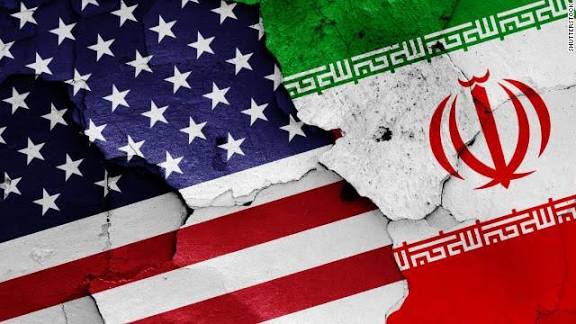
The primary reason Iran targets countries like the UAE and Qatar is that they host the very American military assets Tehran seeks to neutralize.
Qatar’s Al-Udeid Air Base and the UAE’s Al-Dhafra Air Base are the operational nerve centers for U.S. power in the region. By striking these locations, Iran is not attacking the Gulf nations for the sake of conquest, but is attempting to disable the “launchpads” from which U.S. strikes on Iranian soil originate. In the eyes of Iranian military planners, any nation that allows its territory to be used for an attack on Iran becomes a legitimate participant in the conflict.
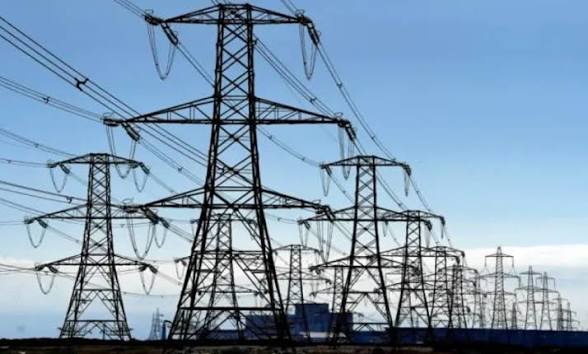
Furthermore, targeting the Gulf states is a form of economic blackmail designed to shock the global system. While a strike on a U.S. city would be a tragedy, a strike on the energy infrastructure of the UAE or Saudi Arabia is a global catastrophe. Because these nations sit atop the world’s most critical oil and gas reserves, any instability there causes immediate spikes in global energy prices. Iran uses this “energy weapon” to force the international community and the U.S. public to pressure Washington into de-escalation to avoid a worldwide economic recession.
Striking regional neighbors also serves as a “warning shot” to the leadership in Abu Dhabi and Doha. Iran’s message is clear: the U.S. security umbrella is a liability, not a shield. By demonstrating that American missile defenses (like the Patriot or THAAD systems) can be bypassed or overwhelmed, Tehran hopes to convince Gulf leaders that their alliance with Washington makes them more vulnerable, not less. The goal is to drive a diplomatic wedge between the U.S. and its partners, encouraging the Gulf states to adopt a more neutral or even conciliatory stance toward Iran.
Geographically, these targets are simply within easier reach. Iran possesses one of the largest ballistic missile and drone inventories in the world, specifically designed for short-to-medium-range theater operations. While hitting the U.S. mainland would require intercontinental capabilities that are technically difficult and politically suicidal to use, the UAE and Qatar are only a few hundred miles away. This allows Iran to use its most reliable and plentiful weaponry to achieve high-impact results with minimal flight time.
There is also the factor of asymmetric deterrence. Iran knows that the U.S. is far more likely to respond with total destruction if American soil is hit. However, if Iran strikes a regional ally or a base on foreign soil, the U.S. response is often more measured to avoid a broader regional war that would engulf its partners. This “gray zone” of conflict allows Iran to retaliate for perceived American aggression while staying just below the threshold of an all-out, regime-ending war with a superpower.
Additionally, targeting the region allows Iran to leverage “Collateral Deterrence.” The Gulf states themselves often become the loudest voices calling for U.S. restraint. When the UAE or Qatar fear they will be the primary battlefield in a U.S.-Iran war, they use their significant diplomatic and financial influence in Washington to lobby against military escalation. By making the neighbors feel the heat, Iran effectively turns America’s own allies into “peace lobbyists” who work to prevent a larger U.S. strike on Iran.
Ultimately, striking the UAE, Qatar, and others is a cold calculation of survival and influence. It transforms the Middle East into a protective moat for Tehran. By ensuring that any conflict with the U.S. results in the immediate destabilization of the world’s most sensitive energy and military hubs, Iran creates a scenario where the cost of attacking them is simply too high for the West to pay. It is a strategy that uses the region’s geography as a shield, ensuring that the “shadow war” remains on everyone’s doorstep but their own.




Great writeup
February 28, 2026I’m enjoying your contents
Abdulsamad Opeyemi Abdulganiy
February 28, 2026Interesting perspective. The analysis highlights how military strategy, geography, and global energy dependence can shape the dynamics of regional conflicts. It shows how interconnected security and economic stability are in the Middle East. 🪖📈📉🛡️