
The Real Story Beneath the Bonanza: Geopolitical Goldmine at costerfield
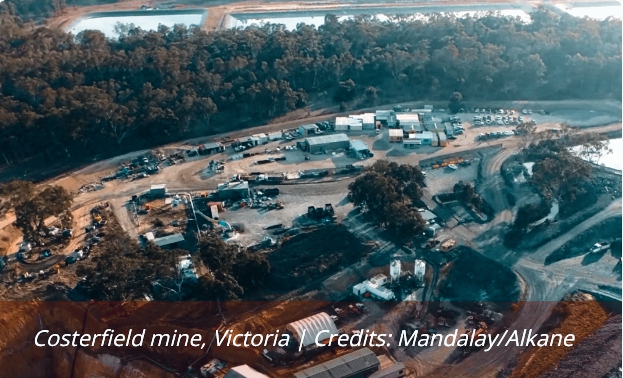
If you want to understand why the mining world is currently fixated on a patch of ground in central Victoria, look no further than the drill results coming out of Alkane Resources’ Costerfield mine. This isn’t just another gold hit; it is a discovery that has effectively handed Alkane the keys to the critical minerals kingdom. The recent findings at the Kendal prospect are, to put it mildly, spectacular. We’re talking about what the industry calls “bonanza grades”—think 267 grams per tonne gold alongside 5.6% antimony over a meaningful width, or even more astonishing, a hit of nearly 43% antimony in another drill hole. To the uninitiated, those numbers look like typos. They aren’t. They represent some of the richest ground currently being delineated anywhere in the Western world.
But what this discovery really illuminates—beyond the eye-watering grades and strategic mineral arithmetic—is something both Fortescue and the ASX’s 2026 performance have been quietly demonstrating: in resources, how you extract matters as much as what you extract.
First, understand the geology. Costerfield isn’t a greenfields miracle; it’s a ghost that refused to stay dead. The area was originally hammered by miners back in the 1800s, but modern exploration by Alkane—especially after its merger with Mandalay Resources last year—has revealed that the old-timers barely scratched the surface. The Kendal system is essentially the antimony-rich upstairs neighbour to the known Youle and Shepherd deposits. While the market was focused on the gold, Alkane’s geologists have uncovered a vein system with 25 individual lodes over 600 metres that is dripping with antimony. In a normal market, that would be a fantastic company-maker. In this market, it’s a geopolitical weapon.
Alkane alkaline Here is the context that every Australian investor needs to grasp: Antimony is nasty, difficult to smelt, and absolutely vital. It’s a critical mineral, essential for flame retardants in everything from your sofa to a fighter jet, and it is a key component in advanced semiconductors and defence applications. For years, the world sleepwalked, relying heavily on China for supply. Alkane That came to a screeching halt in 2024 when Beijing slapped export bans on the stuff, sending prices into the stratosphere with a 250% surge. The United States, which chugs through 25,000 tonnes annually, suddenly found itself looking at a very empty shopping shelf in the East. Enter Alkane Resources. With the Kendal discovery, they haven’t just found a new ore body; they have positioned themselves as the largest Western producer of antimony overnight.
Now layer in the lessons from elsewhere. Fortescue’s lesson is operational: green mining saves money. Their $427 million electrification spend in half a year isn’t environmental theatre—it’s a hedge against diesel volatility, a structural cost advantage Fortescue’s CEO frames in pure margin language. The less diesel, the less exposure. The cleaner the operation, the more predictable the P&L.
The ASX’s lesson is structural: markets reward credible systems. Throughout early 2026, mining stocks stabilized Australia’s record-breaking rally not because investors suddenly loved rocks, but because BHP, Rio, and Fortescue offered something increasingly scarce: audited reserves, visible cash flow, priced risk. In a word, trust.
What makes Alkane matter—what transforms a geological curiosity into a genuine geopolitical asset—is the infrastructure underneath. That processing plant at Costerfield. The regional consolidation with Nagambie Resources, where Alkane is stumping up nearly $30 million to earn into that project precisely because it sits only 40 kilometres down the road. The logic is simple and brilliant: truck the ore from Nagambie to the Costerfield plant, filling the mill and leveraging existing capacity. Managing Director Nic Earner knows the assignment, stating that getting this new mineralisation into the plant is “top priority.” They aren’t wasting time.
Locally, the vibe is cautiously optimistic. Alkane runs a Community Hub and a Reference Sub-Committee, a genuine attempt to do right by the folks around Heathcote. They talk up the “residential” nature of the workforce, meaning the 250-plus employees actually live in the area, spending their wages at the local bakery and footy club rather than flying in and out. For a regional town, a mine that extends its life by a decade or more with this kind of high-grade discovery is usually welcomed as a stabilising force, a guarantee that the local school stays open and the pub stays busy. That’s the careful cultivation of social license—extraction as discipline, not ideology. Community stability as risk management.
What we aren’t seeing yet is the heavy hand of government swooping in with grand announcements, though given the strategic nature of the commodity, it’s likely only a matter of time. When your mine is producing a metal the Pentagon worries about, Canberra tends to take notice.
This brings us to the deeper question, the one that connects a Victorian goldfield to boardrooms in Perth and policy debates in Lagos. Nigeria sits on world-class lithium, cobalt, nickel, manganese—the very minerals powering the energy transition the West is scrambling to secure. Its mining revenues exploded from ₦16 billion to ₦70 billion in two years. Minister Dele Alake’s seven-point reform plan has revoked over 1,600 inactive licenses, boosted enforcement, mandated Community Development Agreements.
But revenue spikes without infrastructure are just exports. Community agreements without operational credibility are just paperwork. Green rhetoric without Fortescue-style electrification arithmetic is just slogans. The Kogi State lithium project, with its Chinese processing plant and 1,000 jobs, evokes the Niger Delta’s oil legacy not because extraction is inherently destructive, but because Nigeria has not yet built what Australia takes for granted: the institutional architecture that turns geology into durable prosperity rather than cyclical curse.
Fortescue saves $818 million annually from 2030 because it invested $6.2 billion upfront. Alkane can process Nagambie ore because it built the plant first. The ASX trusts mining stocks because Australia spent decades constructing the systems—audited reserves, predictable regulation, visible revenues—that make extraction legible to capital.
Alkane’s Managing Director says getting Kendal’s mineralisation into the plant is top priority. That’s the right answer. But the deeper question—for Alkane, for Australia, for Nigeria—is whether the plant exists within a system that can sustain it.
Costerfield’s old-timers barely scratched the surface. Modern exploration revealed what lay beneath. But the real discovery, the one this moment demands we recognise, is that the value isn’t just underground. It’s in the processing plant, the community trust, the regulatory predictability, the electrification that insulates against diesel shocks, the institutional credibility that makes markets lean on mining when uncertainty looms.
Nigeria’s minerals boom could fund that architecture. Or it could repeat oil’s legacy: 40 million liters spilled annually, mangroves destroyed, wealth extracted and exported while communities bear the cost. The difference isn’t geology. It never was.
Australia’s 2026 lesson—extraction stabilises when trusted—is also Nigeria’s test. Alkane’s bonanza is a reminder: the grades matter, but the system matters more. And systems aren’t struck like ore bodies. They’re built, decision by decision, investment by investment, trust by trust.
The question for every government, every company, every community sitting on critical minerals now is simple: What are you building alongside the mine?
Because the market—and history—will eventually ask. And in a world scrambling to secure its supply chains, Alkane just found itself holding a very strong hand. The question is whether they—and we—have built the table to support it.