


Illegal Gold Mining Moves into Residential Osogbo as Warnings Go Unheeded
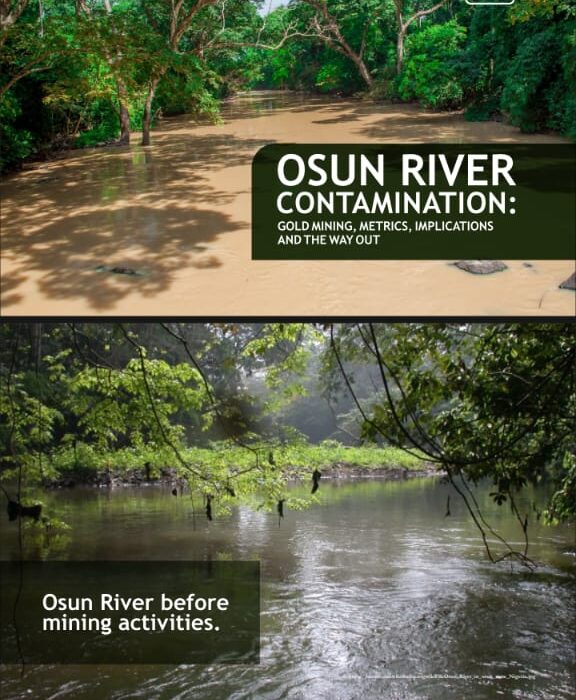
Eighteen days after civic monitors warned that illegal gold mining had expanded from remote forested areas into residential neighbourhoods of Osogbo, no new enforcement actions have been publicly reported, raising fresh questions about surveillance failures, institutional responsibility, and the protection of communities and cultural heritage along the Osun River corridor.
On February 6, civic group Urban Alert issued an alert stating that illegal miners were operating openly within populated communities in Osogbo, including Aberensise Community in Akinlade Estate, the Ilesa Garage area, and Ifesowapo Community in Ajigun along the Owo-Eba–Ilesa Road. The group warned that the activity posed risks to buildings, farmland, water sources, and public safety, and noted that satellite imagery showed mining activity dangerously close to the Osun-Osogbo Sacred Grove, a UNESCO World Heritage Site.
As of February 24, neither the Osun State Government nor federal security agencies have announced new site closures, arrests, or environmental assessments specifically linked to the February 6 warning.
Illegal gold mining has plagued Osun State for over a decade, largely concentrated in rural communities such as Iperindo, Itagunmodi, Araromi, Iponda, Ibala, and Idooko.
What is new, residents say, is the migration of operations into residential Osogbo, where excavations now occur close to homes, roads, and water channels.
Residents interviewed by Urban Alert reported intimidation by groups of miners, structural cracks in nearby buildings, destruction of farmland, and fear of confronting operators who allegedly claim protection from influential individuals and traditional institutions.
These claims could not be independently verified, but they underscore a perception of impunity that residents say discourages reporting.
Urban Alert has repeatedly warned that illegal artisanal mining has contaminated the Osun River with mercury, lead, and cyanide. In 2021, the group released laboratory results confirming the presence of these heavy metals. Since then, it has called for updated, independently supervised water quality assessments, arguing that post-2019 pollution drivers have not been adequately evaluated.
In December 2025, the group cautioned residents against consuming untreated water from the river, stating that public claims declaring the water “safe” were based on studies that did not assess drinking-water thresholds or potable use.
Despite these warnings, no new publicly released water quality data for the Osun River has been announced.
A January 2026 investigation documented widespread child labour in Osun’s gold mining communities, with children as young as 11 engaged in ore hauling, rock crushing, and mercury-exposed washing activities. Health experts warned of chronic respiratory illness from silica dust, neurological damage from mercury exposure, and long-term organ failure risks.
According to the 2022 Nigeria Child Labour Survey, over 26 million children aged 5 to 17 are engaged in child labour nationwide, with mining classified among the most hazardous sectors.
While Osun State authorities have declared a “war” on illegal mining and maintain task forces, officials acknowledge that mining regulation falls under federal jurisdiction. Enforcement actions, residents say, are often sporadic — with sites raided, equipment destroyed, and miners returning weeks later.
One recurring enforcement pattern has drawn scrutiny: the burning of seized equipment rather than its forensic tracing or long-term confiscation. Anti-mining experts note that while destruction disrupts operations temporarily, it may also erase ownership trails that could identify financiers and supply networks.
Urban Alert has called for sealing and removal of equipment, sustained surveillance, and transparent prosecutions rather than short-term raids.
In February 2026, the Federal Government announced the recovery of over 90 mining sites nationwide, with more than 300 illegal miners arrested and several convictions secured. Mining marshals have been established in collaboration with security agencies.
However, it remains unclear whether any of these recoveries addressed the specific residential hotspots flagged in Osogbo on February 6.
Unanswered questions still linger weeks after Urban Alert’s latest warning, key questions remain
1. Why were no emergency security deployments announced for residential Osogbo?
2. Why has no updated Osun River water quality assessment been made public?
3. Why are equipment destruction raids prioritised over network-level investigations?
4. What protective measures exist for residents reporting intimidation?
5. What buffer safeguards are in place for the Osun-Osogbo Sacred Grove?
Urban Alert argues that without sustained surveillance, prosecutions, and dismantling of enabling networks, illegal mining will continue to shift locations rather than cease.
“Interventions must match the scale and brazenness of the threat,” the group said.
For now, illegal mining in Osun appears less a hidden crime than a relocating one — moving from forests into neighbourhoods, from pits into rivers, and from ignored warnings into unanswered accountability gaps.