


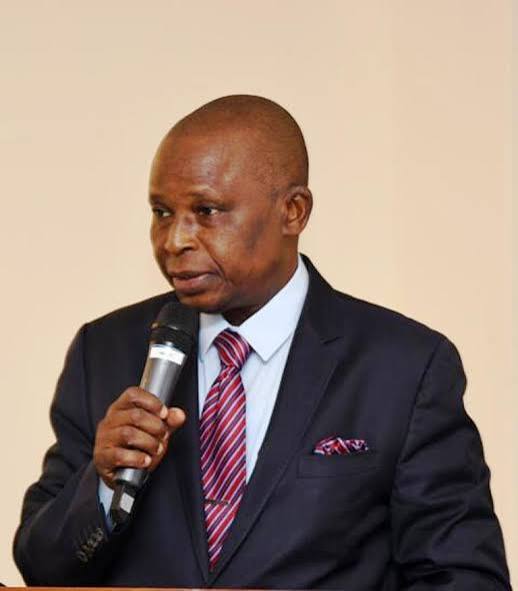
Prince Lateef Fagbemi The Quiet Law Machine
By Bamidele Atoyebi
In the bustling theater of Nigerian politics, where headlines are often dominated by the loud and the flamboyant, a different kind of power moves through the corridors of the Tinubu administration. Lateef Fagbemi, the Attorney General of the Federation (AGF) and Minister of Justice, has emerged as the quiet architect of the government’s legal stability. Unlike the high-decibel visibility of some of his cabinet peers, Fagbemi operates with a measured, cerebral calm that belies the monumental weight of the victories he has secured.
Fagbemi is not a newcomer to the rigors of the law; he is a seasoned veteran whose name was written in gold long before his political appointment. His law firm stands as one of the most prestigious in the country, a place where the pursuit of justice is handled with surgical precision. To mention the top five legal practitioners in Nigeria is to inevitably include Fagbemi, a man whose professional reputation is built on a foundation of intellectual depth and unwavering integrity.
What sets Fagbemi apart is a rare sense of sacrifice that transcends personal ambition. Following the passing of his father, he was the rightful heir to the throne in Ijagbo, destined to wear the crown of his ancestors. However, recognizing the gravity of his national assignment, he made the selfless decision to step aside, installing another to lead the community so he could focus entirely on his role as the nation’s chief law officer. This act speaks volumes about a man who values duty over the allure of traditional royalty.
The President’s choice of Fagbemi was not incidental but a strategic move to bring a high level of cerebral engagement to the Ministry of Justice. While others might chase the limelight of television cameras, Fagbemi is often found deep in the trenches of legal research and strategy. He is described by those who know his work as a “man of few words” but immense action, a leader who understands that in the world of law, results are the only currency that truly matters.
In his first year alone (2023–2024), the Federal Ministry of Justice secured 250 convictions. This included 160 for various criminal offenses, 87 for terrorism cases, and three novel convictions targeting the radicalization of children and violence against women.
Fagbemi’s tenure has also been defined by a relentless pursuit of fiscal accountability and the recovery of national assets. In April 2024, the ministry concluded a high-stakes negotiation with Glencore International A.G., resulting in a $50 million USD penalty and compensation for the company’s past activities in Nigeria. Additionally, in February 2024, the AGF oversaw the signing of an asset-sharing agreement with the Bailiwick of Jersey, facilitating the return of £2,125,944 in proceeds of corruption.
Since his appointment, Prince Lateef Fagbemi, SAN, has redefined the role of the Attorney-General by securing landmark victories that protect both Nigeria’s treasury and its constitutional integrity. His most recent high-profile success in February 2026 involved defeating the UK-based firm European Dynamics in an international arbitration. By proving the firm failed to deliver a functional e-procurement system, Fagbemi saved Nigeria $6.2 million and made the country the first African nation to successfully beat this specific company in court.
Beyond the recent tech dispute, Fagbemi successfully closed the infamous P&ID saga in the UK courts, recovering a $200 million bond plus $10 million in legal costs. This victory officially ended a decade-long threat that could have cost Nigeria over $11 billion in fraudulent debt. He has consistently moved to block “predatory litigation,” most notably by intervening in the £15 billion Petro Union case to prevent a massive payout based on forged documents from the 1990s.
On the domestic front, his crowning achievement remains the July 2024 Supreme Court victory which granted full financial autonomy to Nigeria’s 774 Local Governments. By personally arguing the case against the 36 State Governors, he ensured that federal allocations are now paid directly to local councils. Together, these international and domestic wins demonstrate a shift toward a more aggressive, “defense-first” legal strategy that prioritizes national sovereignty and fiscal accountability.
The relationship between the President and his Attorney General is built on a foundation of profound respect and trust. Because of Fagbemi’s competence, the President is afforded the luxury of “sleeping with both eyes closed” regarding legal matters. When a file is sent to the AGF’s desk, there is a collective confidence within the presidency that the matter will be handled with absolute professionalism and that the results will favor the justice of the land and the integrity of the state.
This era of the AGF’s office marks a sharp departure from the past. History recalls previous holders of the office who were often embroiled in public spats, the abuse of power, or the constant pursuit of media attention. Fagbemi has effectively “cleansed” the office of such distractions. He does not use his position to settle scores or to dominate the news cycle; instead, he uses it to protect the legal interests of the government and the rights of the Nigerian people.
His humble and gentle demeanor often masks the “master of law” that he truly is. He knows his onions, and his mastery of legal precedent ensures that the government’s actions are grounded in constitutionality. This silent efficiency has made him an indispensable pillar of the Tinubu administration, a man who achieves more in the quietude of his chambers than many do through the megaphone of public relations.
Ultimately, the story of Lateef Fagbemi is a testament to the power of silent achievement. He is a man of integrity who refuses to let any stain touch his legal career or his family lineage. As he continues to secure high-level victories and streamline the nation’s justice system, he remains a shining example of what it means to serve with excellence, proving that the most impactful voices are often those that speak through the merit of their work.
Bamidele Atoyebi is the Convener of BAT Ideological Group, National Coordinator of Accountability and Policy Monitoring and a publisher at Unfiltered and Mining Reporting