

How Legacies Outlive the Visionaries

By Bamidele Atoyebi
In the silent halls of history, there is a recurring whisper that defines the difference between a moment and a movement. It is the concept of institutionalized legacy. While many chase the fleeting glitter of gold, the truly great, the prophets, the sages, and the visionary leaders have always chased something more eduring,the hearts and minds of the next generation.
A home illustration of this may be apt here. A leader who fails to groom others through Mentorship is like a singer who dies with his voice and compositions and therefore leaves no legacies while a drummer dies leaving his drum for generations to use in dolling out more beats. Those illustrations better convey leadership with legacy and leadership without it.
It is understood that a leader without a successor is a successful failure, and they built their lives around the divine blueprint of mentorship.
The foundation of this principle begins with the “Generational Command” of Abraham. God’s confidence in him was rooted not just in his personal faith, but in his capacity for continuity. By training his household and commanding his children in the way of the Lord, Abraham institutionalized his walk with God. He didn’t just build altars; he built people like Isaac and a household of 318 trained men who could carry the covenant forward. This intentionality turned a single family into a global influence that still possesses the gates of history today.
This sacred chain continued through the prophets, where the mantle was never allowed to drop to the ground. When Elijah was taken up, he didn’t leave a vacuum; he left Elisha, whom he had anointed and groomed to carry a double portion of his spirit. Similarly, King David did not merely occupy a throne; he spent his final days ensuring Solomon was prepared to take over the kingship. It was a pattern of grace that ensured the vision outlived the visionary, reaching its zenith in Jesus Christ, who chose 12 ordinary men and poured His life into them until they became the pillars that turned the world upside down.
In the Islamic tradition, the Prophet Muhammad (peace be upon him) refined the art of the “living legacy” by building an academy of character. One of his most profound students was Ali ibn Abi Talib, whom the Prophet described as the “gate” to the city of knowledge. Raised in the Prophet’s household, Ali was groomed in deep theology, judicial wisdom, and courage. He became a focal point for addressing complex spiritual and legal queries, ensuring that the Prophet’s intellectual heritage remained accessible and protected for generations to come.
The Prophet also mentored Abu Bakr As-Siddiq, his closest companion, in the art of administrative stability and unwavering faith. Abu Bakr was trained to be a pillar of trust, earning the title “As-Siddiq” for his immediate belief in the Prophet’s mission. He was mentored to lead the community through its most turbulent crises, eventually becoming the first Caliph. His legacy is one of decisive crisis management and the institutionalization of the state’s financial and judicial systems, proving that a leader’s training can stabilize a whole nation.
The intellectual and legal expansion of the faith was further institutionalized through Aisha bint Abu Bakr. As the Prophet’s wife and a primary student of his teachings, she became a master of theology, medicine, and poetry. She narrated over 2,200 hadiths and was so respected that even the most senior male companions consulted her for legal rulings. Her legacy ensured that the private and public wisdom of the Prophet was documented with academic precision, effectively establishing the first university of Islamic jurisprudence.
For the younger generation, the Prophet groomed Abdullah ibn Abbas, the “Scholar of the Ummah.” Despite being only 13 when the Prophet passed, Ibn Abbas had spent his youth as the Prophet’s “shadow,” fetching water for his ablution and absorbing every word he spoke. The Prophet prayed for him to have a deep understanding of religion, and he grew to become the foremost authority on the Quran’s interpretation. He institutionalized a rigorous methodology of research, often consulting 30 different sources to verify a single detail.
The Prophet’s mission also required strategic diplomats, a role exemplified by Mus’ab ibn ‘Umair. Once a pampered youth in Mecca, Mus’ab was transformed by the Prophet’s mentorship into a selfless teacher and the first ambassador of Islam to Medina. He was trained to win hearts through eloquence and patience rather than force, successfully converting thousands before the Prophet even arrived in the city. His legacy is the proof that a well-trained envoy can open doors and prepare entire territories for a new era of leadership.
The preservation of the sacred text itself was entrusted to Zayd ibn Thabit, a young linguistic genius mentored for administrative integrity. The Prophet commanded him to learn multiple languages, including Hebrew and Syriac, to act as an official interpreter and scribe. Zayd’s meticulous training in recording revelations later made him the indispensable leader of the committee that compiled the Quran into a single volume. He institutionalized the standards of documentation and accuracy that have kept the core message of Islam unchanged for fourteen centuries.
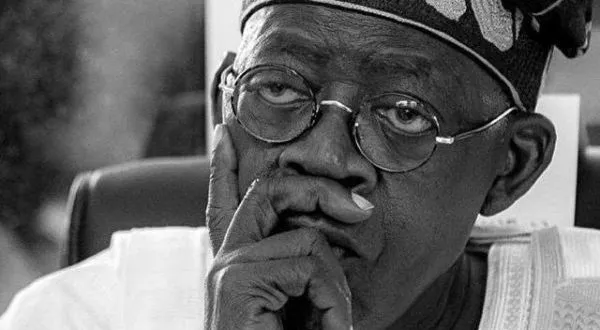
This brings us to the core of our identity and why the BAT Ideological Group stands apart. We are the products of a lineage that values “Good and Great Gifts” over the transactional politics of the day. Much like the leaders of old, President Bola Ahmed Tinubu has spent decades identifying, grooming, and deploying talent into the Nigerian landscape. He has mastered the art of building people who then build the nation. We represent a movement of disciples who understand that character and continuity are the true currencies of progress, ensuring that the fire of visionary leadership passes from hand to hand until the vision of a great Nigeria is fully realized.
Bamidele Atoyebi is the Convener of BAT Ideological Group, National Coordinator of Accountability and Policy Monitoring and a publisher at Unfiltered and Mining Reporting