Atiku Condemns Plot by ICPC to Arrest El-Rufai as Partisanship
by Momodu Favour
Former Vice-President Atiku Abubakar has accused the Independent Corrupt Practices and Other Related Offences Commission (ICPC) of acting in a partisan manner following what he described as a failed attempt to arrest former Kaduna State governor, Nasir El-Rufai, at an airport upon his return to the country.
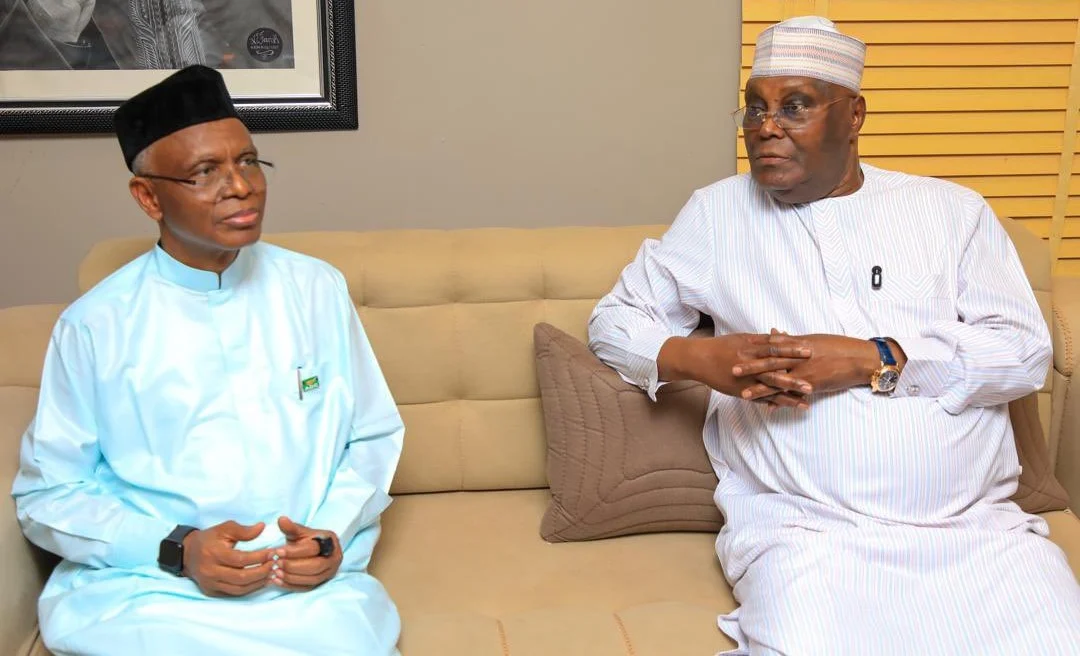
In a post shared on his verified X handle on Friday, Atiku said he paid a solidarity visit to El-Rufai after the incident, which he claimed occurred shortly after the former governor arrived in Nigeria.
“Last night, I paid a solidarity visit to the former Governor of Kaduna State and stalwart of the African Democratic Congress (ADC), Mallam Nasir El-Rufai, following the failed attempt by the partisan ICPC to arrest him at the airport upon his arrival in the country,” Atiku wrote.
The former vice-president also shared photographs from the visit, showing both men in a closed-door meeting at a private residence. He described the alleged move as troubling and warned against what he termed the misuse of anti-corruption agencies for political purposes.
As of the time of filing this report, the ICPC had not issued any official statement confirming or denying the allegation.
The development comes amid heightened political tension following El-Rufai’s recent political engagements and his association with the ADC.
The former governor has in recent weeks openly criticised federal authorities and hinted at possible pressure from security agencies over his political stance.
Reports circulating on Thursday indicated that security operatives attempted to stop him at the airport shortly after his arrival in the country.
According to his aides, the operatives allegedly failed to present an arrest warrant, resulting in a brief confrontation before he was eventually allowed to leave the terminal.
Neither the ICPC nor any other security agency has officially confirmed involvement in the incident.
Political observers say the episode could further inflame tensions within opposition circles and deepen concerns about the relationship between anti-graft agencies and political actors ahead of the 2027 general elections.