

NAFDAC Confiscates Fake Malaria Drugs, Cosmetics Worth N3bn
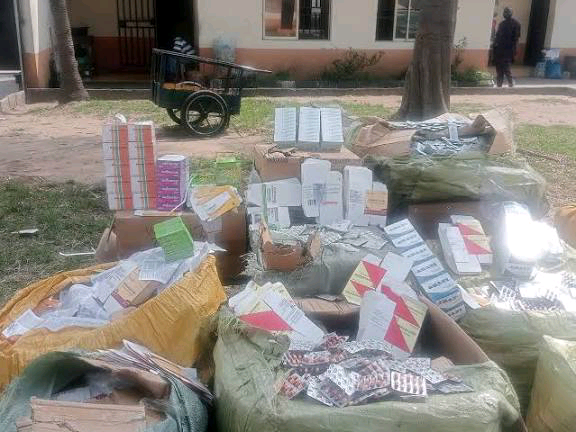
The National Agency for Food and Drug Administration and Control has seized more than 10 million doses of counterfeit malaria drugs and cosmetic products estimated at N3 billion during an operation at the Trade Fair Market in Lagos.
The Director of Investigation and Enforcement at NAFDAC, Martin Iluyomade, disclosed the development to journalists on Monday at the agency’s office in Apapa.
He said the operation followed actionable intelligence received on February 3.
Iluyomade revealed that the counterfeit products included anti-malaria medicines, injections used for the treatment of cerebral malaria, antibiotics, postinor and anagin products that have been prohibited in Nigeria for nearly 15 years, among others.
He explained that the fake drugs and cosmetics were recovered from a three-storey building disguised as a spare parts warehouse, from which eight truckloads of illegal products were evacuated.
Four suspects were arrested during the operation, while investigations are ongoing.
Iluyomade described the raid as one of the agency’s most significant recent breakthroughs.
“What we saw in the warehouse is one of the major discoveries by the agency lately. They have perfected the act of hiding drugs in unconventional places where you would never expect to find such products,” he said.
He added that the scale of the operation was alarming, noting that large quantities of life-saving medicines were found alongside products that had long been banned by the agency.
“These drugs were cloned in such a way that it was extremely difficult for authorised manufacturers to distinguish between the original and the fake versions, which is very disturbing,” Iluyomade said.
He warned that the seized products posed a serious threat to public health, stressing that the volume recovered could have resulted in the deaths of millions of Nigerians if allowed to circulate.
“This is not just a major breakthrough for NAFDAC but for Nigerians, because what we seized from that warehouse can kill three million Nigerians if it enters the market,” he said.
Iluyomade reaffirmed the agency’s commitment to eliminating counterfeit and substandard products from the country, pledging continued action against organised syndicates involved in the illegal trade.
“We have zero tolerance for fake and counterfeit drugs. With the support of Nigerians, the agency will dismantle these networks that are endangering lives,” he said.
He also urged major drug distributors to source medicines only from NAFDAC-accredited manufacturers and advised members of the public to remain vigilant and report suspicious activities to the nearest NAFDAC office nationwide.