

Lai Mohammed Reminisces Buhari-Tinubu Alliance, Says 2015 PDP Defeat Was Inevitable
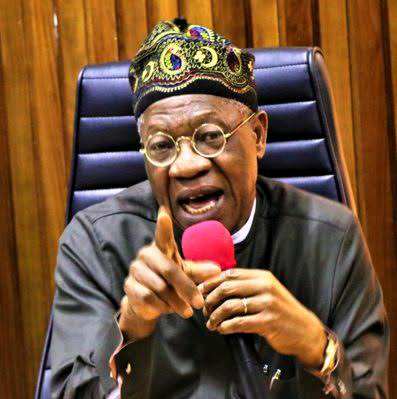
Former Minister of Information, Lai Mohammed, has detailed the political journey that transformed Nigeria’s opposition from a weakened regional force into a dominant national coalition, crediting former President Muhammadu Buhari and President Bola Ahmed Tinubu (Asiwaju) with playing decisive roles in the process that culminated in the All Progressives Congress (APC) victory in 2015.
Speaking while reflecting on his newly released book, Headlines and Soundbites: Media Moments That Defined an Administration, Mohammed said the alliance between Buhari and Tinubu remains central to Nigeria’s democratic history and will “always be given a place of honour” when the story of the country’s democracy is written.
Mohammed traced the roots of the alliance to the aftermath of the 2003 general elections, when the Alliance for Democracy (AD) lost control of five of its six South-West states, retaining only Lagos.
He said the setback nearly wiped out the party and weakened its parliamentary presence, setting the stage for years of political realignment.
By 2005, Mohammed noted, internal crises within the Peoples Democratic Party (PDP), particularly between then Vice President Atiku Abubakar and President Olusegun Obasanjo, opened the door for negotiations between Atiku’s supporters and Tinubu’s political bloc.
This led to an alliance that contested the 2007 elections under a rebranded platform, though the results were disappointing.
“Atiku was our presidential candidate in 2007, but we didn’t even come second; we came third,” Mohammed said, adding that the party emerged from the election with only one sitting governor, Babatunde Fashola of Lagos State.
He explained that the party’s gradual recovery began through court victories rather than the ballot, citing the reclamation of Edo, Ekiti, and Osun states through judicial rulings.
“By the end of 2010, from one state, we had grown to four,” he said.
The former minister said the party gained further momentum in the 2011 elections, winning additional states such as Oyo and Ogun, and becoming a more vocal and visible opposition, despite still controlling fewer states than the PDP. He added that he served as the party’s National Publicity Secretary during this period.
Mohammed also recounted failed attempts at forming a broader opposition alliance ahead of the 2011 elections involving the Action Congress of Nigeria (ACN) and the Congress for Progressive Change (CPC), on which Buhari ran. He said disagreements over the choice of a vice-presidential candidate, particularly Buhari’s preference for Pastor Tunde Bakare, stalled the merger talks.
“We were even willing to contest under the CPC platform and colours,” Mohammed said. “We asked for just one thing, and it was not granted. We couldn’t explain to our people that we had sold out.”
According to Mohammed, renewed merger talks resumed by 2012, eventually leading to the formation of the APC in 2013. He said by the time of the 2015 elections, the political forces aligned against the PDP were overwhelming.
“By 2015, it was clear the PDP could not survive,” he said, citing the merger of ACN, CPC, and other parties, as well as the defection of five PDP governors from Rivers, Kano, Sokoto, Adamawa, and Kwara states.
Mohammed said he had long believed Tinubu would emerge as a national leader, describing him as a strategic thinker with a long-term vision for Nigeria. “He doesn’t think in terms of four or eight years. He thinks long-term and understands Nigerian politics deeply,” he said.
On Buhari’s chances in 2015, Mohammed said absolute predictions were impossible in Nigerian politics but stressed that the scale of opposition unity made the outcome clearer than in previous elections.
The former minister also spoke about Buhari’s personal regard for him, recalling that the former president once expressed admiration for his political sacrifices and loyalty to Tinubu, even referencing them in a private letter years before they became close allies.
Mohammed said his new book was inspired by the need to document governance experiences after leaving office, adding that the newspaper-style cover was deliberately designed to reflect the era of classic Nigerian journalism. “It was inspired by the old Daily Times,” he said. “If I was going to talk about headlines, the cover had to reflect that history.”