


FG Raises 2026 Housing Ministry Budget to N105bn, Critics Dismiss Increase as Tokenism
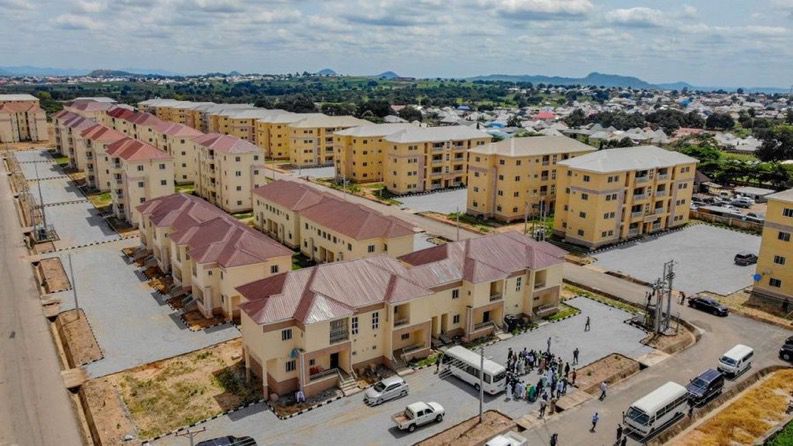
The Federal Government has proposed a seven per cent increase in the budgetary allocation to the Federal Ministry of Housing and Urban Development in the 2026 Appropriation Bill, raising it from N98.13bn in 2025 to N105bn, in a move aimed at advancing housing delivery, urban renewal and infrastructure development across the country, budget documents released in Abuja show.
The proposed allocation, presented as part of the 2026 national budget, is designed to fund housing schemes under the Renewed Hope Agenda, renewable energy initiatives, road projects and institutional reforms within the housing sector.
However, housing advocates and ministry insiders argue that the increase is marginal and insufficient to tackle Nigeria’s deepening housing deficit.
A breakdown of the budget indicates that N8.05bn has been set aside for the construction of 20,000 housing units under the Renewed Hope Agenda Housing Scheme, while N3.74bn is earmarked for ongoing projects under the National Housing Programme.
An additional N2.1bn is allocated for prototype housing developments in Suleja, Niger State, and Ikorodu, Lagos State.
Federal infrastructure projects also feature prominently, with N840m allocated for secretariat projects in 11 states and over N2.3bn directed toward road construction and rehabilitation in states including Kaduna, Sokoto, Ekiti and Borno.
Renewable energy projects, largely focused on solar street lighting, received N700m for Kaduna, N140m for Sokoto and further allocations across 14 other states. Funds were also provided for urban renewal, slum upgrading, digitalisation of housing and land records, capacity development and legal case prosecution.
Despite these provisions, stakeholders insist that the proposed funding does not reflect the scale of Nigeria’s housing challenges. The Executive Director of the Housing Development Advocacy Network, Festus Adebayo, criticised the budget, saying the increase offers little reassurance.
“Comparing the budget of last year to this year is nothing,” Adebayo said.
“Why is that? Because last year, the budget was lower than the previous year, and then we called on the legislative arm of the government to increase the budget, and it was increased last year. But how much of that budget was released to the ministry, and to what extent was it funded? The evidence before us confirmed that the budget was not even funded up to 50 per cent.”
He argued that repeated underfunding has weakened public housing efforts and pushed the burden onto private developers.
“The government should show more seriousness by allocating more to social housing, so that people who need houses can get them. It is just on paper. This is how they write it every year.
The political will of the government is not there,” he said.
Adebayo added that rising construction costs, land prices and high interest rates have worsened affordability, forcing many residents to relocate to city outskirts
“Towards the end of 2025, the prices of rent changed to the extent that people could no longer afford the rent. These people have started going to the outskirts of the city,” he stated, calling for an emergency declaration in the housing sector.
He further noted that rent now consumes more than half of household income for many families, contributing to overcrowding and homelessness. “The situation has reached a level where we have to declare 0.1 per cent of the entire budget to housing,” he said.
An official of the Federal Ministry of Housing and Urban Development, who spoke on condition of anonymity due to lack of authorisation, also expressed concern over the size of the allocation, noting that earlier commitments to significantly scale up housing funding have not materialised.
“Towards the end of 2023, Vice President Shettima was speaking to journalists, and he said that Nigeria needed N20tn to offset its housing deficit,” the official said.
“A year later, in 2024, the minister had conversations with three committees. So they came together and agreed to support the push by the ministry for a N500bn annual budget to be able to make meaningful improvements in the sector in terms of housing delivery.”
According to the official, the agreement failed to reflect in subsequent budgets.
“Unfortunately, in 2025, when the budget was released, we saw that the ministry got less than N100bn… We thought that it would be better in 2026, but unfortunately, it’s just N105bn,” he said, adding that the proposed allocation represents less than one per cent of the over N40tn national budget.
Nigeria continues to face a severe housing shortage, particularly in urban centres where high property prices and rents have pushed low-income earners farther from their workplaces, increasing transportation costs and pressure on household finances.
Stakeholders warn that without a substantial shift in funding priorities and political commitment, the housing deficit is likely to persist despite incremental budget increases.