
Niger Junta Accuses France, Benin, Côte d’Ivoire Attack at Niamey Airport Stokes Tension
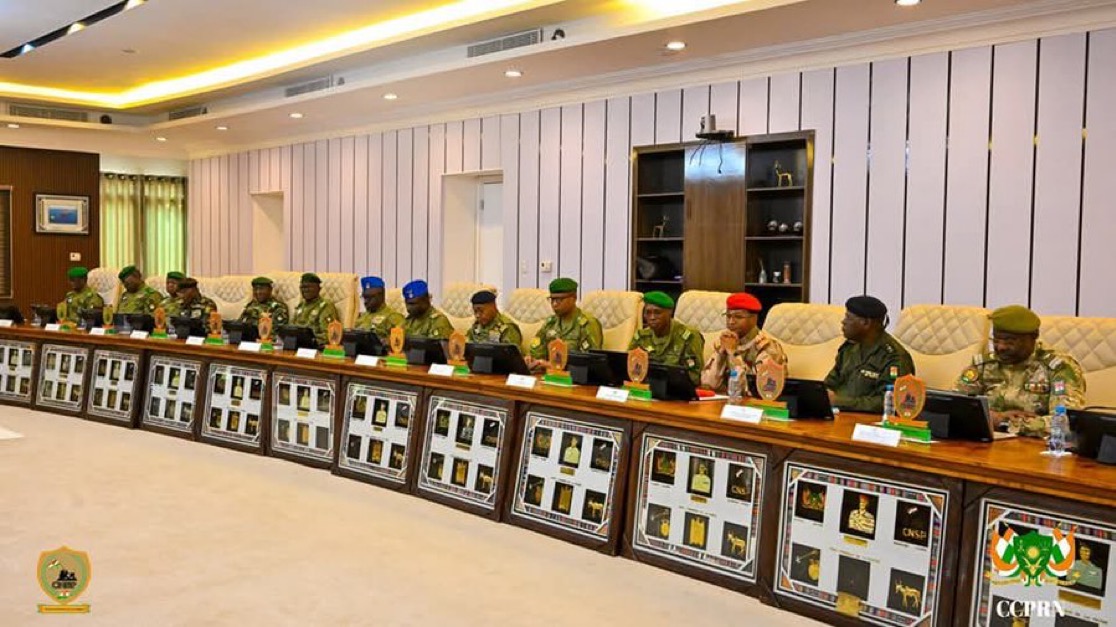
Security tensions in the Sahel escalated sharply after a coordinated overnight attack on Diori Hamani International Airport in Niamey, Niger’s capital, prompting the country’s military leadership to accuse France, Benin, and Côte d’Ivoire of sponsoring the assault.
The attack, which occurred between the night of 28 and 29 January, targeted one of Niger’s most sensitive strategic facilities and underscored growing concerns over the expanding operational reach of armed groups in the region.
According to security sources, the assailants believed to be dozens of fighters arrived on motorcycles, switching off their headlights to evade detection as they infiltrated the city.
The attackers launched a multi-hour assault on military installations located within and around the civilian airport, using mortars, drones, and small arms.
Targets reportedly included drone platforms, air defence systems, and aircraft belonging to Air Côte d’Ivoire and ASKY Airlines, raising fears of both military and civilian aviation disruption.
The Nigerien Defence and Security Forces, supported by personnel from the Russian African Corps, responded swiftly and repelled the attackers after intense exchanges. Official figures indicate that 20 attackers were killed, 11 arrested, and several motorcycles destroyed or seized.
Four security personnel sustained injuries, while no civilian casualties were recorded.
The incident drew heightened alarm due to the airport’s proximity to the presidential residence and its strategic importance. The site hosts an active air force base, a newly constructed drone facility, and the headquarters of a tri-national counterterrorism force involving Niger, Mali, and Burkina Faso the three core members of the Alliance of Sahel States (AES).
Beyond its military significance, the airport reportedly serves as a storage point for uranium awaiting export, placing it at the centre of an ongoing dispute between Niger’s military government and French nuclear company Orano, which has accused Niger of expropriating uranium shipments following the breakdown of relations with Paris.
In a strongly worded address following the attack, Niger’s junta leader, General Abdourahamane Tiani, accused France, Benin, and Côte d’Ivoire of backing the assailants.
“We have heard enough barking from the sponsors of these mercenaries,” Tiani declared. “They too will soon hear from us.”
The military leader further alleged that the attack was linked to foreign opposition to the purported transfer of 1,000 tonnes of uranium to Russia, a claim that has not been independently verified.
The accusations, issued without publicly presenting evidence, have raised concerns among analysts that diplomatic tensions could worsen at a time when regional security cooperation is already strained.
Security experts have noted similarities between the Niamey assault and the September 2024 attack on Modibbo Keita International Airport in Bamako, Mali, which was claimed by the al-Qaeda-linked Jama’at Nusrat al-Islam wal-Muslimin (JNIM).
However, no group has claimed responsibility for the Niamey attack, and certain tactical differences particularly the use of drones and the target selection have complicated attribution.
The attack has exposed critical vulnerabilities in urban perimeter security, highlighting how mobile, lightly armed fighters can strike high-value targets in capital cities.
It also underscores persistent gaps in intelligence sharing and regional coordination, even among allied Sahelian states.
Analysts warn that the swift public attribution of blame to foreign governments risks inflaming regional rivalries and undermining diplomatic channels needed to address cross-border security threats.
Zagazola noted that the Niamey airport assault may signal a new phase in the boldness and sophistication of armed groups operating in the Sahel, capable of probing state defences while exploiting political and geopolitical tensions.
As Niger’s authorities move to reinforce security around critical infrastructure, they face the parallel challenge of navigating sensitive international disputes particularly those linked to uranium resources, foreign military partnerships, and allegations of external interference at a time when the Sahel remains one of the world’s most volatile security theatres.