

Awolowo’s Political Spirit Alive in Tinubu’s Governance, Says BAT Convener
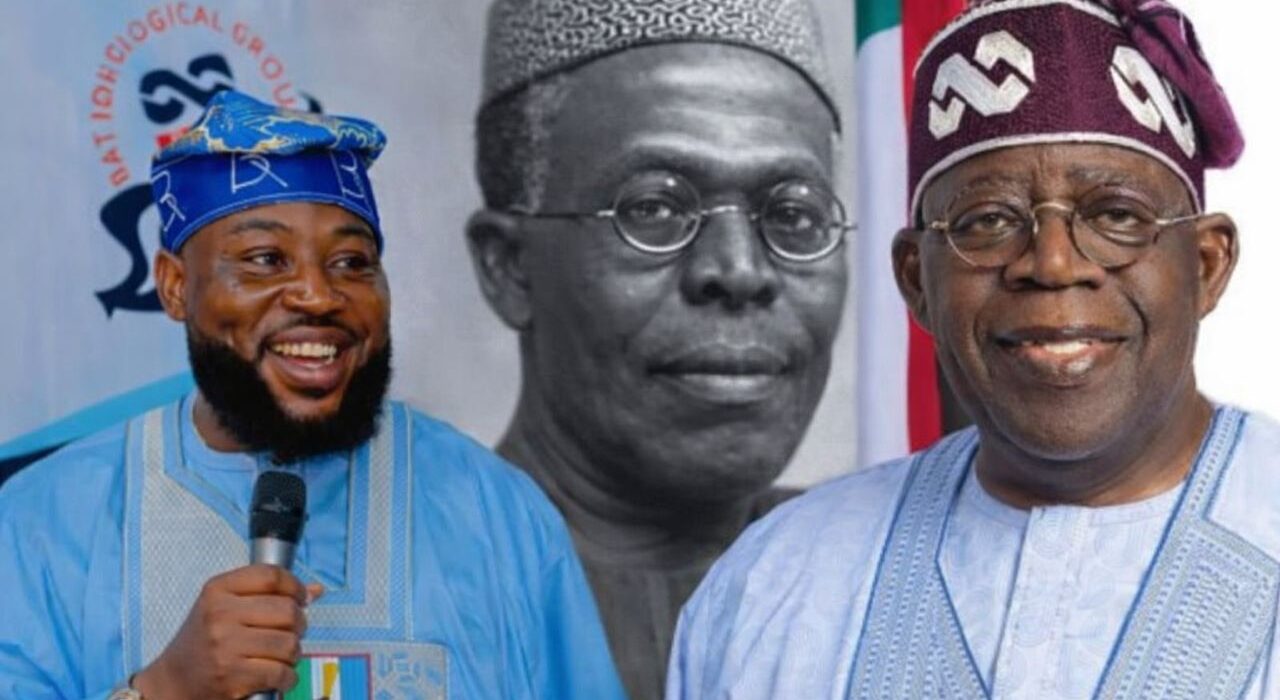
Convener of the BAT Ideological Group, Comrade Bamidele Atoyebi, has described President Bola Ahmed Tinubu as the political and ideological successor of the late Chief Obafemi Awolowo, arguing that Awolowo’s democratic socialist principles continue to shape Nigeria’s governance through Tinubu’s leadership.
Atoyebi, who is also the National Coordinator of Accountability and Policy Monitoring, made the assertion in a statement titled “Sage, Pa Awolowo Lives On,” where he maintained that it is inconsistent to claim admiration for Awolowo while opposing Tinubu, whom he described as a “walking carrier” of Awolowo’s political philosophy.
He said Awolowo’s influence remains deeply rooted in Nigeria’s political development, noting that successive political decisions in the country still revolve around Awolowo’s theories of governance, whether directly or indirectly.
Drawing parallels between both leaders, Atoyebi stated that Tinubu practices democratic socialism, the same ideology Awolowo championed, adding that many of Tinubu’s policy initiatives reflect Awolowo’s long-standing principles on social welfare, taxation, and public development.
He cited tax reforms, free healthcare initiatives, educational funding schemes, student loan programmes, and social intervention policies as evidence of continuity between Awolowo’s ideology and Tinubu’s governance approach. He also referenced Tinubu’s reforms in Lagos State’s tax system during his tenure as governor as an extension of Awolowo’s fiscal philosophy.
Atoyebi further argued that Tinubu advanced Awolowo’s political strategy by blending Awolowo’s combative opposition style with the flexible negotiation approach of the late Ladoke Akintola, which he said contributed to Tinubu’s rise to the presidency.
Addressing internal ideological disputes within the Yoruba political bloc, Atoyebi questioned the late Pa Ayo Adebanjo’s opposition to Tinubu, suggesting it stemmed from leadership succession expectations rather than ideological differences.
He concluded that Awolowo’s political legacy did not end with his death but continues through leaders who uphold his governance model, insisting that Tinubu represents the modern expression of that tradition.