



Stakeholders Push Market-Based Approach for Micronutrient Supply to Pregnant Women
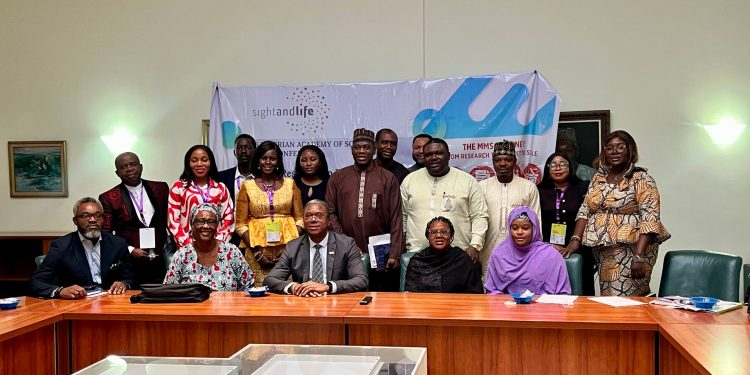
Stakeholders in Nigeria’s nutrition, health and pharmaceutical sectors have urged the Federal Government to promote local production and sustainable financing mechanisms to maintain the supply of multiple micronutrient supplements (MMS) for pregnant women across the country.
The appeal was made on Tuesday in Abuja during a high-level session held alongside the 7th Nigerian Academy of Science Scientific Conference.
The session, organised by the Development Research and Project Centre in partnership with Sight and Life, focused on strategies to transition MMS from donor-funded distribution to market-driven and locally manufactured supply systems.
Participants discussed Nigeria’s ongoing shift from iron and folic acid supplementation to MMS, highlighting evidence, supply chain challenges, financing structures and domestic manufacturing capacity as key factors for long-term sustainability.
President of the Nutrition Society of Nigeria, Salisu Abubakar, said the adoption of MMS was based on research showing improved maternal and birth outcomes compared to traditional iron–folic acid tablets.
He explained that MMS follows the UNIMAP formulation containing 15 essential micronutrients and has been incorporated into Nigeria’s Micronutrient Deficiency Control Guidelines since 2021.
He noted that although MMS is currently provided free in public health facilities through government and donor support, existing supply falls short of national demand.
According to him, dependence on external funding is unsustainable, making local manufacturing and market integration necessary.
Programme lead at Civil Society Scaling Up Nutrition in Nigeria, Sunday Okoronkwo, said implementation research conducted with the Federal Ministry of Health showed high adherence among pregnant women who accessed early antenatal care and received proper counselling. He added that trained health workers, functional supply chains and community engagement significantly reduced stock shortages during pilot programmes.
Country programme manager for Nigeria at Sight and Life, Zainab Abubakar, said the organisation is supporting efforts to expand MMS through healthcare worker training, financing studies and engagement with local pharmaceutical firms to produce UNIMAP-standard supplements within Nigeria. She stated that domestic production would reduce costs, improve availability and enable inclusion in government procurement and health insurance schemes.
Representing the Pharmaceutical Manufacturers Group of MAN, Frank Muonemeh called on authorities to prioritise local producers over imported donations, warning that overreliance on external supply undermines national manufacturing growth and exposes the health sector to global disruptions.
Multiple micronutrient supplements are daily antenatal tablets containing iron, folic acid and other essential vitamins and minerals designed to improve maternal nutrition and birth outcomes.