

Unmasking the El-Rufai Mythology
Unmasking the El-Rufai Mythology
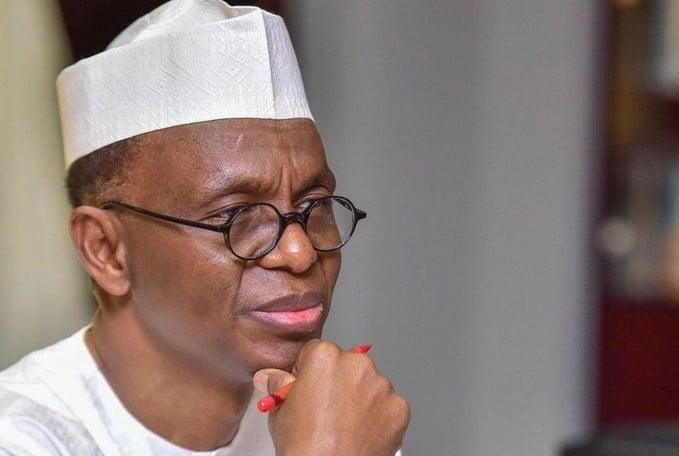
For nearly a decade, Nasir El-Rufai occupied a unique space in Nigerian politics, positioning himself as a relentless crusader for accountability and a “puritan” in a landscape often criticized for ethical decay.
However, a sweeping legislative investigation into his eight-year tenure as Governor of Kaduna State has begun to dismantle this carefully curated image, revealing a legacy now defined more by financial opacity than the moral superiority he once championed.
The probe, conducted by the Kaduna State House of Assembly, has uncovered what investigators describe as a “monumental heist” involving approximately ₦423 billion. The findings detail a pattern of governance marked by massive loans contracted with minimal safeguards, contracts that saw little execution relative to their staggering costs, and withdrawals that bypassed standard administrative due process.
These revelations have deeply unsettled the mythology of El-Rufai’s “spotless stewardship.”
The irony of the current situation is palpable. El-Rufai, a man who was never content merely to govern but often appointed himself the supreme judge in the public square quick to assign blame and harsh in his verdicts against colleagues now finds his own administration referred to anti-corruption agencies.
The very standards he once weaponized against political adversaries are now being applied to his own record through a formal legislative process.
As the legal net tightens and prosecutions of former aides commence, El-Rufai’s prolonged absence from the country has become impossible to ignore. Though no official declaration has been made, he is widely viewed as being in “self-exile.”
This physical distance is seen by critics as a retreat from the same accountability he demanded of others, leaving his proxies to manage his defense while he remains abroad.
Even from a distance, the former governor attempts to shape the national narrative. At the 23rd Daily Trust Dialogue, a speech attributed to him was read, railing against governance without accountability and selective law enforcement.
To many observers, the address felt like an unintentional self-indictment, as the grievances he aired mirrored the exact conclusions reached by the probe into his own government’s conduct.
Reports also suggest that El-Rufai remains politically active in his absence, allegedly holding private consultations in secret locations abroad. These meetings are reportedly aimed at organizing political actors to challenge the current administrations at both the federal and state levels. However, this shadow activism has been met with skepticism, viewed by many as a pursuit of personal relevance rather than genuine public interest.
Meanwhile, Kaduna State appears to be turning the page under the leadership of Senator Uba Sani. The current administration has signaled a deliberate shift away from the “politics of discord” and confrontation that defined the El-Rufai era. By prioritizing dialogue, reconciliation, and stability over spectacle, the state has entered a period of relative calm, suggesting that Kaduna is no longer diminished by the former governor’s absence.
The tragedy of this unraveling lies in the collapse of the “moral shelter” El-Rufai built for himself. By setting an impossibly high bar for others, he ensured that his own eventual fall would be measured by the extreme height of his own proclamations. His historical contempt for dissent has left him with a narrowed field of credibility now that the scrutiny of the law has finally turned inward.
Ultimately, the record suggests that reputations are not destroyed by enemies alone, but are eroded by the contradictions between one’s words and one’s deeds. History will judge El-Rufai not just on the legality of his financial dealings, but on his temperament and consistency. Whether he returns to face these charges or continues to address the nation from afar will define the final chapter of his public life.
The current situation serves as a stark reminder of the dangers of unchecked power and the necessity of true institutional accountability. As the investigation transitions to anti-corruption agencies, the public sentiment remains grounded in a single, sobering observation: