Tinubu’s Administration Run Like Cartel, Not Government, Says Nwajiuba
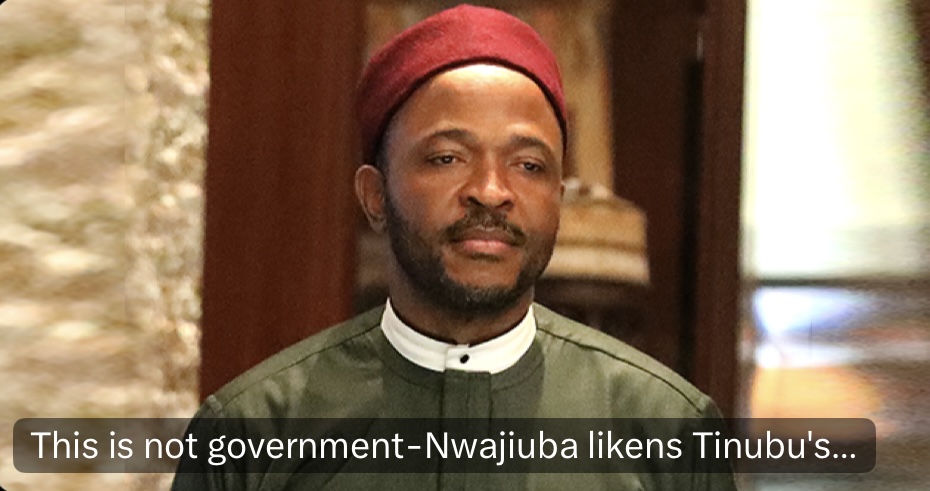
Former Minister of State for Education, Chukwuemeka Nwajiuba, has criticised President Bola Ahmed Tinubu’s administration, describing its style of governance as resembling a cartel rather than a functional government.
Nwajiuba made the remarks during a recent media appearance, where he faulted the federal government’s economic management, policy direction, and overall competence in handling Nigeria’s current challenges. He argued that the administration’s decisions, particularly on economic reforms, have lacked strategic planning and have worsened the hardship faced by millions of Nigerians. He cited the removal of fuel subsidy as an example of what he described as poorly sequenced policy implementation, noting that the government failed to adequately prepare the economy and citizens for the impact. According to him, the problem is not necessarily corruption but gross incompetence in governance, budgeting, and fiscal priorities. This is not government. This is cartel behaviour,” Nwajiuba said, criticising what he described as contradictory spending patterns, including borrowing while funding luxury-related expenditures. Beyond economic concerns, he also accused the ruling All Progressives Congress (APC) of aggressively consolidating political power by attracting governors, lawmakers, and political elites, which he warned could weaken democratic competition and accountability. Nwajiuba further confirmed his intention to contest the 2027 presidential election under the African Democratic Congress (ADC), positioning himself as part of an emerging opposition movement seeking to challenge the current political order. He outlined a vision for a collegiate leadership system, advocating a governance model where decision-making is shared among competent professionals rather than concentrated in a single authority. He also called for greater inclusion of younger leaders, saying Nigeria’s future depends on fresh ideas combined with experience. His comments come amid rising public frustration over inflation, high fuel prices, naira depreciation, and declining purchasing power. As political activities ahead of 2027 begin to intensify, Nwajiuba’s criticism adds momentum to the growing national debate over governance quality, leadership competence, and Nigeria’s economic direction.