

Israel’s Herzog Says Iran’s Future ‘Can Only Be Regime Change’ Amid Crackdown on Protests
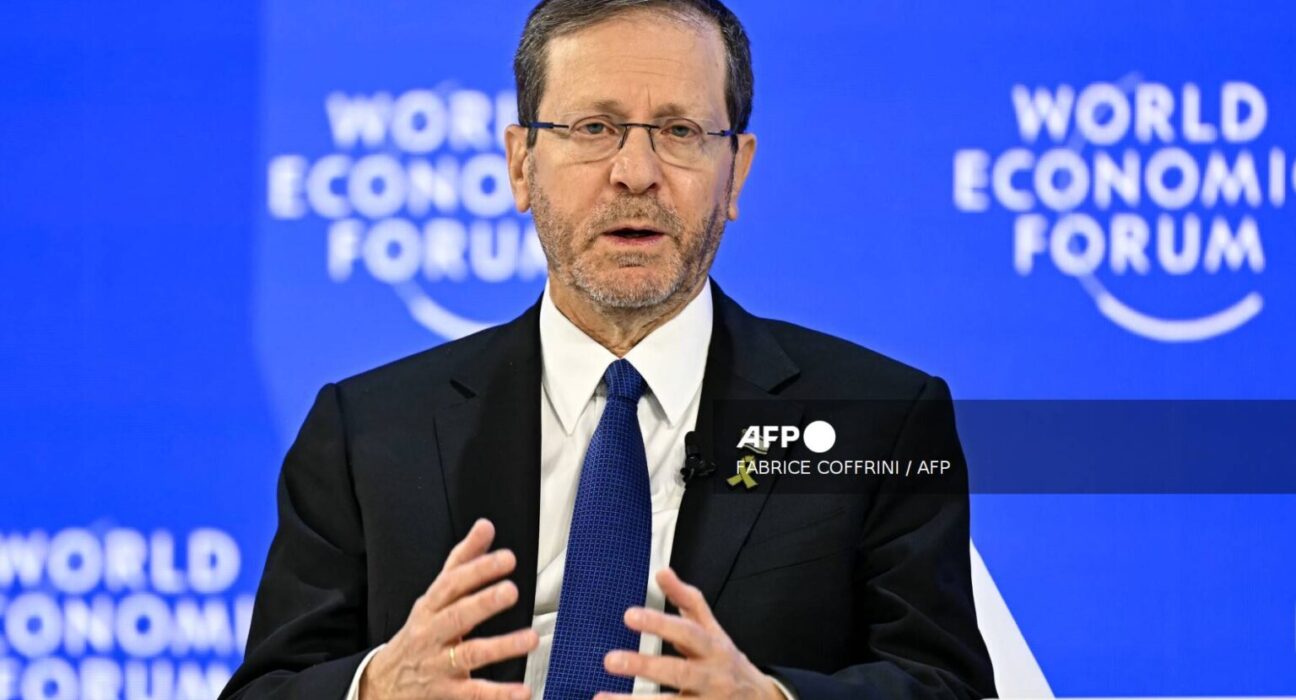
Israel’s President, Isaac Herzog has said that “regime change” is the only viable future for Iran, as authorities in the Islamic Republic intensify a crackdown on mass protests against the country’s clerical leadership.
Speaking in an interview on Thursday on the sidelines of the World Economic Forum in Davos, Herzog said Iranians were demanding fundamental political change after weeks of unrest sparked by economic hardship and broader frustrations with the ruling theocracy.
“The Iranian people are yearning for change. The Iranian people deserve change,” Herzog said, adding that the current system had failed to meet the aspirations of its citizens.
The protests began in late December over rising prices and economic conditions but quickly evolved into a wider movement against Iran’s political and religious leadership, which has been in power since the 1979 Islamic Revolution.
Demonstrations spread across several cities, with crowds taking to the streets for days beginning January 8.
However, the unrest appears to have subsided in recent days following what activists describe as a severe security response, including mass arrests and a near-total internet shutdown aimed at limiting coordination and information flow.
Iranian authorities said on Wednesday that 3,117 people were killed during the protests, a figure that activists and rights groups dispute, warning that the true death toll could be significantly higher.
The government has not allowed independent verification of the casualties.
Israel, a long-time adversary of Iran, has openly voiced support for the protesters but has stopped short of suggesting any direct intervention. Earlier this month, Israeli Prime Minister Benjamin Netanyahu said Israel stood “in solidarity with the struggle of the Iranian people,” a remark that drew sharp criticism from Tehran.
Iran accused Israel of attempting to undermine its national unity, dismissing Israeli statements as foreign interference in its internal affairs.
Tensions between the two countries remain high following a brief but intense 12-day conflict last year, during which Israel launched strikes on Iranian nuclear facilities and residential areas. Israel said the attacks were aimed at degrading Iran’s nuclear research and ballistic missile capabilities, a claim Iran has strongly denied.
Herzog’s remarks are among the strongest yet by an Israeli leader on Iran’s internal politics, underscoring growing regional concern over instability in the Islamic Republic and the potential consequences for the Middle East.