Trump Uses AI-Generated Images to Push Greenland Acquisition, Map of Expanded U.S. Territory
Trump Uses AI-Generated Images to Push Greenland Acquisition, Map of Expanded U.S. Territory
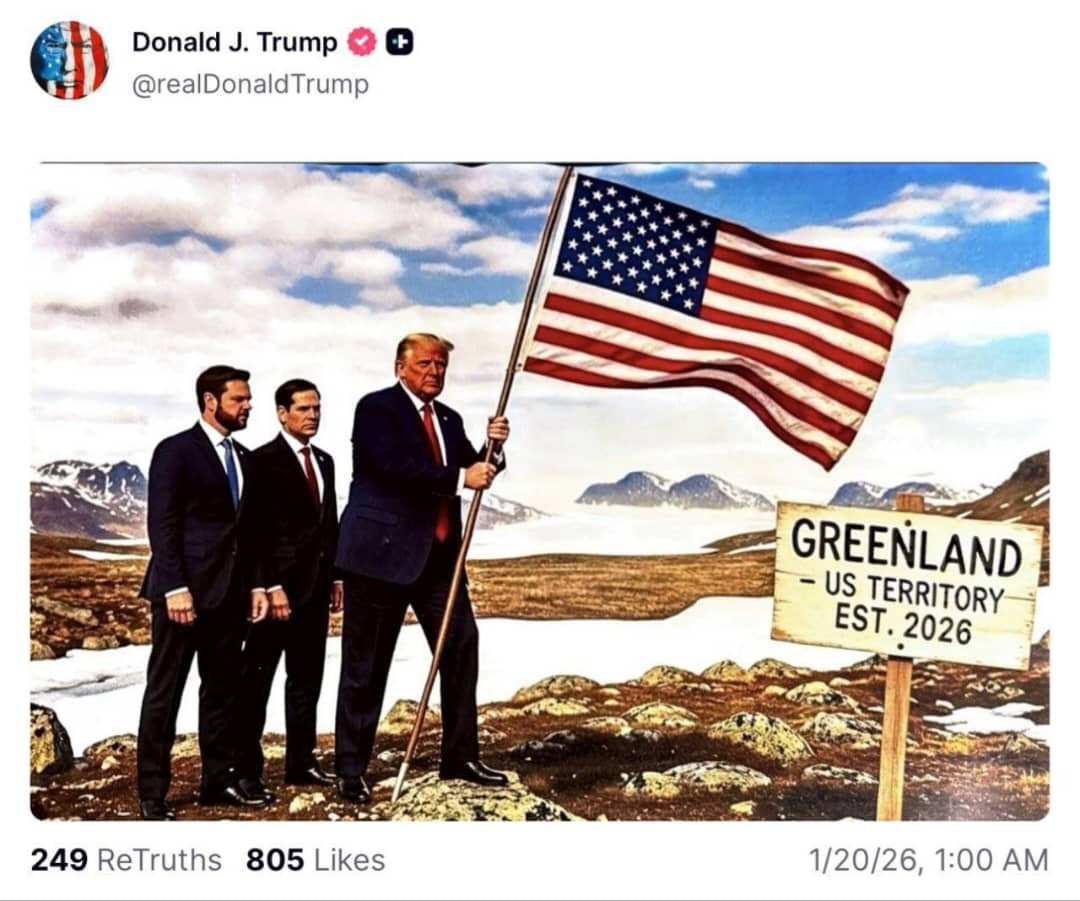
President Donald Trump has escalated his campaign to acquire Greenland by sharing a series of AI-generated images on his social media platform, Truth Social.
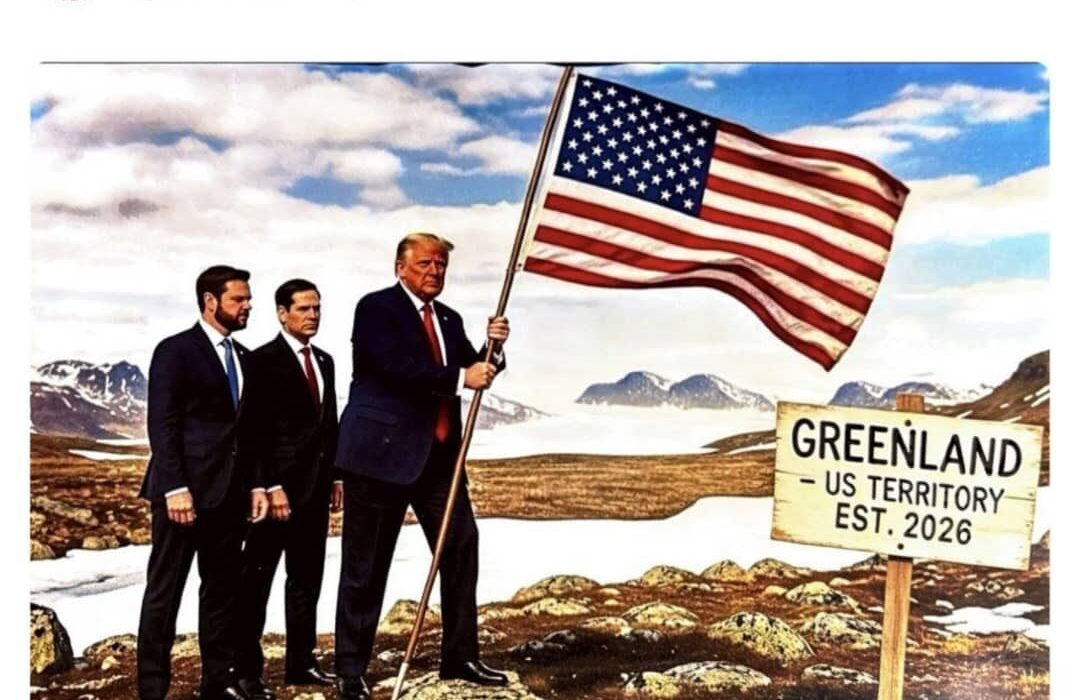
One notable image depicts Trump, Vice President JD Vance, and Secretary of State Marco Rubio standing in Greenland with an American flag, accompanied by a sign that reads: “GREENLAND – US TERRITORY EST. 2026.”
Another controversial AI-generated picture shows Trump meeting with European leaders in the Oval Office. In the background, a map of the Western Hemisphere is displayed, featuring American flags placed not only over Greenland but also over Canada, Cuba, and Venezuela.
This “posting blitz” has been interpreted by critics as a deliberate attempt to use digital propaganda to assert U.S. territorial ambitions.
The President has justified these moves by citing national security, arguing that U.S. control of Greenland is essential to prevent influence from Russia and China in the Arctic.
He has further increased pressure on European allies by threatening 10 to 25 percent tariffs on goods from nations that oppose the acquisition, specifically targeting countries like France and Denmark.
International reaction has been swift and largely condemnatory. French President Emmanuel Macron and EU Commission President Ursula von der Leyen have criticized the tactics, with Macron calling the approach “colonial” and von der Leyen labeling the tariff threats a “mistake.” In Canada, Prime Minister Mark Carney and other officials have expressed serious concern over the imagery suggesting American sovereignty over Canadian territory.
Despite the backlash and Greenland’s own insistence that it is not for sale, Trump has remained defiant, stating there is “no going back” on his goal. He has even linked his pursuit of the island to his frustration over not receiving a Nobel Peace Prize, suggesting that he is now focused on strategic acquisition rather than traditional diplomatic peace initiatives.