
Who is Ibrahim Traoré and why 30 Assassination Attempts?
Who is Ibrahim Traoré and why 30 Assassination Attempts?
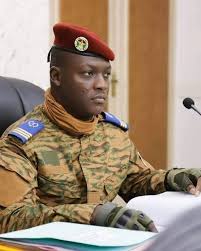
Captain Ibrahim Traoré is the interim president of Burkina Faso and currently the youngest head of state in the world. Born in 1988, he rose through the military as an artillery officer, gaining a reputation for bravery while serving in UN peacekeeping missions in Mali and fighting jihadist insurgencies at home.
He seized power in a September 2022 coup, ousting Paul-Henri Sandaogo Damiba, who had himself taken power in a coup earlier that year. Traoré’s rise was fueled by his promise to better handle the country’s security crisis and his adoption of a revolutionary, Pan-Africanist persona inspired by the legendary Thomas Sankara.
The claim that Traoré has faced a high number of assassination attempts often cited by supporters as high as 19 or even 30 stems from frequent government announcements regarding foiled plots. These “umpteenth” attempts are typically described by the junta as coordinated efforts by “dark forces” to destabilize the nation. While the exact count of 19 is widely circulated on social media, the government often uses more general terms to describe a near-constant state of threat, with major foiled plots being announced every four to six months.
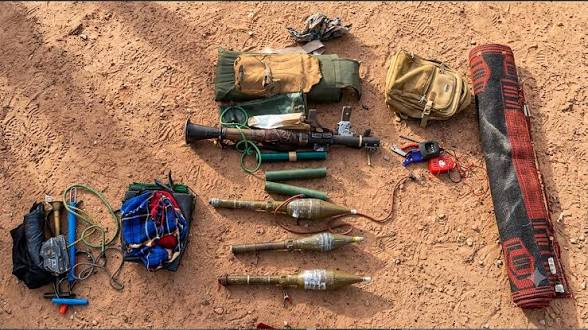
The most recent and significant of these attempts occurred in early January 2026. Security Minister Mahamadou Sana announced that intelligence services had intercepted a plot scheduled for the night of January 3rd. According to the government, the plan involved the “neutralization” of Traoré at his residence using either point-blank gunfire or explosives. This particular plot was allegedly part of a larger scheme to disable a drone base and pave the way for a foreign-backed ground intervention.
One primary reason for these targets is Traoré’s radical shift in foreign policy. Since taking power, he has expelled French military forces and severed long-standing colonial-era ties, choosing instead to align Burkina Faso with Russia. This “anti-imperialist” stance has created deep friction with Western powers and neighboring pro-Western regimes, whom Traoré’s government frequently accuses of financing and orchestrating assassination plots to restore a more compliant leadership.
Internal military rivalry is another major factor behind the threats. The junta has explicitly named former leader Paul-Henri Damiba, currently in exile in Togo, as the mastermind behind multiple attempts. Because Traoré represents a younger generation of junior officers who overthrew their superiors, there remains a deep-seated factionalism within the Burkinabe army. Older high-ranking officers and those loyal to previous regimes are often cited as the primary internal conspirators.
The geopolitical tension with neighboring Ivory Coast also plays a central role in these assassination claims. The Burkinabe government has repeatedly accused the Ivorian administration of providing a safe haven and financial backing for plotters. In the January 2026 plot, officials claimed that $120,000 (70 million CFA francs) was funneled through intermediaries in Ivory Coast to pay for the “decapitation” of the state leadership, though Ivory Coast has consistently denied these allegations.
Public perception and political strategy are also intertwined with these attempts. Each time a plot is “foiled,” thousands of Traoré’s supporters, known as “Wayiyans,” take to the streets of Ouagadougou to act as human shields for the president. This creates a powerful narrative of a “people’s leader” under siege by foreign imperialists, which helps Traoré maintain high popular approval despite the country’s ongoing struggles with poverty and insecurity.
However, many political analysts and international observers view the high frequency of these reports with skepticism. Some argue that the junta “cries wolf” to justify crackdowns on civil society and the media. Since the government frequently airs “confessions” on state television but rarely proceeds to transparent public trials, critics suggest these plots are sometimes exaggerated or fabricated to consolidate power and silence domestic dissent under the guise of national security.
The security situation in the Sahel provides the volatile backdrop for these events. Burkina Faso is currently battling a severe jihadist insurgency that controls large portions of its territory. This state of perpetual war makes the leadership naturally vulnerable to both external attacks and internal blame. When military operations against insurgents go poorly, the risk of a counter-coup or assassination attempt increases, leading the government to stay in a state of constant high alert.
Ultimately, whether there have been exactly 19 attempts or a different number, the narrative of the “hunted leader” is a defining feature of Ibrahim Traoré’s presidency. It serves as both a reflection of the genuine dangers inherent in Sahelian military politics and a strategic tool used by his administration to define its enemies. As long as Burkina Faso remains at the center of a tug-of-war between Western influence and Russian alignment, the reports of plots against Traoré are likely to continue.