
Only Three African Countries Have Never Taken Loans from the IMF
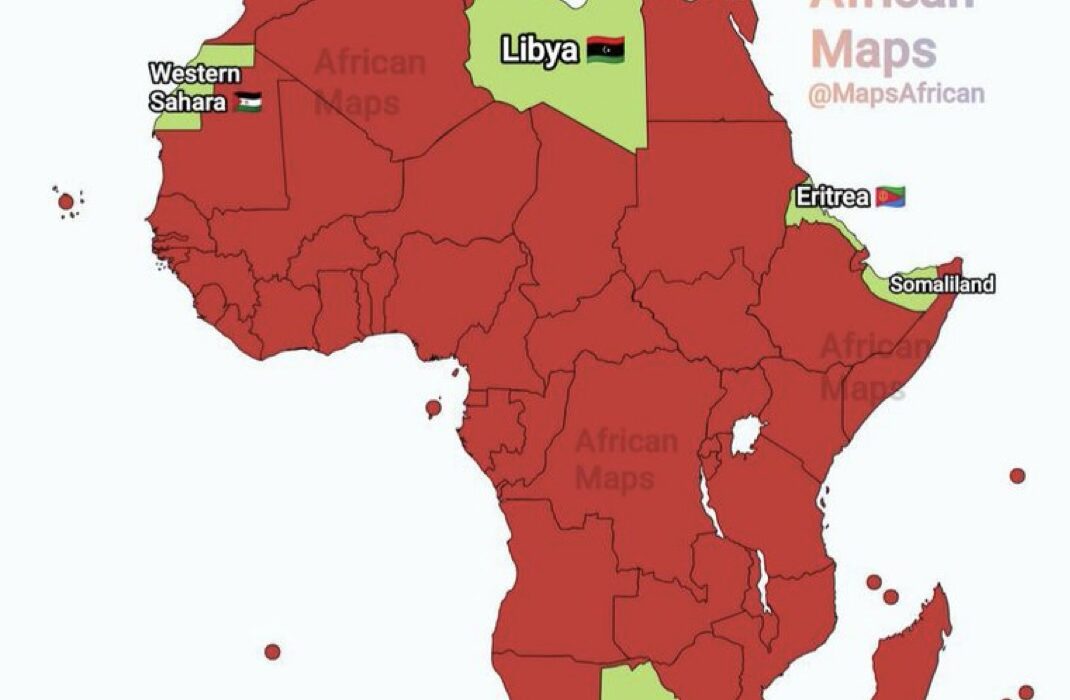
Recent claims circulating online that five African countries have never borrowed from the International Monetary Fund (IMF) have been debunked by official IMF lending records and credible financial reporting, which confirm that only three African nations fall into that category.
Verified data from the IMF shows that Botswana, Libya and Eritrea are the only African countries that have never accessed IMF loan facilities since the institution began operations on the continent in 1952. Analysts say confusion often arises when countries with no current IMF debt are mistakenly grouped with those that have never borrowed at all Several African countries, including Mauritius, Namibia, Seychelles and Eswatini, are sometimes cited in online discussions because they have minimal or zero outstanding IMF obligations at certain periods. However, records show that these countries have taken IMF loans in the past, disqualifying them from the list of nations that have never borrowed from the Fund Botswana is widely regarded as a fiscal success story in Africa. Strong governance, careful management of diamond revenues and low public debt have enabled the country to fund its development without turning to IMF loans. Libya, despite prolonged political instability, has historically relied on oil revenues to finance government spending and maintain foreign reserves, allowing it to avoid IMF borrowing while still engaging the Fund for policy consultations. Eritrea, on the other hand, has pursued a policy of economic self-reliance and limited engagement with international financial institutions, choosing not to participate in IMF loan programmes. The broader African picture highlights how rare this status is. Out of Africa’s 54 countries, more than 48 have borrowed from the IMF at least once, often to address balance-of-payments problems, stabilise currencies or respond to economic shocks such as global recessions and the COVID-19 pandemic. As of 2025, African countries collectively owe tens of billions of dollars to the IMF, with Egypt, Ghana, Kenya and Côte d’Ivoire among the continent’s largest borrowers. Nigeria, which accessed IMF emergency financing during the COVID-19 crisis, has since fully repaid its loan and currently has no outstanding IMF debt, though it does not qualify as a country that never borrowed. Economists say the renewed attention on IMF borrowing reflects ongoing debates about Africa’s dependence on external financing. While critics argue that IMF programmes often come with harsh economic conditions, supporters maintain that the Fund provides vital support during periods of financial distress. What remains clear from the data is that the claim of five African countries never borrowing from the IMF is inaccurate, with the verified number standing at just three.