



Procurement Schemes Drainpipe to Public Funds, Says ICPC
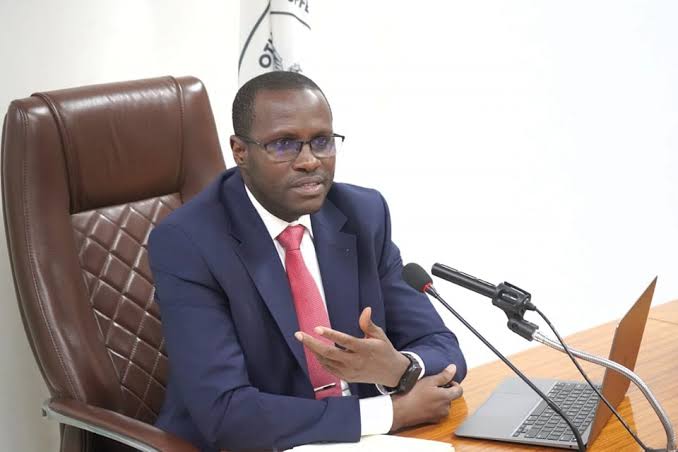
Nigeria’s Independent Corrupt Practices Commission, ICPC has exposed a detailed account of how government resources are being siphoned through fraudulent procurement operations involving compromised contractors and collaborating officials.
According to the commission, the most significant haemorrhaging of public funds occurs within ministries, departments and agencies during contract awards, payment approvals and project supervision.
Investigators revealed that many contractors exploit weaknesses in oversight by deliberately splitting large-scale projects into smaller fragments to evade competitive bidding.
This practice allows inflated quotations to slip through procurement checks, leading to government projects being priced far above market value. In numerous cases examined by the agency, invoices were inflated by multiples of the actual cost, while project specifications were simultaneously reduced to save on materials and labour.
The commission also identified widespread use of fictitious contracts created solely to facilitate the withdrawal of public funds without delivering any service.
Some of these schemes involved shell companies operated by friends, relatives or associates of public officials, who acted as fronts to channel payments into private accounts. In other investigations, contractors received mobilisation funds but subsequently abandoned worksites after completing only a fraction of the promised output.
The anti-graft body noted that tracing stolen funds is often complicated by sophisticated money-moving tactics.
Funds are laundered through layered transfers, bureau-de-change operators and a chain of proxy accounts designed to conceal the real beneficiaries.
However, recent convictions secured by the commission demonstrate that ongoing investigative efforts are successfully untangling many of these networks.
To address the systemic vulnerabilities, the agency is calling for stronger procurement reforms, stricter monitoring of project execution and the adoption of transparent digital payment systems that leave an auditable trail.
Officials argue that prevention remains more effective than punishment, stressing that loopholes must be closed before opportunities for theft arise.
The commission has also shared examples from past probes, revealing millions of naira recovered through audits of payroll padding schemes, ghost-worker fraud, and the discovery of suppliers that existed only on paper.
It warned that unless systemic reforms are adopted urgently, funds meant for critical infrastructure—such as roads, hospitals and schools—will continue to be diverted, leaving citizens without essential public services.
Governance experts have urged policymakers to act swiftly, arguing that consistent enforcement, public transparency and digital procurement tools are essential to rebuilding trust.
They emphasise that confronting entrenched corruption within the public sector is vital to safeguarding national development and ensuring that public funds truly benefit the communities they intend to serve.