

Frank Gehry, Visionary Architect Who Redifined Modern Design, Dies at 96
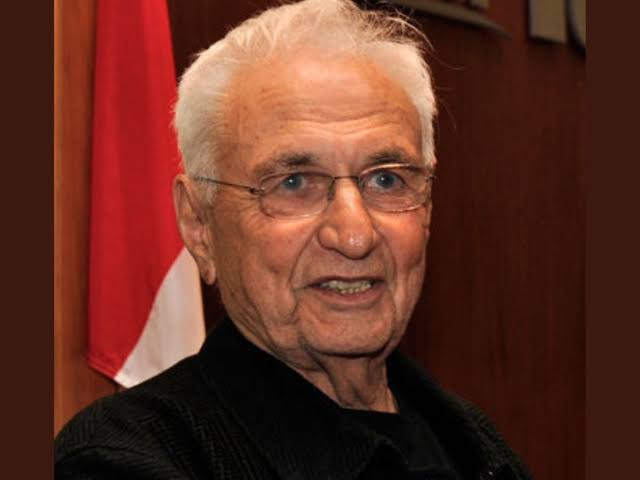
Frank Gehry, the celebrated architect whose bold, fluid and unconventional designs reshaped skylines and elevated contemporary architecture to global prominence, has died at the age of 96.
His family confirmed that he passed away on Friday at his home in Santa Monica after a brief illness.
Born Frank Owen Goldberg in Toronto in 1929, Gehry later moved to Los Angeles, where he built a career that spanned more than six decades. Known for challenging traditional architectural norms, he crafted buildings that looked more like monumental sculptures than conventional structures.
His approach – marked by sweeping curves, metallic surfaces and playful unpredictability – made him one of the most recognizable and influential architects of his era.
Gehry’s breakthrough masterpiece, the Guggenheim Museum in Bilbao, Spain, completed in 1997, became a turning point in global architectural history.
Its swirling titanium panels and daring form not only earned critical acclaim but also revitalized the city’s economy, giving rise to the term “the Bilbao effect,” referring to the power of architecture to transform urban fortunes.
He went on to design other iconic works, including the Walt Disney Concert Hall in Los Angeles, the Fondation Louis Vuitton in Paris, the Dancing House in Prague and numerous cultural and commercial landmarks across the world.
Each project reflected his signature commitment to innovation, technological experimentation and relentless creativity.
Despite being widely regarded as one of the world’s leading “starchitects,” Gehry openly disliked the label. He maintained that he saw himself simply as a builder striving to create spaces that improve people’s lives.
Colleagues often described him as both rebellious and meticulous — a designer with a childlike imagination and the discipline of an engineer.
Throughout his career, he received many of the profession’s highest honors, including the Pritzker Architecture Prize, Japan’s Praemium Imperiale and the American Institute of Architects Gold Medal.
Even in his later years, Gehry remained active, continuing to influence younger architects and shaping ambitious projects worldwide.
Gehry is survived by his wife, children and grandchildren. Tributes from cultural institutions, architects and world leaders have poured in, celebrating a man whose works will stand for generations.
His legacy endures in the cities he transformed, the students he inspired and the unmistakable architectural language he pioneered — one defined by daring form, masterful engineering and a boundless sense of imagination.