
Was the 2025 Coup in Guinea-Bissau Orchestrated by the Outgoing President?
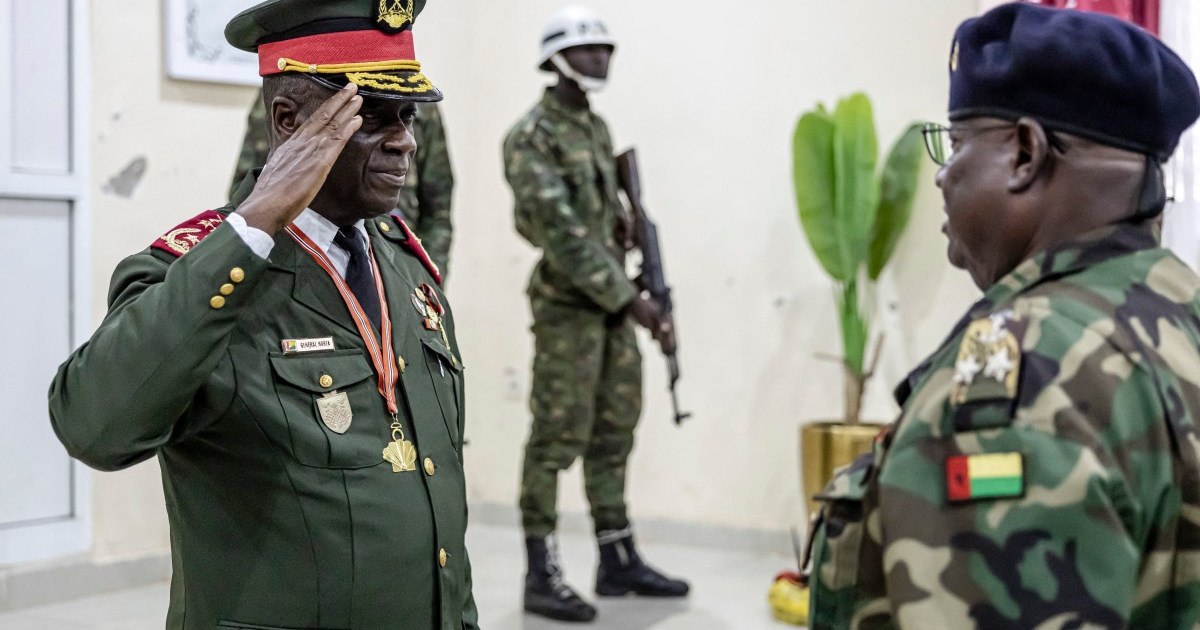
On November 26, 2025, gunfire erupted near the presidential palace and the headquarters of the electoral commission in Bissau, hours before provisional results from the November 23 presidential election were to be announced. Moments later, a group of army officers declared that they had seized power, installed a junta, and placed the country under curfew, border closures, and a suspension of the electoral process. The self-styled High Military Command for the Restoration of National Security and Public Order announced that it was now in charge.
President Umaro Sissoco Embaló who stood for re-election was arrested and subsequently removed from office. A new transitional leader, Horta Inta-A Na Man, a general reportedly close to the outgoing president, was sworn in to lead Guinea-Bissau for a one-year transition.
Almost immediately, serious questions surfaced not just about who staged the coup, but who actually orchestrated it. The main opposition candidate, Fernando Dias da Costa, accused Embaló of orchestrating a “simulated coup” to avoid admitting defeat. He claimed he had won the vote and argued that the coup was “fabricated” to prevent the real results from being made public.
A coalition of civil society groups echoed this view. According to them, the timing of the army takeover — just hours before results were due — strongly suggests that the announced coup was a ruse. Their allegation: Embaló, fearing electoral defeat, enlisted the military to forcibly block the outcome, then planned to run again once a transition government was in place.
Observers from the regional bloc ECOWAS and the African Union have condemned the coup. They called it a “blatant attempt to disrupt the democratic process,” demanding the immediate release of detained political figures and resumption of the vote-counting and results publication.
Analysts say the episode underscores systemic institutional weakness and blurred lines between civilian politics and military power in Guinea-Bissau. According to experts, the saga reflects overlapping problems: elite infighting, corrupt governance, drug-trafficking influences, and frequent recourse to extra-constitutional methods of retaining power.
At the same time, key facts remain unsettled. There has been no independent verification of votes or election result leaks. The alleged evidence for the military and drug-trafficking link cited by the junta as justification has not been made public. What is beyond dispute is that constitutional order has been interrupted, political uncertainty reigns, and the will of millions of Bissau-Guineans remains in limbo.
For many critics, the 2025 coup stands less as a spontaneous military intervention and more as a calculated stratagem a “self-coup” by a president unwilling to accept defeat, cloaked in the language of national security.
How regional powers, civil society, and the international community respond in the coming days may determine whether Guinea-Bissau returns to constitutional order or slides deeper into engineered authoritarianism.