

Families Left in Agony as Over 640 Abducted Pupils and Worshippers Remain in Captivity
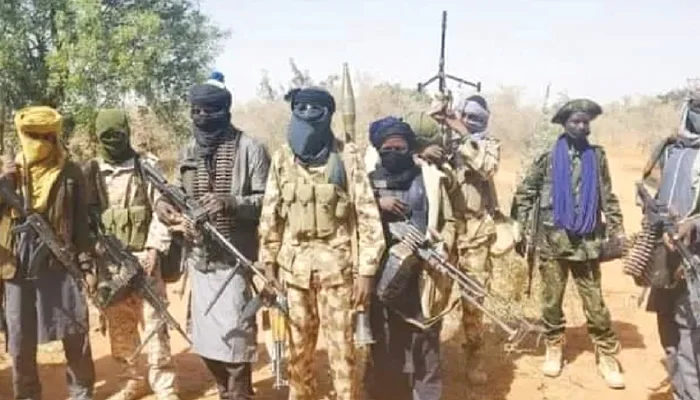
At least 640 Nigerians, including schoolchildren and worshippers, are still being held by their abductors months after they were kidnapped, leaving their families in prolonged distress and uncertainty.
Among those still in captivity are 78 schoolchildren abducted in Borno State six months ago, 547 worshippers taken from a mosque in Niger State three months ago, and 15 schoolgirls kidnapped in the Rafi area of Niger State on October 31.
The 78 pupils were abducted in two separate attacks in Askira-Uba Local Government Area of Borno State on May 15 and June 29, 2026.
On May 15, armed insurgents invaded Mussa Primary and Junior Secondary School, taking away 42 pupils, including children reportedly as young as two years old.
About six weeks later, gunmen attacked Government Day Secondary School, Lassa, while students were writing their National Examinations Council examinations. Thirty-six students were abducted, while two teachers were killed during the incident.
On August 21, terrorists suspected to be members of the Lakurawa group attacked Kpenya Mosque during Friday Juma’at prayers after raiding nearby communities, including Gidan-Zana, Sabon Gida and Masaka, in the Dekara district of Borgu Local Government Area, Niger State.
Although the police and local authorities initially estimated the number of abducted worshippers at between 60 and 80, community leaders subsequently compiled and released a list containing 547 names of men, women and children taken away.
The terrorists later released a video showing hundreds of captives seated in a forest, prompting President Bola Tinubu to direct security agencies to secure their freedom.
In another incident, bandits abducted 15 pupils of an Islamiyya school in Tungan-Bako village, Pandogari District, Rafi Local Government Area of Niger State, on October 31, 2026.
All the victims remain in captivity, with their relatives anxiously awaiting information about their condition and possible rescue.
A parent of one of the 78 schoolchildren abducted in Borno State, Bura Emmanuel, told Saturday PUNCH that neither the families nor the authorities had received any communication from the kidnappers.
He said the parents had not been given information about the whereabouts of their children by either the government or their abductors.
According to him, the families have continued to hold on to hope that the authorities would eventually secure the children’s release.
“As of today, we have not heard anything. Not even the government is giving us any information. We just keep our hopes hanging, believing that our children will be rescued someday by the government,” he said.
Meanwhile, the Principal of Government Day Secondary School, Lassa, John Medugu, said the abduction had negatively affected the learning environment, with fear and trauma reducing students’ ability to concentrate in class.
“There is still trauma. The level of concentration of our students is very low because of fear,” he said.
Medugu added that he could not confirm whether the state government had established communication with the abductors.
He expressed hope that the government would take urgent steps to rescue the missing students and teachers.
The Managing Director of Beacon Security and Intelligence Limited, Kabir Adamu, identified difficult terrain and poorly secured national borders as some of the major obstacles delaying the rescue of the abducted victims.
He also pointed to political considerations, explaining that rescue operations could expose captives to casualties, a risk that authorities might be reluctant to take, particularly as the country approaches another election period.
Adamu explained that the areas where criminal groups operate are difficult to access, with several ungoverned spaces providing hiding places for armed groups and their captives.
He cited locations such as the Mandara Mountains and Sambisa Forest, noting that the current situation appeared to involve the Mandara Mountains.
He further identified the weakness of border security as another major challenge.
According to him, the Army Joint Task Force operates across four sectors, with Niger previously responsible for Sector Four. However, the breakdown in relations between Nigeria and Niger had left parts of the border vulnerable, allowing criminal groups to move across the region with relative ease.
He said the combination of difficult terrain and unrestricted cross-border movements had made it extremely challenging for Nigerian security forces to maintain control of the affected areas and prevent further criminal activities.
Adamu also argued that security agencies might not have sufficient specialised equipment to conduct rescue operations while minimising harm to the captives.
He explained that operations involving women and children required particular caution because of the emotional and psychological consequences of casualties during rescue attempts.
He added that political leaders might be unwilling to authorise operations with a high risk of civilian casualties, especially during an election period.
The security expert also blamed the lack of sustained media coverage and public pressure for the slow pace of efforts to secure the victims’ release.
He argued that the failure to maintain public attention on the abductions had reduced the political pressure on the government to make their rescue an urgent priority.
He clarified that this did not necessarily mean the government was uninterested in securing the victims’ freedom, but maintained that the urgency required to achieve a speedy rescue was lacking.
However, a retired Brigadier General, Bashir Adewinbi, suggested that political interests might be contributing to the delay, alleging that some individuals were exploiting the kidnappings to discredit President Bola Tinubu’s administration.
He claimed that the abductions had become a political instrument being used against the government.
Adewinbi maintained that security agencies were making efforts despite the challenges confronting them, stressing that rescue missions required careful planning to avoid casualties.
He said terrorists often deliberately complicate rescue operations, making it difficult for security forces to free captives without putting their lives at risk.
He added that successful operations would require intelligence gathering, proper planning and, where necessary, negotiations.
Efforts to obtain an update on the rescue operation from the Niger State Police Command spokesperson, Wasiu Abiodun, were unsuccessful, as telephone calls to him were not answered.
He also did not respond to a message seeking clarification as of the time the report was filed.
Similarly, calls made to the Niger State Commissioner for Information and Orientation, Obed Nuhu, were unanswered, while a message sent to him had yet to receive a response.
The Borno State Commissioner for Information and Internal Security, Usman Tar, also failed to answer calls or respond to messages requesting an update on the government’s efforts to rescue the abducted children.
The state’s Police Public Relations Officer, Nahum Daso, equally did not respond to calls or messages.
Attempts to reach the Director of Media Operations at Defence Headquarters, Major General Michael Onoja, for comments were also unsuccessful.