


My Administration Will Uphold Court Rulings, Tinubu Assures Nigerians
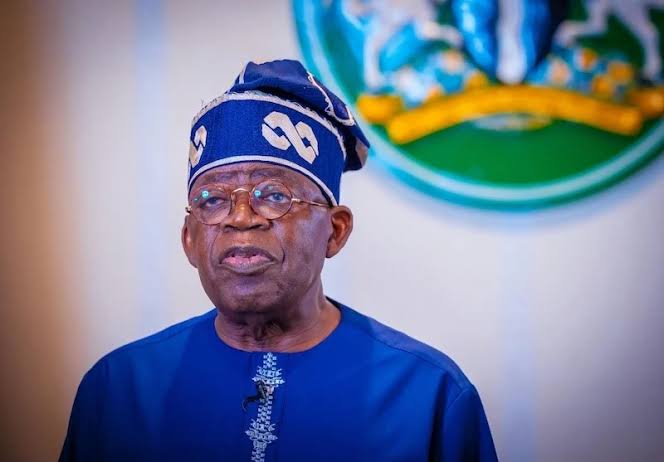
President Bola Tinubu has reaffirmed his administration’s commitment to respecting judicial decisions, including court judgments that may not favour the Federal Government.
The President also conferred Nigeria’s second-highest national honour, the Grand Commander of the Order of the Niger (GCON), on renowned legal practitioner, Chief Wole Olanipekun, SAN.
Tinubu gave the assurance on Thursday in Abuja at the unveiling of a six-volume publication titled *Wole Olanipekun Through the Cases*, organised to celebrate the senior lawyer’s 75th birthday, 50 years at the Bar and 35 years as a Senior Advocate of Nigeria.
Speaking at the event, the President maintained that his government would not undermine or intimidate the judiciary, stressing that any administration that harasses judges weakens the foundation of its own authority.
“Our administration respects court judgments, even the ones we do not enjoy reading. We do not denigrate, attack or intimidate the judiciary. A government that bullies its judges only weakens its own foundation,” he said.
Tinubu also highlighted his administration’s efforts to improve the welfare of judicial officers, citing the Judicial Officeholder Salary and Allowances Act 2024, which introduced a 300 per cent increase in the salaries of judicial officers of superior courts of record after more than 15 years of stagnation.
He acknowledged that the country had yet to achieve its desired level of judicial development but maintained that significant progress was being made.
The President urged stakeholders in the justice sector to work towards positioning Nigeria as a business-friendly destination, noting that timely delivery of judgments could improve investor confidence.
“Every timely judgment is an advertisement for the Nigerian economy,” he stated.
Tinubu congratulated Olanipekun on his professional achievements, describing him as an exceptional Nigerian whose legal practice and mentorship had made significant contributions to the country and humanity.
He also acknowledged their longstanding personal and professional relationship, disclosing that the senior lawyer had led his legal team for several decades.
The President said Olanipekun had also headed the legal teams that defended three of his predecessors when their presidential election victories were challenged.
According to Tinubu, the development meant the senior lawyer had served as lead counsel to four successive Nigerian presidents since 2007, describing the record as unprecedented.
“Presidents change. Parties change. The Lead Counsel remains,” he said.
Senate President Godswill Akpabio commended Tinubu for what he described as his commitment to justice, democracy and national development.
He assured the President that the National Assembly would continue supporting legislative measures aimed at strengthening justice delivery, democracy and the rule of law.
The Chief Justice of Nigeria, Justice Kudirat Kekere-Ekun, also praised Olanipekun for his contributions to the legal profession, expressing confidence that the newly unveiled publications would enrich Nigeria’s legal knowledge, advocacy and jurisprudence.
Similarly, Attorney-General of the Federation and Minister of Justice, Prince Lateef Fagbemi, praised the senior lawyer, recalling their professional encounters in court.
Ekiti State Governor Biodun Oyebanji also celebrated Olanipekun’s contributions to the legal profession, while Minister of the Federal Capital Territory, Nyesom Wike, delivered a goodwill message.
In his remarks, Olanipekun reflected on his longstanding relationship with Tinubu and commended the President for his commitment to democracy and the sacrifices he had made over the years.
He recalled an occasion when the President explained to him the distinction between legal jurisprudence and political jurisprudence.
Speaking during the event, businessman Tony Elumelu, in a keynote address titled The Rule of Law as a Catalyst for Private Sector Growth, said a dependable judicial system was essential for attracting investments and expanding private sector activities.
He explained that investors and entrepreneurs needed confidence that laws would be properly applied and disputes resolved through fair and timely arbitration.
Elumelu described trust as the foundation of economic activities, noting that it influences citizens’ willingness to cooperate with government, investors’ decisions to commit capital and businesses’ readiness to expand.
He also warned that negative narratives about Nigeria could discourage investment and contribute to the loss of skilled citizens.
According to him, perceptions portraying Nigeria as a hopeless or unreliable country could affect investment decisions, increase the returns investors demand to compensate for perceived risks and encourage businesses to delay expansion plans.
He, however, acknowledged that citizens had every right to expose government shortcomings, demand accountability and speak about the difficulties they experience.
Elumelu stressed that responsible communication should not be mistaken for an attempt to suppress criticism, adding that publicity could not replace effective governance or conceal poor performance.
“Government and businesses cannot rely on publicity to conceal poor performance or substitute communication for service delivery. We cannot communicate our way out of conflicts,” he said.
Meanwhile, international public relations professionals have cautioned governments and corporate organisations against using publicity, propaganda and strategic communication to cover up leadership failures.
They maintained that public trust could only be earned through integrity, accountability and actions that reflect the promises made by leaders.
The warning was delivered during a session on Ethical Leadership and Trust in a Divided World at the 2026 World Public Relations Forum in Abuja.
The event was organised by the Global Alliance for Public Relations and Communication Management in collaboration with the Nigerian Institute of Public Relations.
The discussion featured regional council leaders representing Europe, Asia-Pacific, Africa, the Middle East and South Asia, and North America. It was moderated by Chimdi Neliaku, Chairman of the NIPR Young Professionals Hub.
Speaking for Europe, Global Alliance Vice President and Chair of its European Regional Council, Silvia Arto, said ethical leadership was demonstrated through personal conduct rather than public declarations.
She explained that integrity involved consistently doing what was right, even when nobody was watching.
The Asia-Pacific representative, Jaffri Osman, argued that effective leadership required more than intellectual ability, stressing that emotional and social intelligence were equally important in building relationships across different communities.
He said leaders needed to understand people, their cultures and social environments to build trust and influence communities responsibly.
Using Malaysia’s Sarawak region as an example of multicultural coexistence, Osman emphasised the importance of understanding local traditions and relationships.
For Africa, regional chair Irene Lungu Chipili identified political communication, democratic competition and misinformation as major challenges to public confidence.
She questioned whether citizens could trust messages from political parties and governments, arguing that the credibility of the person delivering a message was just as important as the information itself.
Similarly, Middle East and South Asia regional chair Serra Gorpe identified accountability, transparency and stakeholder engagement as essential elements of institutional legitimacy.
She also called for stronger ethics education in universities, urging institutions to incorporate regional case studies instead of depending predominantly on Western academic materials.