


Did You Know? “Aboki” and “Mallam” Were Never Meant to Be Insults
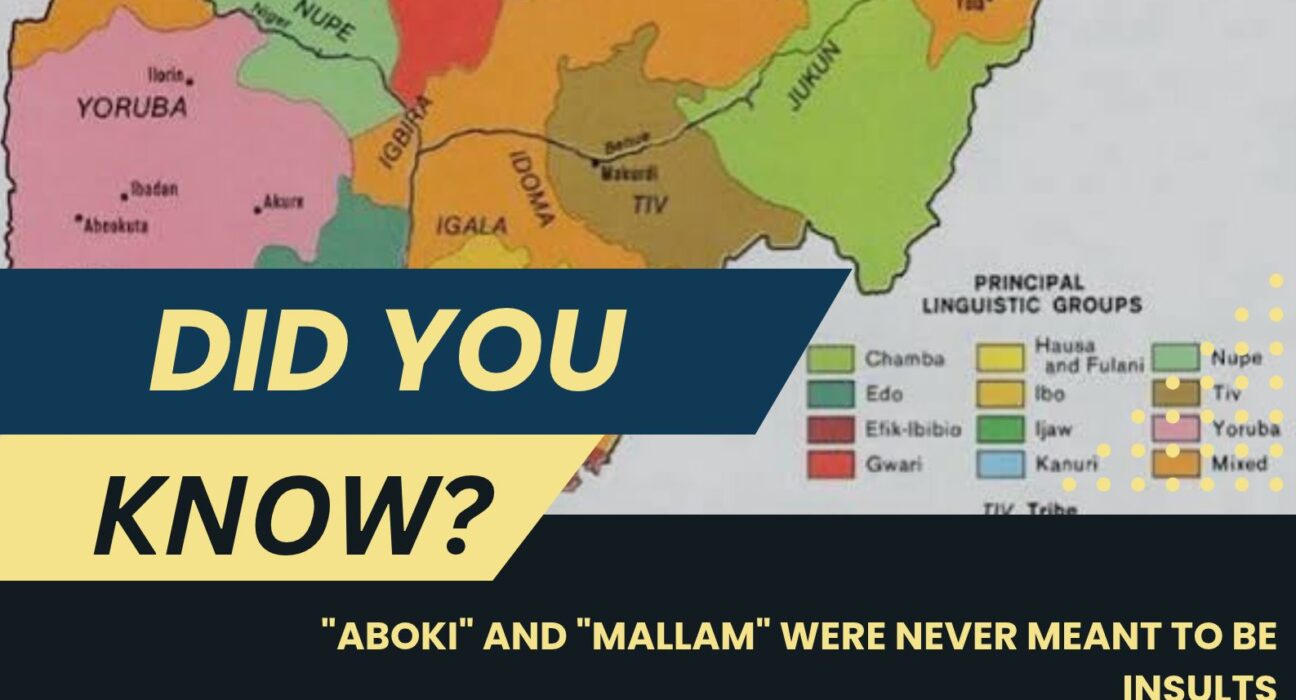
Did you know that two of the most commonly used Hausa words in Nigeria, Aboki and Mallam, started out as expressions of friendship and respect, yet many Nigerians now use them as labels to mock or look down on people?
In the Hausa language, aboki simply means “friend.” The plural is abokai, and an Hausa speaker might use it for a close companion, a classmate, or a trusted neighbour. Calling someone aboki na (“my friend”) is a warm gesture, much like calling someone “buddy” or “mate” in English.
Mallam (also spelt Malam) carries even more dignity. The word traces back to the Arabic *mu’allim*, meaning “teacher.” In Northern Nigeria, it came to describe a learned person, especially an Islamic scholar or teacher who instructs others in the Quran and in knowledge generally. Over time it widened into a general title of respect, similar to “Sir” or “Mr.” Some of the region’s most respected figures carried it, including the political leader Mallam Aminu Kano, one of the most influential voices of Nigeria’s independence era.
So how did words of friendship and honour end up with a sting? The shift happened as Nigerians from different regions began living and working side by side in cities like Lagos, Ibadan, and Port Harcourt. Many Hausa-speaking northerners worked as traders, cattle dealers, suya sellers, security guards, and gatemen. Because the words were so frequently attached to people in these jobs, they gradually became shorthand for a whole group. Instead of being used as a title or a greeting, “Aboki” and “Mallam” started to be thrown around as stereotypes, sometimes as a casual joke and sometimes as a deliberate put-down. Calling any northerner “Aboki,” whether or not he was your friend, or using “Mallam” to imply someone is uneducated or low-class, turned the original meanings upside down.
The irony is that nothing in the words themselves is insulting. A mallam is a teacher, and an aboki is a friend. What changed was the tone and the intent behind them. Linguists often point out that words take on the attitude people attach to them, and when a word is repeatedly used with contempt, it can carry that contempt even when its dictionary meaning is kind. This happens in many languages around the world.
The shift has real consequences. Many Hausa people say they feel hurt when their own words of respect and friendship are used against them, and the habit feeds stereotypes between Nigeria’s regions. At the same time, some Hausa speakers still use both words proudly and sincerely among themselves, and that original meaning has not disappeared.
The lesson is simple: context and intent matter. Before using a word borrowed from another language, it helps to know what it really means to the people who gave it to us. A word that began as “friend” and “teacher” deserves better than to become a joke.