
Today in History: November 17, 1993, General Sani Abacha Takes Power in Nigeria
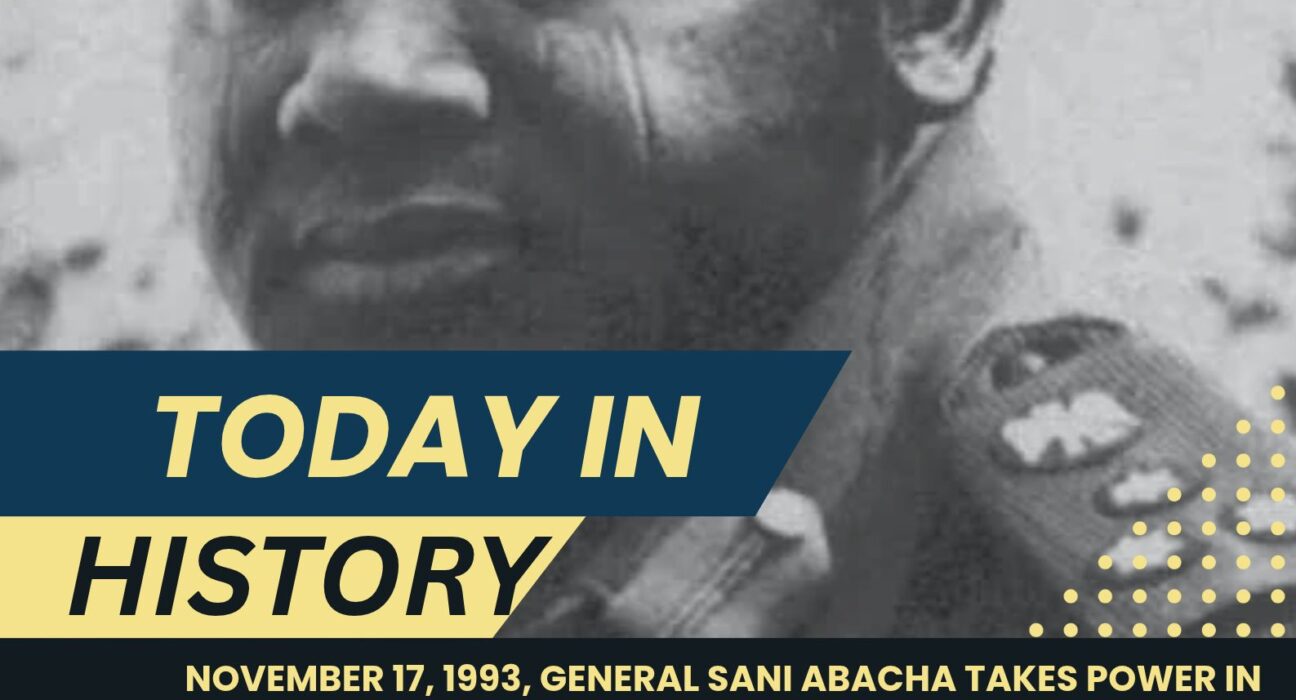
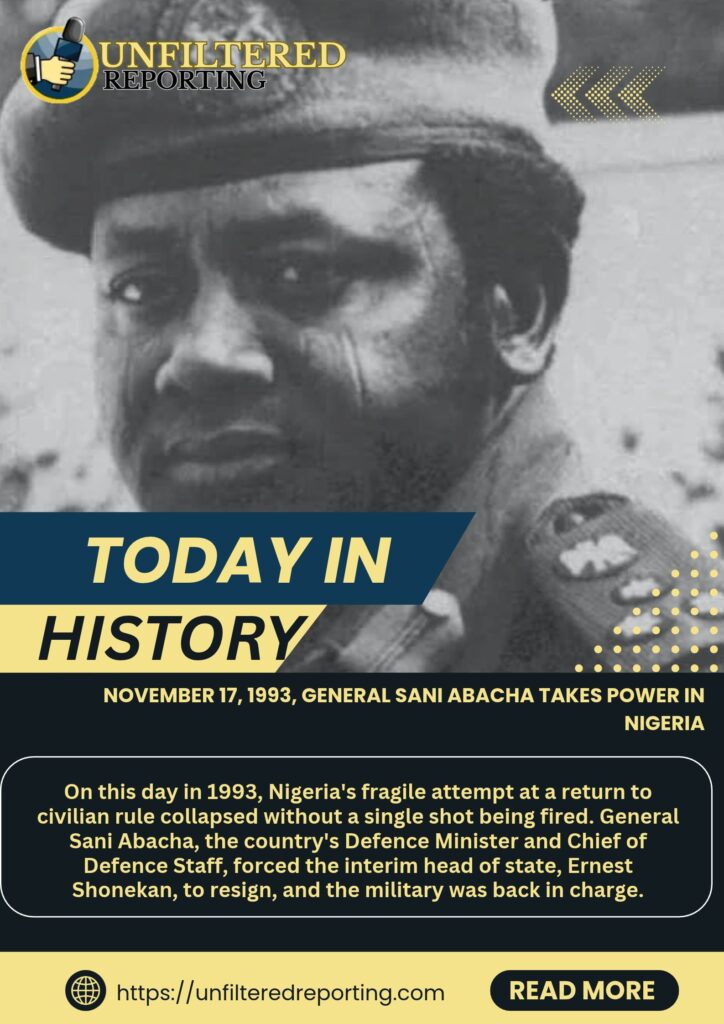
On this day in 1993, Nigeria’s fragile attempt at a return to civilian rule collapsed without a single shot being fired. General Sani Abacha, the country’s Defence Minister and Chief of Defence Staff, forced the interim head of state, Ernest Shonekan, to resign, and the military was back in charge.
The coup grew out of a political crisis that began months earlier. On June 12, 1993, Nigerians voted in a presidential election widely regarded as the freest and fairest in the country’s history. Chief M.K.O. Abiola of the Social Democratic Party was leading comfortably when the military government of General Ibrahim Babangida annulled the election. The annulment triggered protests, strikes and deep unrest, particularly in the South-West, and Babangida came under intense pressure to leave.
In August 1993, he stepped aside and handed power to an Interim National Government headed by Ernest Shonekan, a respected businessman and former chairman of the United Africa Company. The arrangement was supposed to steer Nigeria toward fresh elections, but it never gained real legitimacy. Many Nigerians saw it as a stopgap that ignored the mandate Abiola had won at the polls, and Abacha, who sat in the cabinet as Defence Minister, remained the most powerful figure in the armed forces.
The government’s position weakened further when a Lagos High Court ruled that the Interim National Government was illegal. With the ruling hanging over it and with strikes, particularly in the oil sector, crippling the economy, the administration was running out of road. Shonekan had been in office for roughly eighty-three days when Abacha stepped in on November 17. Shonekan resigned, and Abacha announced that the military had taken over. Because there was no bloodshed and no fighting between rival units, the takeover is often described as a bloodless or palace coup.
Abacha moved quickly to consolidate control. He dissolved the National Assembly, the state assemblies and the local governments, removed the elected governors, and banned political parties. Military administrators replaced the civilian governors, and power was vested in a Provisional Ruling Council. He promised a return to democracy, but the years that followed became some of the most repressive in Nigeria’s modern history. In June 1994, Abiola declared himself president and was arrested for treason soon afterward, and he remained in detention for years.
Abacha ruled until June 8, 1998, when he died suddenly. Abiola died in custody a month later, on July 7, 1998, just as his release seemed possible. General Abdulsalami Abubakar took over and organized a swift transition, and on May 29, 1999, Nigeria returned to civilian rule, the beginning of the unbroken democratic era the country still lives in today. Ernest Shonekan, whose brief tenure ended on that November day, remained a respected elder figure until his death in January 2022.