



COP31: Experts Urge NNPCL To Balance Oil Revenue, Energy Transition
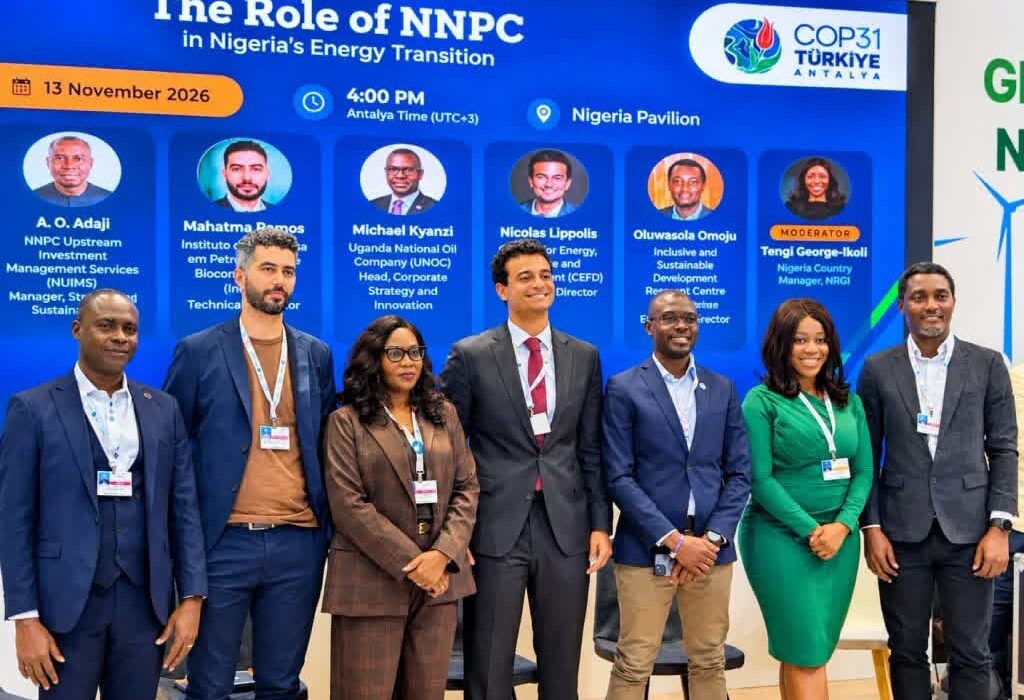
The Nigerian National Petroleum Company Limited has been urged to balance its commercial interests with Nigeria’s long-term economic priorities as the global shift towards cleaner energy threatens the future of fossil fuel investments.
Energy experts and researchers warned that decisions on whether to expand oil and gas investments, diversify into renewables or gradually withdraw from fossil fuels could have significant implications on government revenue, employment, energy security and the wider economy.
They made the submissions at a session titled ‘The Role of NNPC in Nigeria’s Energy Transition’ at the ongoing 31st United Nations Climate Change Conference on Friday in Antalya, Türkiye.
The session was organised by the Centre for Petroleum, Energy Economics and Law, University of Ibadan; the Centre for Energy, Finance and Development; and the Inclusive and Sustainable Development Research Centre, and was moderated by the Nigeria Country Manager of the Natural Resource Governance Institute, Tengi George-Ikoli.
George-Ikoli, in her comments, said national oil companies would determine how successfully the world managed the gradual decline in fossil fuel production, particularly as International Oil Companies reconsidered their investments, adding, “National oil companies will play a major role in determining the success of the push for a managed decline in fossil fuel production globally.
As international oil companies scale back, NOCs may step in to fill the gap, making their involvement in the transition essential. This is particularly true for NNPC in Nigeria.”
She said discussions involving Nigeria, Senegal and Uganda at COP31 had demonstrated the importance of peer learning, particularly in helping countries understand their different circumstances and develop responses to shared energy challenges.
In a presentation, the Executive Director, Centre for Energy, Finance and Development, Nicolas Lippolis, said the Petroleum Industry Act 2021 had transformed NNPC into a commercially oriented company, creating the need to reconcile profitability with its public responsibilities, noting that about 35 per cent of NNPC’s revenue came from oil and gas exports, while petroleum products accounted for approximately 85 per cent of Nigeria’s exports, exposing the country to changes in global demand, as his research identified gas-fired power, domestic midstream infrastructure and international pipelines as areas requiring closer scrutiny because of their potential exposure to energy transition risks.