

Iran Hits Bahrain Again, Warns Gulf States Over Backing US Operations
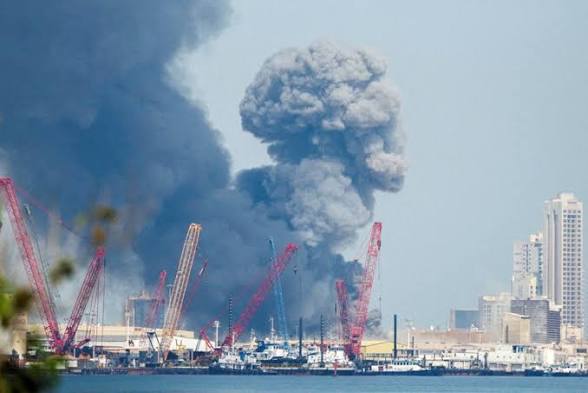
Iran’s Revolutionary Guard Corps (IRGC) has again struck at Bahrain, firing drones at a US air defence radar system at the Al-Riffa helicopter base on Sunday.
Tehran called it the second phase of its retaliation for what it described as hostile US actions. Bahrain’s military said it intercepted several of the incoming attacks and prevented them from reaching their intended targets.
The kingdom also issued its first nationwide threat alert in months, urging residents to take shelter.
It was the second Iranian claim of an attack on US military assets in Bahrain in three days. On Friday, the IRGC said it destroyed a US early-warning radar system in the country, in retaliation for an air attack on a telecommunications tower in southern Iran.
That was the first time since early September that Tehran had claimed a strike on US assets in a Gulf country. Bahrain, which hosts the headquarters of the US Navy’s Fifth Fleet, said both drones fired in Friday’s attack were shot down.
Tehran has also turned its warnings on the Gulf states themselves. Iran has told the UN Security Council it will respond immediately to any renewed US or Israeli attack, and accused Bahrain and other Gulf nations of supporting American military operations.
At a press conference on Sunday, Foreign Ministry spokesman Esmaeil Baghaei insisted the strikes were purely defensive, aimed only at US military assets and not at the sovereignty of neighbouring countries. He claimed Iran had documented evidence that regional states aided US attacks. Parliament Speaker Mohammad Bagher Ghalibaf warned that continued attacks would leave Iran to decide the geographical scope of the conflict, adding that Tehran would not remain in a situation of neither war nor peace.
An Armed Forces General Staff spokesman also threatened to hit the homes of American and Israeli officials in the region if attacks on Iranian civilian sites continue.
Bahrain has responded by calling for full implementation of UN Security Council Resolution 2817, which condemned Iranian attacks on it and other regional countries and demanded they stop. The country has endured thousands of Iranian drone and missile strikes since the US-Israel war on Iran began on 28 February, though attacks on Gulf states have been far less frequent since major hostilities ended in the summer.
The flare-up comes as diplomacy and war planning run side by side. Ghalibaf said Iran has conveyed seven conditions for a deal through a Qatari mediator and is awaiting an official US response. They include lifting the US naval blockade and sanctions, releasing frozen Iranian funds, ending hostilities on all fronts and formally declaring the war over.
President Donald Trump has said he might halt further attacks if Washington faces no new provocations from Tehran or the Houthis in Yemen, while also suggesting the US no longer needs a deal with Iran. Meanwhile, Israel’s Mossad chief, Roman Gofman, was reported to be in Washington on Friday for talks with senior Trump administration officials, with reports saying Prime Minister Benjamin Netanyahu is pressing for a resumption of strikes on Iran despite Trump’s reluctance.