
Today in History: November 11: The Day Nigeria Once Remembered Its Fallen
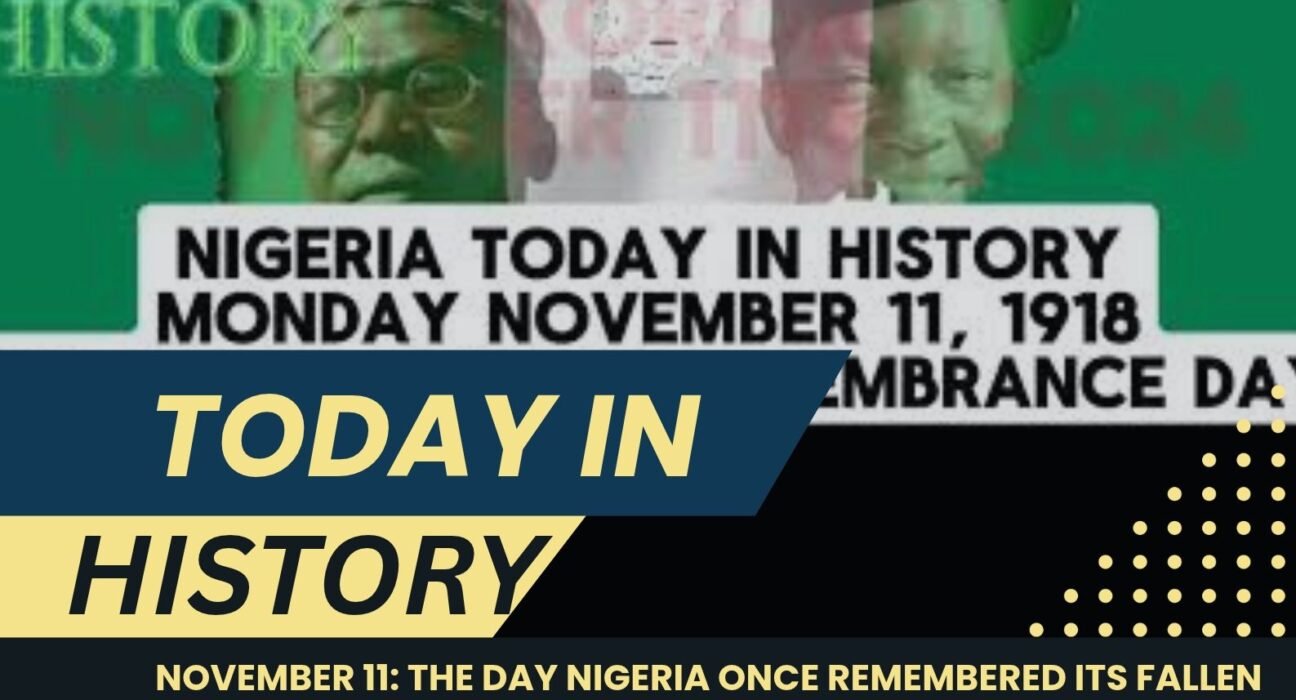
Today, November 11, the world pauses to remember the end of the First World War. At the 11th hour of the 11th day of the 11th month of 1918, the guns fell silent on the Western Front after an armistice took effect. In Britain and across the Commonwealth, the date became known as Armistice Day, Remembrance Day, or Poppy Day, after the red poppies worn in memory of the dead.
Nigeria, then a British colony, took part from the start. As a Commonwealth nation, it originally marked its own Armed Forces Remembrance Day on November 11, in line with other member countries, to honour those who fought in the First World War. One account says the event was first marked with a national holiday on November 12 and later moved to November 11, when it became popularly known as “11-11” or Poppy Day. The day carried real weight for Nigerians. Soldiers of the West African Frontier Force and later the Royal West African Frontier Force fought in campaigns in Cameroon and East Africa during the First World War. In the Second World War, many Nigerians served in places as far away as Burma. For decades, remembering those soldiers meant standing with the wider Commonwealth on this date.
Then history intervened at home. The date was changed in 1970 to coincide with the day Biafran troops surrendered to federal forces, ending a civil war that lasted about 30 months. The surrender came on January 15, 1970. The shift reflected a wish to make the day about Nigeria’s own story and its own sacrifices, not only those of a distant European war. As one account puts it, the new date was meant to make the observance more reflective of Nigeria’s own national history.
So today, November 11, is no longer Nigeria’s official day of remembrance. Every January 15 is marked as Armed Forces Celebration and Remembrance Day, set aside to honour fallen heroes who died in the line of duty as well as those still in service. In 2024, the name was officially changed to “Armed Forces Celebration and Remembrance Day.” The tradition of the emblem continues. Nigerians wear it on the left side of their outfits as a sign of solidarity with the armed forces, and the president flagged off the 2026 emblem at the Presidential Villa in Abuja. States hold military parades and wreath-laying ceremonies, and in Abuja the President, as Commander-in-Chief, inspects the parade.
It is worth noting that the day also asks something of the living. Commentary around recent observances has stressed the need for better welfare and support for serving personnel and veterans. Remembrance, in this view, is as much about how a nation treats those who served as about the ceremonies themselves.