Today in History: Ken Saro-Wiwa: The Writer, Activist Who Died for Ogoniland
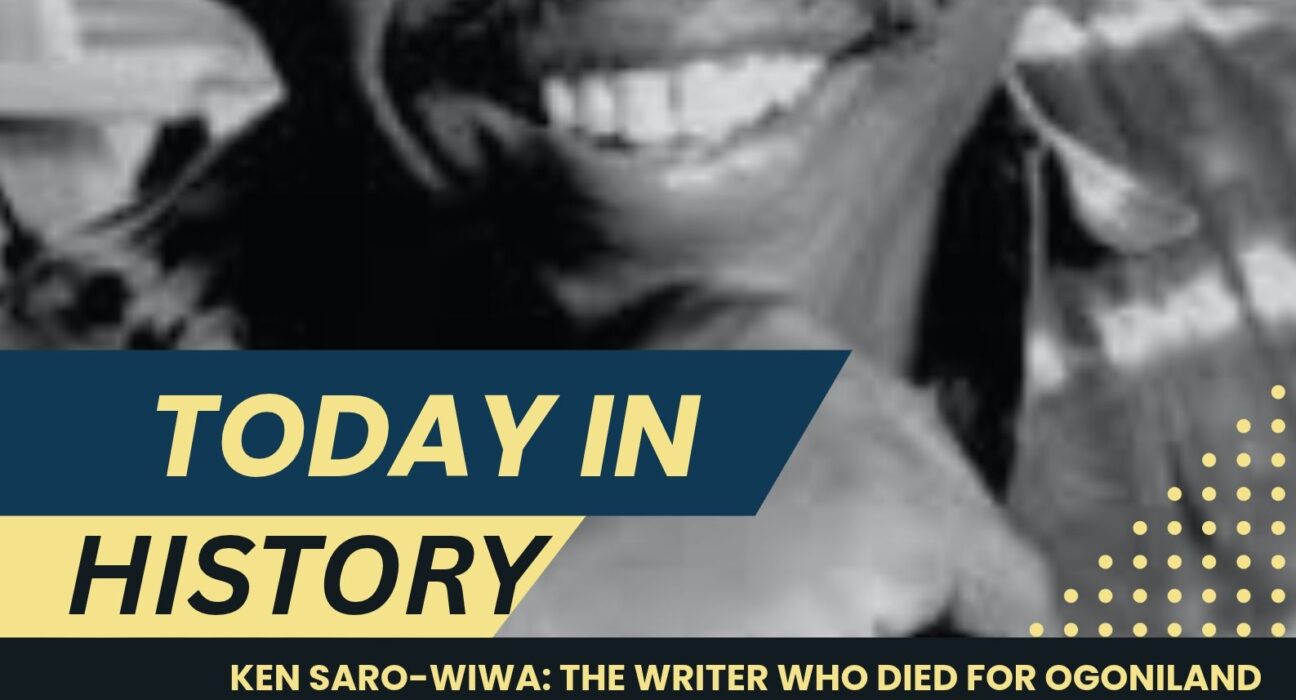
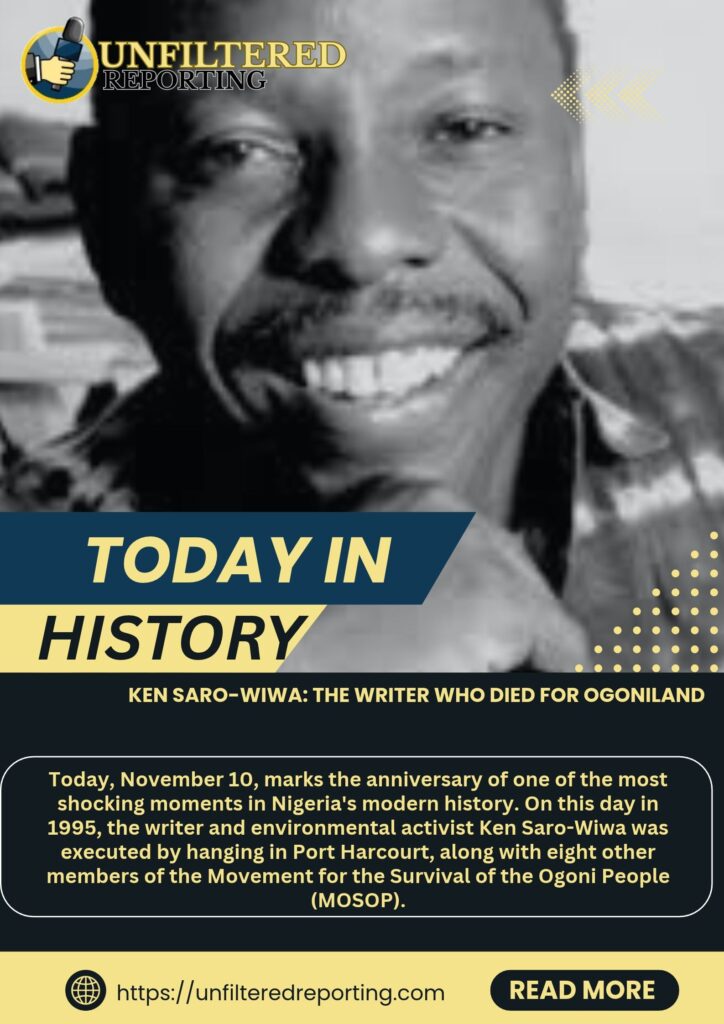
Today, November 10, marks the anniversary of one of the most shocking moments in Nigeria’s modern history. On this day in 1995, the writer and environmental activist, Ken Saro-Wiwa was executed by hanging in Port Harcourt, along with eight other members of the Movement for the Survival of the Ogoni People (MOSOP).
Kenule Beeson Saro-Wiwa was born on October 10, 1941, in Bori, in Ogoniland, in what is now Rivers State. He was a gifted writer long before he became an activist. He wrote novels, poetry, short stories and plays, and he created *Basi & Company*, a hugely popular Nigerian television comedy series that ran for years and made him a household name. He was also a successful businessman and, for a period, a government administrator during the Nigerian civil war.
Ogoniland is a small region in the Niger Delta, home to roughly half a million people. Oil was discovered there in the late 1950s, and for decades the area produced enormous wealth for the Nigerian state and for oil companies, especially Shell. The Ogoni people, however, saw little of that wealth. Instead they lived with gas flaring, oil spills, and polluted farmland and waterways, which destroyed the fishing and farming that their communities depended on.
In 1990, Saro-Wiwa helped found Movement for the Survival of Ogoni People (MOSOP) and became its spokesman and president. The movement drafted the Ogoni Bill of Rights, demanding political autonomy, a fair share of oil revenue and an end to environmental destruction. In January 1993, MOSOP organized a massive peaceful march that drew an estimated 300,000 Ogoni people, a remarkable turnout given that this was most of the Ogoni population. Shell later halted its operations in Ogoniland, though the oil industry’s presence and the tensions around it remained.
In May 1994, four Ogoni leaders were murdered at a gathering in Giokoo. Saro-Wiwa had been barred by the military authorities from attending that event, but he was arrested anyway and accused of inciting the killings. He and eight others, known as the Ogoni Nine, were put before a special military tribunal set up by the regime of General Sani Abacha. Human rights groups, lawyers and international observers widely condemned the process as unfair. Key witnesses were later alleged to have been bribed, and the defendants’ legal team faced serious obstruction.
In October 1995, the tribunal found Saro-Wiwa and the others guilty and sentenced them to death. Despite appeals from world leaders, human rights organizations and public figures around the globe, the sentences were carried out on November 10, 1995. Alongside Saro-Wiwa, the others executed were Barinem Kiobel, John Kpuinen, Baribor Bera, Saturday Dobee, Nordu Eawo, Daniel Gbooko, Paul Levura and Felix Nuate.
The executions provoked outrage worldwide. The Commonwealth suspended Nigeria’s membership, several countries recalled their ambassadors, and Shell faced intense criticism and boycotts for its role in the region and its perceived failure to intervene. The case became a defining moment in debates about corporate responsibility and human rights.
Saro-Wiwa’s death turned him into an international symbol of the fight for environmental justice and minority rights. His case contributed to lasting legal actions against Shell. In 2009, the company agreed to a settlement of 15.5 million US dollars in a case brought by relatives of the executed men, though it denied any wrongdoing. In 2000, a Nigerian tribunal also recognized the wrongs of the era, and in 2022 the Nigerian government moved to clear the names of the Ogoni Nine, with the Nigerian president at the time approving their pardon.
The environmental damage in Ogoniland remains a pressing issue. A 2011 United Nations Environment Programme report found extensive oil contamination, including polluted groundwater, and recommended a major cleanup, an effort that has moved slowly over the years.