
Gumi Acknowledges Nigeria’s Economic Recovery, Urges Tinubu to Expand Support for Poor Nigerians
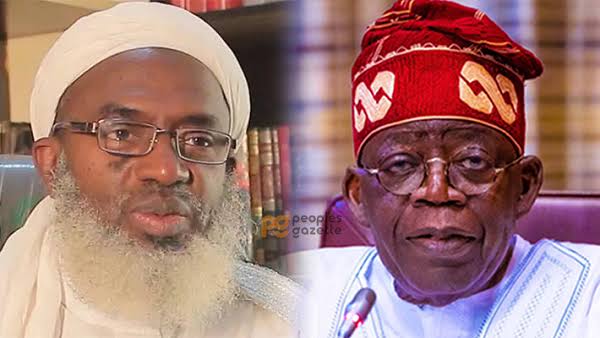
Islamic cleric, Sheikh Ahmad Gumi, has acknowledged signs of economic recovery in Nigeria under President Bola Tinubu’s administration but urged the Federal Government to strengthen social protection programmes to ensure vulnerable citizens benefit from the improvements.
Gumi made the remarks during an interview with the online platform PAPShow, where he assessed the administration’s economic policies and their impact on Nigerians.
He identified improvements in the country’s Gross Domestic Product (GDP), government revenue and allocations to state and local governments as indications that the economy was gradually recovering.
According to him, major macroeconomic indicators suggest that the country’s economic situation is improving, although the benefits have yet to sufficiently reach ordinary Nigerians.
He noted that citizens were still experiencing the consequences of economic adjustments, stressing that the government needed to establish more effective social safety nets to cushion the effects of the reforms.
Gumi acknowledged that the Federal Government had introduced several poverty alleviation programmes and other interventions but argued that the scale of assistance remained inadequate compared with the level of hardship.
He explained that the success of government policies depended not only on their formulation but also on effective implementation and proper distribution of resources to intended beneficiaries.
The cleric maintained that he found little fault with the overall direction of Tinubu’s economic policies, noting that the measures introduced were largely consistent with recommendations that many economists would make.
However, he emphasised the need for greater accountability in the management of funds allocated to social intervention programmes.
Gumi also advocated free education from primary through secondary school, arguing that Nigeria possessed sufficient resources to provide every child with access to basic education, regardless of their family’s financial circumstances.
He questioned why Nigerian children should be denied educational opportunities when the country’s resources could support such a programme.
Speaking on the removal of petrol subsidy, the Islamic cleric described the decision as inevitable given Nigeria’s economic circumstances.
However, he said he would have preferred the government to establish stronger social protection mechanisms before implementing the policy to reduce its impact on vulnerable households.
Gumi also acknowledged some infrastructure and education initiatives under the Tinubu administration, including the ongoing construction of the Abuja-Kaduna Road and the establishment of additional federal, state and private universities.
He urged the government to pay greater attention to ordinary citizens, particularly those living in remote and underserved communities with limited access to education, healthcare and other essential services.
While acknowledging the administration’s efforts to support vulnerable Nigerians, he maintained that more needed to be done to ensure that economic recovery translated into improved living conditions for the wider population.
He called for closer monitoring of social intervention funds, effective implementation of poverty reduction programmes and increased investment in essential public services.