


Kanu’s Detention Has Damaged Nigerian Government More Than Him, Says Brother
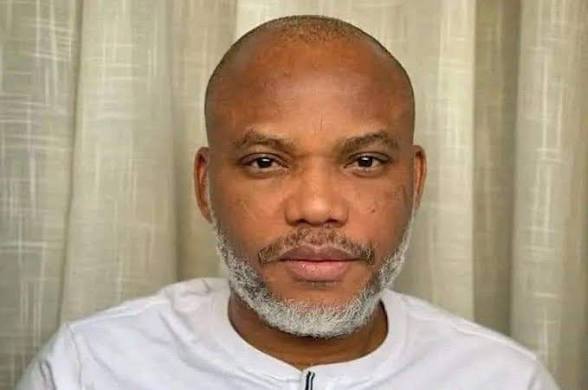
The continued incarceration of Nnamdi Kanu, leader of the proscribed Indigenous People of Biafra (IPOB), has done more damage to the Nigerian government than to Kanu himself, his younger brother, Prince Emmanuel Kanu, said in a statement posted on his verified Facebook page on Sunday, November 1, 2026.
Describing the detention as “a self-inflicted wound,” Emmanuel Kanu listed six areas in which he claimed Nigeria has paid heavily for keeping the IPOB leader in custody: loss of international credibility, insecurity and economic collapse in the South-East, the emergence of more radical splinter groups, damage to the regional economy, the alienation of Igbo youths, and the amplification of Kanu’s influence from prison.
Emmanuel Kanu said Nigeria presents itself to the world as a democracy that respects the rule of law, but that the circumstances of his brother’s “extraordinary rendition” from Kenya in 2021, and the government’s refusal to obey a Court of Appeal judgment discharging him, had painted a different picture.
He claimed foreign investors and human rights bodies had taken notice of a country that disobeys its own courts.
He alleged that before his brother’s rendition, the South-East was Nigeria’s most peaceful region, but that it had since been gripped by Monday sit-at-home orders, killings by “unknown gunmen” and heavy military deployment. He estimated that the five South-East states lose more than ₦10 billion every Monday in trade, schooling, banking and market activity, and that over four years of sit-at-home disruptions the region had lost trillions of naira.
“That is Nigerian GDP destroyed because of one man’s incarceration,” he said.
Emmanuel Kanu argued that jailing a leader who preached a non-violent referendum created a vacuum that “more violent and uncontrollable groups” have filled, some enforcing sit-at-home with guns. “The government now has a bigger security problem than IPOB,” he said.
He also claimed that the detention had deepened feelings of marginalisation among Igbo people and eroded trust in the Federal Government among young people. “Even Igbos who did not support IPOB before now sympathise with him,” he said. “The government has lost the trust of an entire generation of Igbo youths”.
Emmanuel Kanu said his brother had become more influential in detention and is now seen as a political prisoner and a martyr. “The government tried to silence a man, but amplified his voice worldwide,” he said.
He concluded that keeping Kanu in detention “has not brought peace, has not brought unity, and has not strengthened Nigeria,” and that it had cost the country its image, its money, its security in the South-East and the trust of its own people.
Nnamdi Kanu was convicted of terrorism by the Federal High Court in Abuja on November 20, 2025, and sentenced to life imprisonment by Justice James Omotosho. He is held at the Sokoto Correctional Centre. He has filed an appeal against the conviction, which reports indicate had yet to be heard as of October 2026.
The Nigerian government has maintained that Kanu was lawfully prosecuted for terrorism-related offences, and the court had earlier dismissed his argument that his alleged rendition from Kenya invalidated the trial.
The statement came amid sustained pressure for Kanu’s release. On October 31, 2026, Abia State Governor Alex Otti said South-East governors were still engaging relevant federal authorities behind the scenes to secure Kanu’s release. Diaspora groups and US-based organisations have also called for his release, citing health concerns and alleging inadequate medical attention in detention. In October 2026, IPOB urged the British government to press Nigeria on Kanu’s pending appeal.
Emmanuel Kanu’s intervention adds a family perspective to a debate that has persisted for years, framing the detention not only as a legal matter but as a political and economic liability for the government that continues to hold him.