




Yemen War Toll Passes 8,500 as Iran’s Guards Claim Strikes on Ships, Threaten US Bases
The World Health Organization says at least 1,574 people have been killed and 6,939 others injured in Yemen since fighting escalated in early August, bringing the total number of casualties to 8,513.
The figures cover the period up to October 19 and were released on Thursday. The agency did not say how many of the victims were civilians and how many were fighters. The latest report recorded 292 deaths and 1,048 injuries in the most recent eight-day reporting period alone, a sharp rise from the toll of 1,282 dead and 5,891 injured it had published a week earlier.
The escalation began on August 6 between Saudi-backed Yemeni government forces and the Iran-backed Houthi movement, reviving a conflict that has dragged on since the Houthis seized the capital, Sanaa, in 2014. A Saudi-led coalition intervened the following year to support the internationally recognised government.
The Houthis still control much of the north and west of the country, while government forces and their allies hold Aden and large parts of the south and east. Early October was among the deadliest stretches so far, with the WHO recording almost double the daily average of casualties seen in the preceding weeks.
The human cost extends well beyond the battlefield. The UN migration agency has said more than 184,000 people have been forced from their homes since the start of August, most of them since early September, while the World Food Programme has warned that the renewed fighting is driving a surge in hunger.
In the southwestern city of Taiz, residents inspected a damaged ambulance outside Al-Thawra General Hospital after it was towed from the Al-Shaqab front, where it was reportedly hit while carrying wounded people during clashes between government fighters and the Houthis.
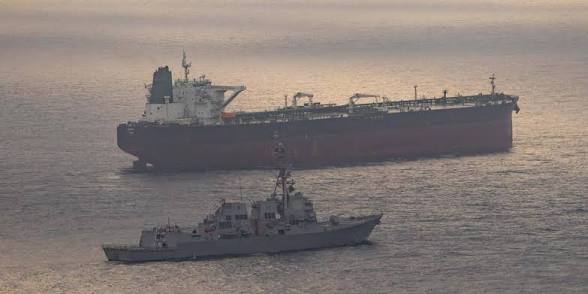
The wider regional picture also darkened on Thursday. Iran’s Islamic Revolutionary Guard Corps said its navy had struck four ships involved in oil transfers in the northern Persian Gulf, setting them on fire, and that three other vessels had hit mines west of the Strait of Hormuz overnight.
The claims were carried by Iranian state media and have not been independently verified. The Guards also warned that the confrontation would extend to American bases in the region if the US military continued to urge ships to pass through what Tehran calls illegal, mined waterways. Iran has restricted traffic through the strait since March, when the war with the United States and Israel disrupted one of the world’s most important oil routes.
In Washington, President Donald Trump denied that his administration is negotiating with Iran. He said the situation would be resolved “fairly soon” and that something would happen “one way or the other”, without giving details.
The remarks leave the prospect of a diplomatic breakthrough uncertain, even as the war’s pressure points, from the Gulf shipping lanes to the front lines in Yemen, continue to produce new casualties.