


Nigeria’s $1 Trillion Economy Target May Slip to 2040, Warns Adesugba
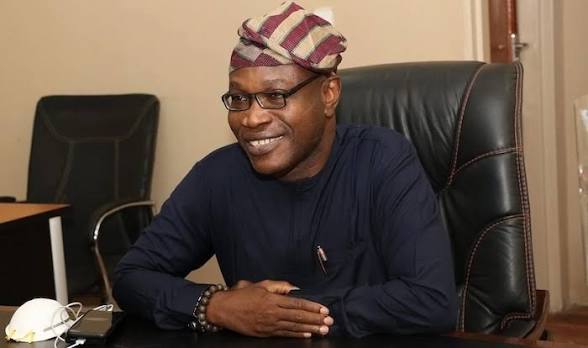
Nigeria may not achieve its ambition of becoming a $1 trillion economy until 2040 if its current growth trajectory persists, former Managing Director of the Nigeria Export Processing Zones Authority (NEPZA), Professor Adesoji Adesugba, has warned.
Adesugba said the country would need to grow its economy by an average of about 28 per cent annually in dollar terms to meet the 2030 deadline, stressing that weak productivity, inadequate infrastructure and low investment in productive sectors remained major obstacles.
He gave the warning on Tuesday while delivering the 20th anniversary lecture of the Commerce and Industry Correspondents Association of Nigeria (CICAN) in Abuja.
The former NEPZA chief said Nigeria had recorded improvements in macroeconomic stability but had yet to achieve the structural transformation required to sustain the level of growth needed to reach the target.
He estimated that Nigeria’s economy, valued at between $285 billion and $291 billion in 2025, would have to more than triple in dollar terms within five years to attain the $1 trillion mark by 2030.
Adesugba described the target as a national mobilisation objective rather than a guaranteed economic forecast, arguing that its realisation would depend on effective policy implementation and expansion of productive capacity.
He projected that if Nigeria sustained real economic growth of between four and 4.5 per cent, alongside moderate inflation and gradual depreciation of the naira, its economy could reach approximately $450 billion by 2030, pushing the $1 trillion milestone to around 2040.
Under a more favourable scenario involving real growth of six to seven per cent and a broadly stable currency, he said the economy could expand to about $585 billion by 2030, potentially bringing the target within reach by 2034.
Even under a highly optimistic scenario involving stronger growth and real exchange-rate appreciation, Adesugba estimated that Nigeria’s economy would reach about $773 billion by 2030.
He cautioned against relying on currency appreciation or changes in nominal gross domestic product to create the impression of economic expansion without corresponding increases in production, productivity and employment.
Adesugba, who is also the First Deputy President of the Abuja Chamber of Commerce and Industry, said a stronger currency alone would not deliver meaningful economic development without an expansion of the country’s industrial base.
The economist acknowledged improvements in key economic indicators, citing real gross domestic product growth of 4.43 per cent in the second quarter of 2026, first-half growth of 4.16 per cent and a decline in headline inflation to 14.63 per cent in September.
He also pointed to foreign exchange reserves of $55.25 billion and a narrowing gap between official and parallel market exchange rates as signs that ongoing economic reforms were delivering some stabilisation benefits.
However, he warned that the gains had yet to translate into sufficient long-term investment in manufacturing, agriculture and other sectors capable of generating sustainable growth and employment.
Adesugba said capital importation reached $10.37 billion in the first quarter of 2026, but foreign direct investment accounted for only $135.08 million, representing 1.3 per cent of the total.
He added that approximately 73 per cent of capital inflows went into the banking sector, while manufacturing attracted about 1.5 per cent and agriculture received less than one per cent.
He distinguished between portfolio investments, which can support financial market stability, and foreign direct investment, which creates productive assets, expands industrial capacity and generates jobs.
According to him, Nigeria could lose some portfolio inflows as interest rates decline unless improved economic conditions encourage investors to commit capital to manufacturing, agriculture, mining, logistics and other productive activities.
Adesugba identified unreliable electricity supply as another major impediment to economic expansion, noting that the country’s installed grid capacity of 13,625 megawatts contrasted sharply with average available capacity of 4,758 megawatts in August 2026.
He said the shortfall forced businesses to depend on costly alternative energy sources, increasing operating expenses and weakening their competitiveness.
He called for electricity sector reforms to become a central component of Nigeria’s economic development strategy, recommending improved gas-to-power arrangements, increased investment in transmission infrastructure, faster electricity metering and the development of state electricity markets under the Electricity Act 2023.
The former NEPZA chief warned that economic expansion would have limited value if it failed to improve living standards and reduce poverty.
Citing World Bank estimates, he said approximately 140 million Nigerians, representing 63 per cent of the population, lived below the national poverty line in 2025, while food inflation of nearly 20 per cent continued to weaken household purchasing power.
To improve accountability, he proposed measurable benchmarks alongside the $1 trillion ambition. These include an interim $500 billion economy, sustained real GDP growth of at least six per cent, foreign direct investment accounting for more than 10 per cent of capital importation, reliable electricity supply of at least 8,000 megawatts and single-digit headline inflation.
He said the benchmarks would enable citizens, investors and the media to evaluate the government’s economic performance using measurable outcomes rather than official declarations.
Adesugba urged the Federal Government to sustain its economic reforms through the 2027 electoral cycle, warning that policy reversals could undermine investor confidence.
He also advocated stronger coordination between fiscal and monetary authorities, transparent implementation of the new tax laws, improved revenue accountability and greater involvement of state governments in attracting investment.
He called for Nigeria’s special economic and free trade zones to be repositioned as export-oriented manufacturing and value-addition centres linked to the African Continental Free Trade Area.
He said the organised private sector, financial institutions, labour unions, universities and development partners also had important roles to play through long-term financing, industry-focused research, skills development and investment in productive capacity.
Adesugba proposed that CICAN establish a quarterly $1 trillion economy tracker to independently monitor economic indicators, including real growth, dollar-denominated GDP, foreign direct investment, electricity supply, inflation, manufacturing output, employment and poverty levels.
He also recommended an economic reporting fellowship and an annual real-economy forum to strengthen scrutiny of government policies and provide consistent assessments of progress towards the target.
The professor called for stronger protection of journalists, timely access to official information and greater investment in specialised economic reporting, describing credible journalism as essential to public understanding, investor confidence and government accountability.
He maintained that Nigeria’s economic success should not be judged solely by the year it attains the $1 trillion mark, but by its ability to sustain growth, create jobs and reduce poverty.
Earlier, CICAN Chairman Gabriel Kuma said the association’s 20th anniversary should reinforce its commitment to responsible, independent and courageous economic reporting.
Kuma urged government institutions and industry stakeholders to improve transparency and engagement with journalists, while strengthening specialist reporting on issues affecting the country’s economic development.
He said the ultimate measure of economic policy should be its contribution to improving the welfare and prosperity of Nigerians.