
Scavengers Carted Away N3bn Power Project Wires, Says Zulum
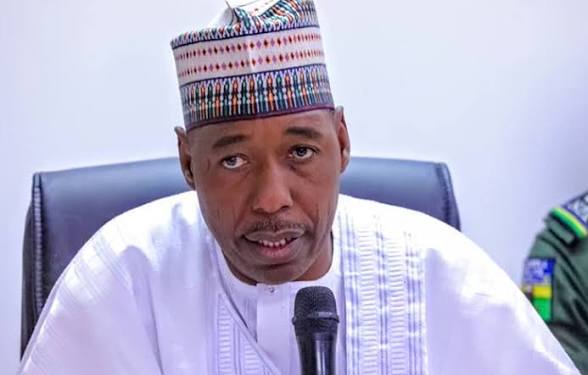
Borno State Governor, Babagana Zulum, has disclosed that metal scavengers removed electricity cables worth more than N3 billion from a power distribution project designed to link Damaturu in Yobe State with Maiduguri, the Borno State capital.
Zulum said the loss of the cables was one of the major reasons his administration imposed restrictions on scrap metal activities across the state, amid growing concerns over the vandalism of public infrastructure and security threats.
The governor made the disclosure while meeting with scrap metal dealers and other affected operators in Maiduguri, according to a statement issued on Sunday by his Senior Technical Assistant on Print and Digital Communications, Abdulrahman Bundi.
He said the government had invested more than N3 billion in the electricity project but subsequently lost the wires to metal scavenging.
“We spent more than N3 billion to connect an electricity distribution line from Damaturu to Maiduguri, but unfortunately we lost all the wires to the metal scavenging activities,” Zulum said.
The governor also said security reports had linked some scrap dealers to the disposal of metals allegedly stolen by insurgents, warning that the government could not overlook such intelligence in the interest of maintaining public safety.
According to him, the decision to restrict the trade was not motivated by a desire to undermine the livelihoods of legitimate operators, but by concerns that the activities were being exploited to damage infrastructure and facilitate criminal operations.
“We have security intelligence that even the insurgents use your platforms to sell looted metals,” he said, adding that no responsible government would ignore such information for the sake of political correctness.
Zulum further expressed concern about the safety of scavengers themselves, particularly those entering communities where civilian activities remain restricted because of insecurity.
He said hundreds of people had reportedly been killed while searching for scrap metals in areas that were yet to be considered safe for civilian operations.
The governor stressed that the administration had no personal interest in shutting down businesses, saying the priority was to protect lives, public assets and critical infrastructure.
The latest disclosure has renewed concerns over the vulnerability of electricity infrastructure in Borno and other parts of the North-East, where repeated attacks and vandalism have contributed to prolonged power disruptions and increased the cost of restoration efforts.
Borno authorities had previously raised alarm over the destruction of high-tension electricity facilities serving Maiduguri and other parts of the state. Insurgent attacks on power installations had at various times left the state capital without electricity for extended periods.
The restriction on metal scavenging is not new. On July 10, 2023, Zulum announced a ban on the activity across Borno’s 27 local government areas after an inspection in Maiduguri uncovered scrap materials believed to include government property.
The administration had cited the alleged removal of streetlights, communication equipment and other public assets as part of the reasons for the prohibition.
However, the state government has recently taken steps to cushion the economic impact of the restriction on affected traders.
At the meeting with operators on Saturday, Zulum approved a temporary waiver allowing traders to remove scrap materials accumulated before the ban from designated locations.
He also directed the operators to submit proposals outlining measures they could adopt to continue their businesses without facilitating vandalism, insecurity or the destruction of government infrastructure.
The intervention followed a reported N200 million assistance package for affected operators and the designation of 72 locations where accumulated scrap materials could be evacuated.
The governor indicated that the government could review the restriction if the traders presented credible measures capable of preventing the misuse of the scrap metal trade for criminal activities and protecting public infrastructure.