



Freed Kebbi Judge Recognises Bandits’ Hideout
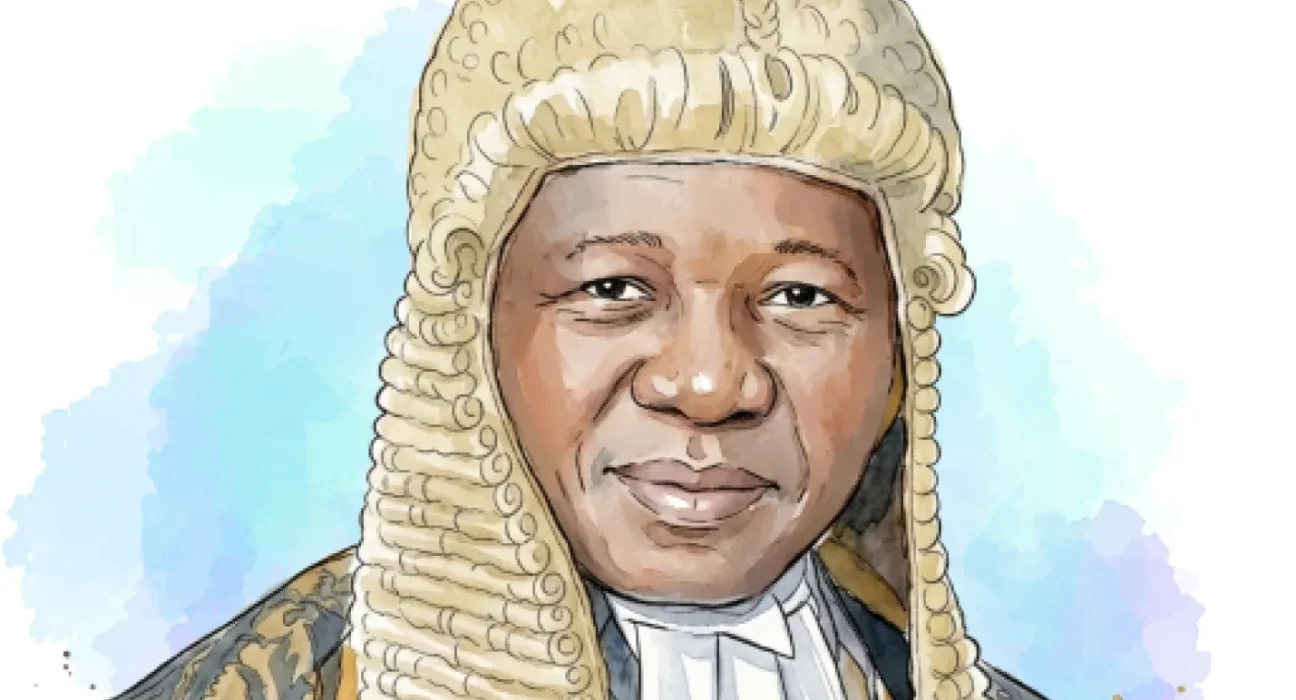
A High Court judge in Kebbi State, Faruk Bunza, has identified the location where armed kidnappers held him captive for over a week, while raising critical concerns regarding the inadequate security details assigned to judicial officers who preside over sensitive criminal proceedings.
Following his release, Justice Bunza disclosed that his abductors detained him at Dutsen Bandan in Dakin Gari, located within the Suru Local Government Area, which sits roughly forty-nine kilometres away from his private home in Bunza.
The judicial officer explained that several armed members residing in the camp lived alongside their families, noting that the criminal network relied heavily on local informants operating within surrounding communities.
His detailed disclosures have raised pressing questions concerning whether law enforcement and security authorities were previously aware of the encampment, how the kidnappers acquired operational intelligence regarding prospective targets, and the actual level of security provided to judges in Kebbi State.
The abduction took place during the early hours of July 26 when five armed men breached Justice Bunza’s residence along Zogirma Road in Bunza Local Government Area, shortly after he returned from a trip to Sokoto State.
Following the intrusion, law enforcement authorities deployed specialized intelligence and tactical units to track down the perpetrators and locate the abducted judge.
Recounting his ordeal, Justice Bunza stated that his captors forced him to trek approximately twenty-five kilometres barefoot to the Tungar Bandan junction where their operational motorcycles were parked, before transporting him an additional twenty-four kilometres to Dutsen Bandan.
The judge identified the captivity site as a elevated hill situated directly behind the permanent orientation camp of the National Youth Service Corps in Dakin Gari.
A local resident who spoke anonymously corroborated the judge’s account, describing the hill as a notorious sanctuary for criminal elements and noting that local community members had repeatedly reported suspicious armed movements around the area to relevant authorities.
Justice Bunza revealed that his captors possessed extensive personal details about him prior to the abduction, demonstrating advanced preparation.
He disclosed that the kidnappers displayed photographs of him alongside Nura Abdullahi, the chairman of Bungudu Local Government in neighboring Zamfara State.
The armed men informed the judge that they were under explicit orders to kidnap both individuals, though they refused to reveal the identities of those who issued the directive.
The experience led Justice Bunza to conclude that the syndicates maintain active networks of local informants who monitor high-profile individuals and gather intelligence across various communities, with younger associates serving as lookouts and errand runners.
Beyond the details of his captivity, Justice Bunza expressed deep concern regarding the current security protocol established for judicial officers in Kebbi State.
He revealed that he had been assigned permanent static security guards at his residence during his tenure as a magistrate and chief magistrate, but that residential security detail was discontinued after his elevation to the High Court bench.
He explained that High Court judges are currently assigned protection only on a shift basis, despite routinely presiding over high-risk cases involving banditry, kidnapping, and severe violent offenses.
He advocated for the mandatory provision of overnight residential security for all judges and urged the government to establish fortified, dedicated residential quarters for judicial officers.
His observations align with demands made by the African Judges and Jurists Forum, which publicly called on Nigerian authorities to conduct comprehensive risk assessments and upgrade protection measures for judicial personnel.
Justice Bunza reported that fewer than twenty armed men were present at the Dutsen Bandan camp throughout his period of confinement.
He characterized the location as an established settlement where some gang members resided with their wives and children.
The judge noted that he encountered two other abducted victims at the hill and was guarded by a dedicated crew of five armed men, while other members occupied lower sections of the terrain.
He pointed out that the relatively small number of armed men present at the site makes such hideouts vulnerable to targeted security operations if law enforcement agencies act on precise intelligence.
The Kebbi State Police Command has not formally announced any security operation at Dutsen Bandan since the judge regained his freedom.
Justice Bunza stated that his abductors actively followed news coverage and media reports concerning his kidnapping and the ongoing efforts to secure his release.
He recalled that the gang showed him a print newspaper report covering the incident and openly discussed updates regarding ransom negotiations.
This level of monitoring reinforced his assessment that the criminal group maintains active communication links with external contacts outside the camp.
Family members disclosed that the kidnappers initially demanded a ransom payment of two hundred million Naira before eventually accepting fifty million Naira to facilitate his release.
The Kebbi State Police Command confirmed the judge’s release on August 3 and reiterated its official policy against ransom payments, without clarifying whether financial demands were met by third parties.
Justice Bunza expressed his belief that the primary motive behind his abduction was financial extortion, fueled by the kidnappers’ perception of his social standing and personal wealth.
The judge explained that his ordeal came to an end after two fellow captives successfully escaped from the camp on August 1, prompting the majority of the armed gang to abandon the area.
The remaining two guards assigned to watch over him subsequently deserted their post, allowing Justice Bunza to remove his head covering and walk down the hill unhindered.
He navigated his way on foot to neighboring settlements before securing local transportation back to Bunza town.
While investigations into the incident remain ongoing, Justice Bunza affirmed that the harrowing experience will not deter him from discharging his constitutional responsibilities on the bench.